Category: Productivity

  • What Is an IMEI Number? Meaning, Format & How to Find It

    What Is an IMEI Number? Meaning, Format & How to Find It

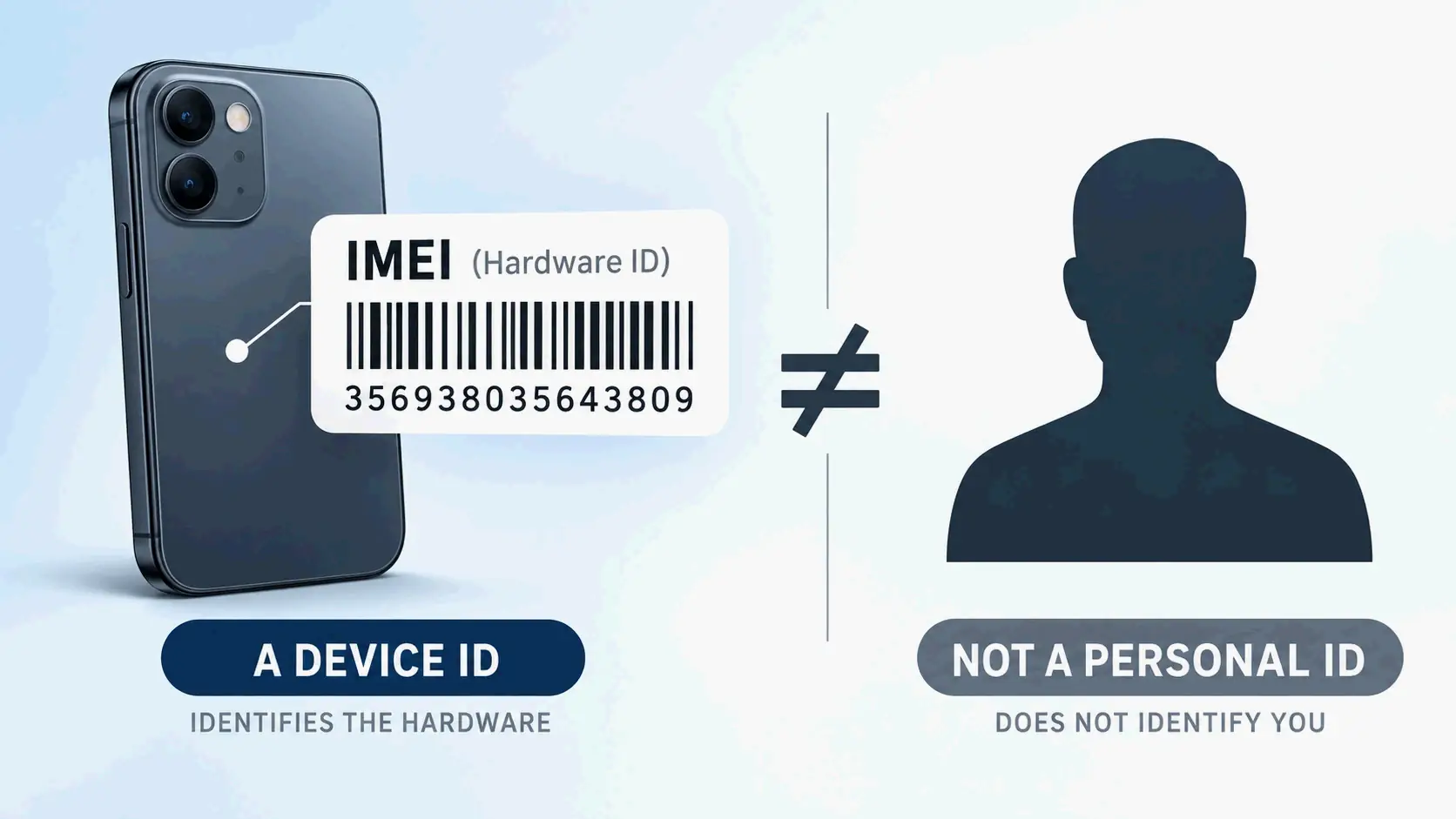
    Header: IMEI as a hardware identity for a cellular device

    An IMEI (International Mobile Equipment Identity) is a 15-digit number that identifies a specific cellular device — not its owner and not its phone number. Networks use it to authorize hardware, and U.S. carriers can blocklist a stolen IMEI. To find yours, dial *#06# or check your Settings.

    What Is an IMEI Number?

    IMEI stands for International Mobile Equipment Identity. It’s a numeric identifier, usually unique, assigned to 3GPP and iDEN mobile phones, and it also appears on some satellite phones (Wikipedia). A standard IMEI has 15 digits. The numbering space is managed under rules published by the GSMA, the industry association that defines how IMEI ranges are allocated to device makers.

    The identifier is tied to the hardware, not to an account. Swapping a SIM card, switching carriers, changing your phone number, or performing a factory reset does not produce a new IMEI. Only replacing the device itself gets you a different one.

    Almost anything that connects to a cellular network carries an IMEI: smartphones, cellular tablets, cellular smartwatches, some laptop cellular modules, and satellite terminals. The Broadband Global Area Network (BGAN), Iridium, and Thuraya satellite networks all use IMEIs on their transceiver units, and the Iridium 9601 modem relies solely on its IMEI for identification with no SIM card at all (Wikipedia).

    A GSM network reads the IMEI when a device first attaches. It uses that number to decide whether the specific piece of hardware is allowed to access the network. A phone reports the number when the network asks for it, and operators may request it to check whether a device is damaged, reported stolen, or associated with fraud or faults (Phone Scoop).

    What an IMEI does not contain: no name, no address, no billing details, no phone number. That absence is exactly what separates it from the identifiers most people confuse it with.

    What Does an IMEI Number Identify — the Device or Its Owner?

    It identifies the device — and only the device. An IMEI does not point to a person, an account, or a phone number. It identifies the physical radio hardware.

    That distinction matters because several different identifiers can appear on the same phone at the same time. Each one answers a different question.

    Identifier What it identifies Where it lives Does it change?
    IMEI The cellular device In the device firmware/hardware No — survives SIM swaps, carrier changes, and factory resets
    IMSI The subscriber On the SIM card or eSIM profile Yes — it belongs to the SIM, not the phone
    Phone number (MSISDN) The subscription line Carrier network and account records Yes — it changes with a new line or a port
    SIM card The subscription module itself Physical SIM or eSIM chip Yes — replacing the SIM replaces this identity

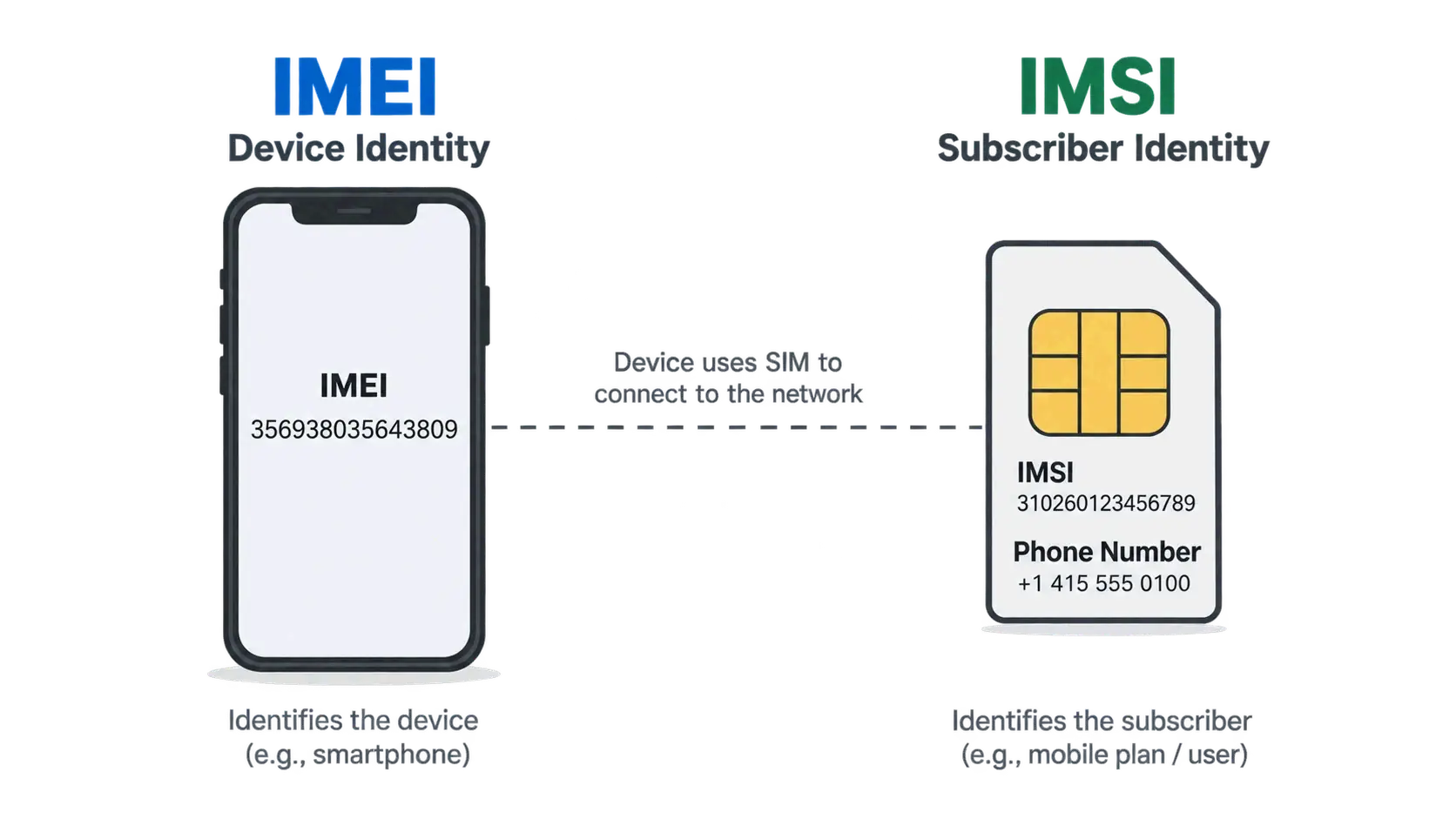
    Device identity vs subscriber identity: IMEI on hardware, IMSI/SIM for subscriber

    Because the IMEI lives in the hardware, it stays the same no matter whose SIM is inside. The phone identifies the subscriber separately by transmitting the International Mobile Subscriber Identity (IMSI), which is stored on the SIM card and can in theory be moved to any handset (Wikipedia). That’s why a carrier can recognize a device without knowing who is using it, and recognize a subscriber without caring which handset they inserted the SIM into.

    IMEI vs. IMSI: Device Identity vs. Subscriber Identity

    The IMEI is a hardware label; the IMSI is a subscription label. A network authenticates the IMSI, not the IMEI — the SIM proves who the subscriber is, while the IMEI simply declares what the device is.

    In practice, the two can be separated. Move a SIM from one phone to another, and the IMSI stays the same while the IMEI changes completely. Leave the SIM in place and swap the phone number on your account, and the IMEI is untouched. The two systems are designed to describe different things, and they are not interchangeable in any carrier support conversation.

    Why an IMEI Is an Unauthenticated Identifier

    An IMEI is an unauthenticated mobile identifier, in contrast to the IMSI, which home and serving networks routinely authenticate (Wikipedia). The device reports it, and the network generally takes that report at face value rather than cryptographically proving it.

    Two consequences follow. First, an IMEI can be spoofed or cloned, which is why it cannot serve as an identity credential on its own. Second, and more useful in daily life, blocklisting targets the hardware itself: a thief who pulls the SIM out of a stolen phone and puts it into a different handset still cannot use the stolen device on any participating network, because the blocked hardware is the thing being refused.

    The identifier also cuts both ways. Saudi Arabian government agencies have reportedly used IMEI numbers taken from cell phone packaging to locate and detain women who fled the country (Business Insider, 2019). The IMEI itself carried no personal data — it was combined with other information to become a tracking pivot.

    The 15-Digit IMEI Format: TAC, Serial Number, and Check Digit

    A standard IMEI is 15 decimal digits, and the structure is formally specified in 3GPP TS 23.003. The number is not random: it breaks into three parts that together describe the allocation, the individual unit, and a mathematical validity check. The display format is often written as AA-BBBBBB-CCCCCC-D, though devices frequently show it as one unbroken string.
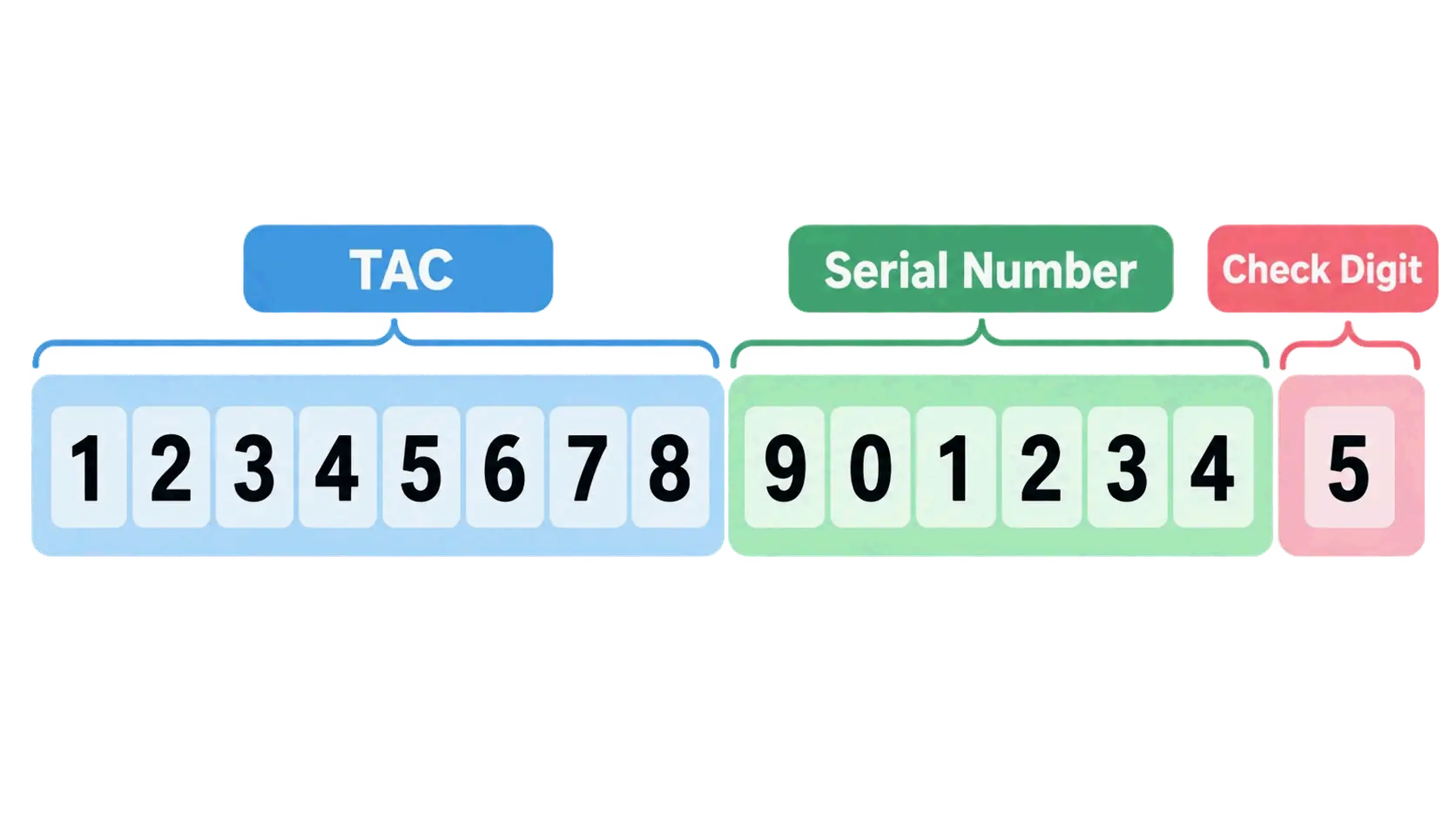
    The 15-digit IMEI split into TAC, serial number, and check digit

    Digits 1–8: The Type Allocation Code (TAC) and RBI

    The first eight digits form the Type Allocation Code (TAC), which is tied to the origin and model of the device. The TAC is allocated by the GSMA to the brand owner for an approved device type, and phones in the same model family can share a TAC while differing in the digits that follow.

    Within those eight digits, the first two are the Reporting Body Identifier (RBI). The RBI identifies which GSMA-approved group allocated the TAC, and RBI numbers themselves are assigned by the Global Decimal Administrator (Wikipedia). An older-style IMEI such as 35-209900-176148-1 shows RBI code 35 — issued by BABT — with allocation number 2099.

    Digits 9–14: The Device Serial Number

    Digits 9 through 14 are the serial number portion, chosen by the TAC holder to distinguish one unit from another within that allocation (Aikon). This is not the same thing as the manufacturer’s device serial number printed elsewhere on the phone or the box, even though both use the word “serial.” Six digits give roughly a million individual units under a single TAC before a new allocation is needed.

    Digit 15: The Luhn Check Digit

    The fifteenth digit is a check digit calculated with the Luhn algorithm, the same checksum used on payment card numbers under ISO/IEC 7812. Its purpose is narrow but useful: it guards against incorrect entries into Equipment Identity Register and Central Equipment Identity Register systems (Wikipedia). The check digit is not transmitted over the radio interface and is not stored in the EIR database.

    The arithmetic is straightforward. Take the first 14 digits, double every second digit starting from position 2, subtract 9 from any doubled value greater than 9, add everything up, and the check digit is whatever you must add to reach the next multiple of ten. Worked through for the base 35316105214284:

    Position 1 2 3 4 5 6 7 8 9 10 11 12 13 14
    Digit 3 5 3 1 6 1 0 5 2 1 4 2 8 4
    Value added 3 1 3 2 6 2 0 1 2 2 4 4 8 8

    The sum is 46, the next multiple of ten is 50, so the check digit is 4 and the complete IMEI is 353161052142844 (Aikon). Change any single digit and the total stops being a multiple of ten, which is precisely what the checksum is designed to catch.

    What the check digit cannot do is prove that a device exists, that it belongs to the seller, or that it has a clean network status. It validates format, not truth.

    IMEISV: When an IMEI Shows 16 Digits

    If you see 16 digits, you are most likely looking at an IMEISV — International Mobile Equipment Identity and Software Version. The IMEISV keeps the 8-digit TAC and 6-digit serial but replaces the Luhn check digit with a two-digit Software Version Number, giving the format AA-BBBBBB-CCCCCC-EE (Wikipedia). A software version of 99 is reserved.

    IMEISVs show up in diagnostic screens and in exports from repair systems. If a lookup service asks specifically for an IMEI and you paste a 16-digit IMEISV, the result may be rejected or simply wrong.

    How the IMEI Format Changed (and Why the Year Matters)

    The current 8-digit TAC is a post-2004 standard, and older references still describe the previous layout. Before 2002, the TAC was six digits followed by a two-digit Final Assembly Code (FAC), a manufacturer-specific code indicating where the device was assembled. From January 1, 2003 until April 1, 2004, the FAC for all phones was 00, marking the transition period. After April 1, 2004, the FAC ceased to exist and the TAC grew to eight digits (Wikipedia).

    Separately, the link between regulatory approval and IMEI allocation was removed in April 2000 with the introduction of the European R&TTE Directive. Since then, having a formally allocated IMEI range has not meant a device is approved or compliant — a point worth remembering when a listing claims an IMEI “proves” regulatory certification.

    How to Find Your IMEI Number on Any Device

    There are five reliable places to find an IMEI, and they are not equally useful in every situation. The fastest works only if the phone turns on. The slowest works when the phone is gone.

    Dial *#06# — the Fastest Method

    Open the phone dialer and enter *#06#. The IMEI appears on screen immediately, and on many devices this works even from the lock screen. On a dual-SIM phone you will typically see IMEI 1 and IMEI 2 displayed together, so you can capture both in one step (imeichanger.net). No app, no menu navigation, no account login.

    Android and iPhone Settings Paths

    If the dialer code is blocked or you prefer a menu, both major platforms expose the number:

    • Android: Settings → About Phone (the exact wording varies by manufacturer — Samsung, Google Pixel, Xiaomi, Motorola, and OnePlus all label this section slightly differently).
    • iPhone: Settings → General → About.

    On both platforms the IMEI appears alongside other identifiers, including the serial number and, on eSIM-capable models, the EID. Read the label next to each value rather than assuming the longest number is the IMEI.

    When the Phone Won’t Turn On: Box, Invoice, and Carrier Records

    A dead, damaged, or stolen phone cannot display anything, so the IMEI has to come from outside the device. The available sources are the original retail packaging or label, the purchase invoice or receipt, carrier account records, insurance documents, and previous repair documentation.

    Reliability differs sharply here. The box is convenient but not trustworthy on its own — packaging can be counterfeited or swapped between devices. Whenever the phone still powers on, compare the printed number against what *#06# displays. If the two disagree, treat that as a serious warning sign rather than a clerical error.

    One habit is worth building now: write your IMEI down and store it somewhere other than the phone itself — a cloud note, a password manager, or a paper record. Storing it only inside the device defeats the purpose the moment the device is locked or gone.

    Why a Dual-SIM Phone Shows Two IMEI Numbers

    Two IMEIs on one phone is normal, not a defect. Dual-SIM phones normally carry two IMEI numbers because each cellular connection needs its own device identifier (Wikipedia). IMEI 1 and IMEI 2 correspond to the two separate cellular interfaces inside the same physical handset.

    The practical implication is easy to miss: when reporting a phone lost or stolen, provide both numbers so carriers and law enforcement can blocklist both connections. When checking a used phone, do not verify only one IMEI and assume the result covers the whole device.

    Apple Watch, eSIM-Only Devices, and Other Exceptions

    Not every connected device has an IMEI, and the exceptions trip people up. Wi-Fi-only tablets, laptops, and other non-cellular hardware have no IMEI at all. For Apple Watch, IMEI is available on GPS + Cellular models only (Apple Support, updated September 14, 2026); a GPS-only Apple Watch carries a serial number but no IMEI.

    Devices that use eSIM instead of a physical SIM tray usually still have an IMEI, and they typically have an EID as well. The two numbers identify different pieces of hardware: the IMEI covers the device, the EID covers the eSIM chip. Apple Watch owners can read either value on the watch under Settings → General → About, or on a paired iPhone through the Apple Watch app under My Watch → General → About (Apple Support).

    What an IMEI Number Is Actually Used For

    Beyond simply naming a device, the IMEI supports several practical processes that all depend on one property: it distinguishes this specific unit from every other unit of the same model, color, and storage size.

    • Carrier activation and network authorization. When a device first joins a network, its IMEI is registered so the carrier can determine whether that hardware is permitted on the network.
    • Warranty and repair verification. Official and third-party repair points use the IMEI to confirm the model, the parts involved, and the warranty status of the exact unit on the bench.
    • Device insurance claims. Insurers use the IMEI as the unique identifier for the item being claimed, which is why the number belongs on your policy documents.
    • Network troubleshooting. A carrier can use the IMEI to check whether a device has recently registered successfully with a cell site, which helps separate a device problem from a coverage or account problem.
    • Second-hand transaction verification. Buyers compare the IMEI shown by the device against the seller’s number and check reported status before paying.
    • Law enforcement investigation. Device identifiers can survive physical destruction, making them a durable investigative lead.

    Note what is missing from that list: none of these uses require the IMEI to reveal who owns the phone.

    How Law Enforcement Uses IMEI Numbers

    An IMEI can serve as an investigative starting point even when the device itself is destroyed. An IMEI recovered from the remnants of a Nokia 5110 was used to trace and identify the perpetrators of the 2002 Bali bombings (ABC News). Because the number is tied to hardware rather than to a SIM, it can remain recoverable and meaningful after the components around it are gone.

    The same capability explains why the IMEI shows up in debates about surveillance. Law enforcement and intelligence services can use an IMEI as an input for tracking devices that locate a cell phone with accuracy of a few meters (Wikipedia) — a capability that exists on the network side, not in any consumer tool.

    Lost, Stolen, or Blocked: How IMEI Blocklisting Works

    Blocklisting is the mechanism that turns an IMEI into a theft deterrent. When a device is lost or stolen, the owner can ask their service provider to block the phone from the network. If the local operator maintains an Equipment Identity Register (EIR), it adds the device IMEI to that register. Optionally, it also adds the IMEI to a shared registry such as the Central Equipment Identity Register (CEIR), which blocklists the device with every other operator using that system (Wikipedia).

    The result is that the handset becomes unusable on any operator connected to the CEIR, which removes most of the value from phone theft — apart from reselling the parts.
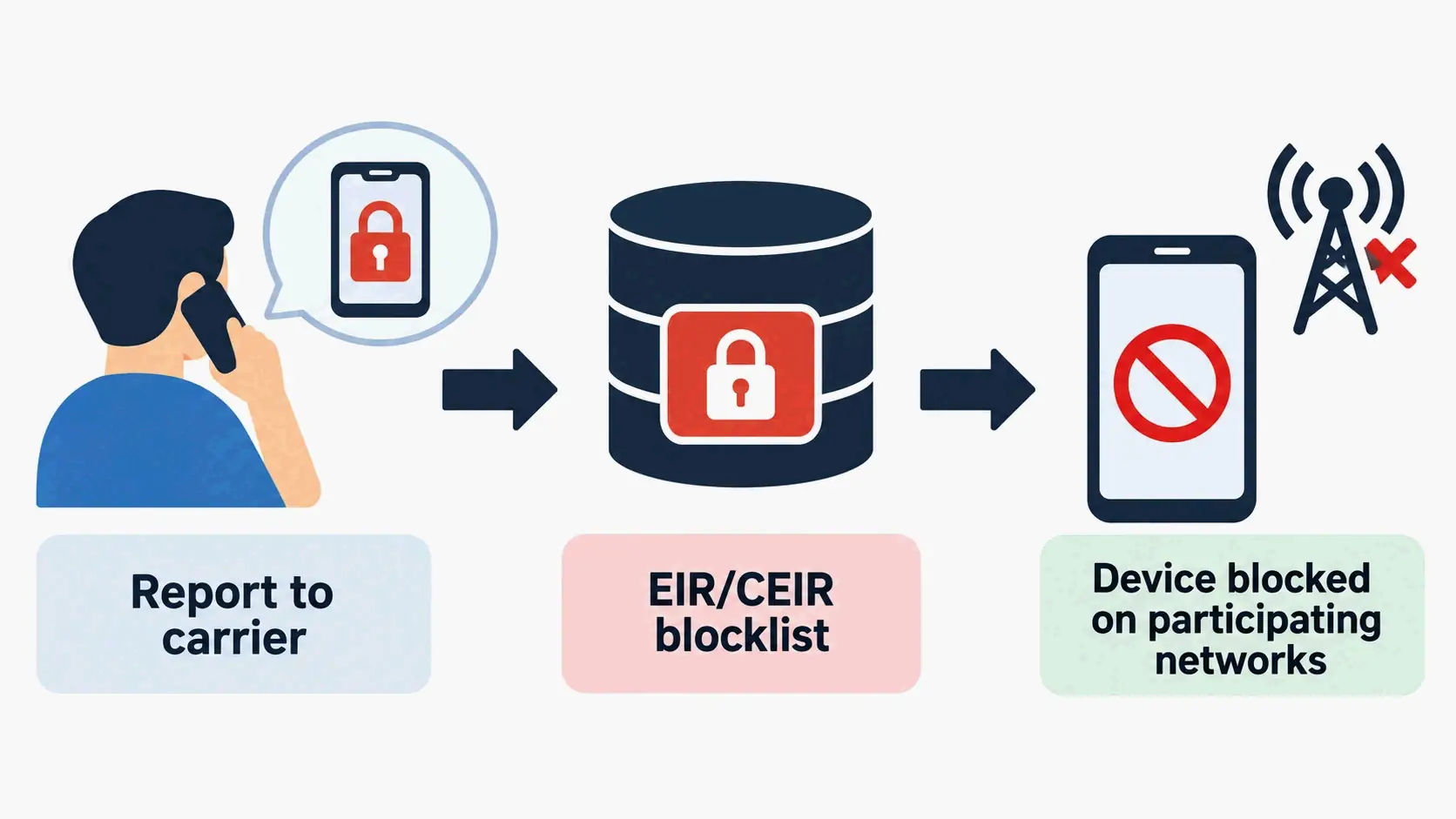
    Reporting a stolen IMEI to carrier then EIR/CEIR blocklisting

    What Happens the Moment a Carrier Blocklists an IMEI

    The cellular identity of the device stops working. Calls and mobile data are refused on participating networks, and the block follows the hardware rather than the SIM, so inserting a new SIM does not restore service.

    Two limits are worth stating plainly. First, Wi-Fi still works: a blocklisted phone can still run apps, browse, and make VoIP calls over a wireless network. Second, a blocklisted phone retains value as parts. Blocklisting also depends on the IMEI being difficult to change, and in practice a phone’s IMEI may be changeable with special tools (Wikipedia) — this is exactly why the IMEI is described as unauthenticated. In some jurisdictions, an IMEI can also be removed from a blocklist under local arrangements, typically by quoting a password chosen when the block was placed.

    There is a broader caveat about effectiveness: it remains unclear whether local barring produces a net positive effect, since it may simply push stolen phones into international smuggling channels (Wikipedia).

    EIR and CEIR: How Blacklists Travel Between Networks

    An EIR is a carrier-side database. A CEIR is the shared layer that lets one operator’s block reach other operators’ networks. Without that shared layer, blocklisting would only work on the network that recorded it, and a thief could move a stolen handset to a competitor.

    Cross-border coordination has been in place for a long time. Australia was the first nation to implement IMEI blocking across all GSM networks, in 2003. In the UK, a voluntary charter operated by the mobile networks ensures that any operator’s blocklisting of a handset is communicated to the CEIR and then to all other networks, making the handset unusable for calls within at most 48 hours (Wikipedia).

    Blocklists are also used for compatibility rather than theft. After Australia’s 3G network shutdown, all 4G and 5G devices not approved for use in Australia by the carriers are IMEI- and/or TAC-blocked, and users cannot request removal even if they can demonstrate the device is technically compatible (Wikipedia). That is a TAC-level block, which affects an entire model range rather than a single unit.

    How to Report a Lost or Stolen Phone Step by Step

    Move through these three steps in order, because each one produces a record the next one needs.

    1. Contact your carrier. Ask them to blocklist the IMEI on your account. Provide both IMEI 1 and IMEI 2 if the phone is dual-SIM.
    2. File a police report and get a case number. The case number is what insurance companies and carriers typically ask for, and it creates an official record of the theft.
    3. Notify your insurer. Your policy documents should already contain the IMEI; if they do not, supply it now.

    If you are in the United States and want to confirm a device’s reported status before or after any of this, the CTIA refers consumers to stolenphonechecker.org and to the GSMA device check, where you can check whether a smartphone has been reported lost or stolen to member carriers (Wikipedia).

    The U.S. Context: Blocklists, Not Whitelists

    The United States runs a blocklist model, not a whitelist model. Under a blocklist, a device is presumed usable unless someone has reported it; under a whitelist, a device must be registered in the country before it can access local networks at all. Chile, Turkey, Tunisia, Azerbaijan, Colombia, Nepal, and Egypt are among the countries using allowlists, with various exceptions for international roaming and registration grace periods, and India, Pakistan, Indonesia, Cambodia, Thailand, Iran, Nigeria, Ecuador, Ukraine, Lebanon, and Kenya have adopted some form of mandatory IMEI registration (Wikipedia).

    The U.S. mechanism has a specific starting date. GSM carriers AT&T and T-Mobile began blocking newly reported IMEIs in November 2012; thefts reported before that date were not added to the database (Wikipedia). That cutoff explains a common frustration: an older stolen handset may never appear in a lookup simply because the report predates the system.

    A frequent error in older articles is describing Sprint’s approach as the American norm. Before its merger with T-Mobile, Sprint used an allowlist under which users had to register their IMEI and SIM card before an LTE-capable device could be used, despite no U.S. law requiring it — and had to re-register whenever they changed devices. T-Mobile, by contrast, uses a blocklist, including for former Sprint customers and select Sprint-sold devices. Treating Sprint’s old allowlist as a current U.S. rule is wrong.

    For consumers, the available public entry points are the CTIA stolen phone checker and the GSMA device check. Both report only what has already been reported to participating carriers. As of 2026, the United States has no nationwide, consumer-facing IMEI registry that returns real-time device status or owner information — a clean result from a public checker means “not reported,” not “verified.”

    How to Check an IMEI Before Buying a Used Phone

    Before anything else, separate two things that are routinely conflated: an IMEI lookup and a blacklist check. An IMEI lookup decodes the number and returns information tied to the device type. A blacklist check queries reported or restricted status in relevant databases. A lookup that returns a model name says nothing about whether the phone was reported stolen.

    What an IMEI Lookup Actually Returns

    A lookup can surface the manufacturer, device model, device type, and blacklist-related information, alongside other technical details — but there is no universal database that guarantees identical results for every phone (imeichanger.net). Results depend on the country, the carrier, the device model, the database being queried, the service provider, the age of the device, and what information is actually available to that service.

    One limitation is worth stating precisely. The Luhn check digit confirms only that a number is structurally self-consistent. It cannot establish that the device exists, that it belongs to the person selling it, or that it has a clean history. Format validity and device cleanliness are different claims, and a fabricated number can be built to pass the checksum. A 15-digit number can look perfectly normal while being the wrong number for the phone being sold.

    The Pre-Purchase IMEI Checklist

    Work through this list before money changes hands. Each item catches something the others miss.

    1. Confirm the four-way match. The IMEI shown on the device via *#06#, the IMEI the seller quoted, the IMEI on the box, and the IMEI on the invoice or documentation must all agree. Any mismatch ends the conversation.
    2. Check reported status yourself. Run the number through the CTIA stolen phone checker or the GSMA device check rather than trusting a screenshot from the seller. Screenshots are trivially edited.
    3. Confirm activation locks are off. Verify that Find My (Apple) or the corresponding Google account lock has been removed, and that the device can be set up from scratch.
    4. Verify carrier and band compatibility. Confirm the model works on your carrier’s network, particularly for voice over LTE, before you buy.
    5. Ask for proof of ownership. An original receipt or a written transfer record matters more than any single lookup result.
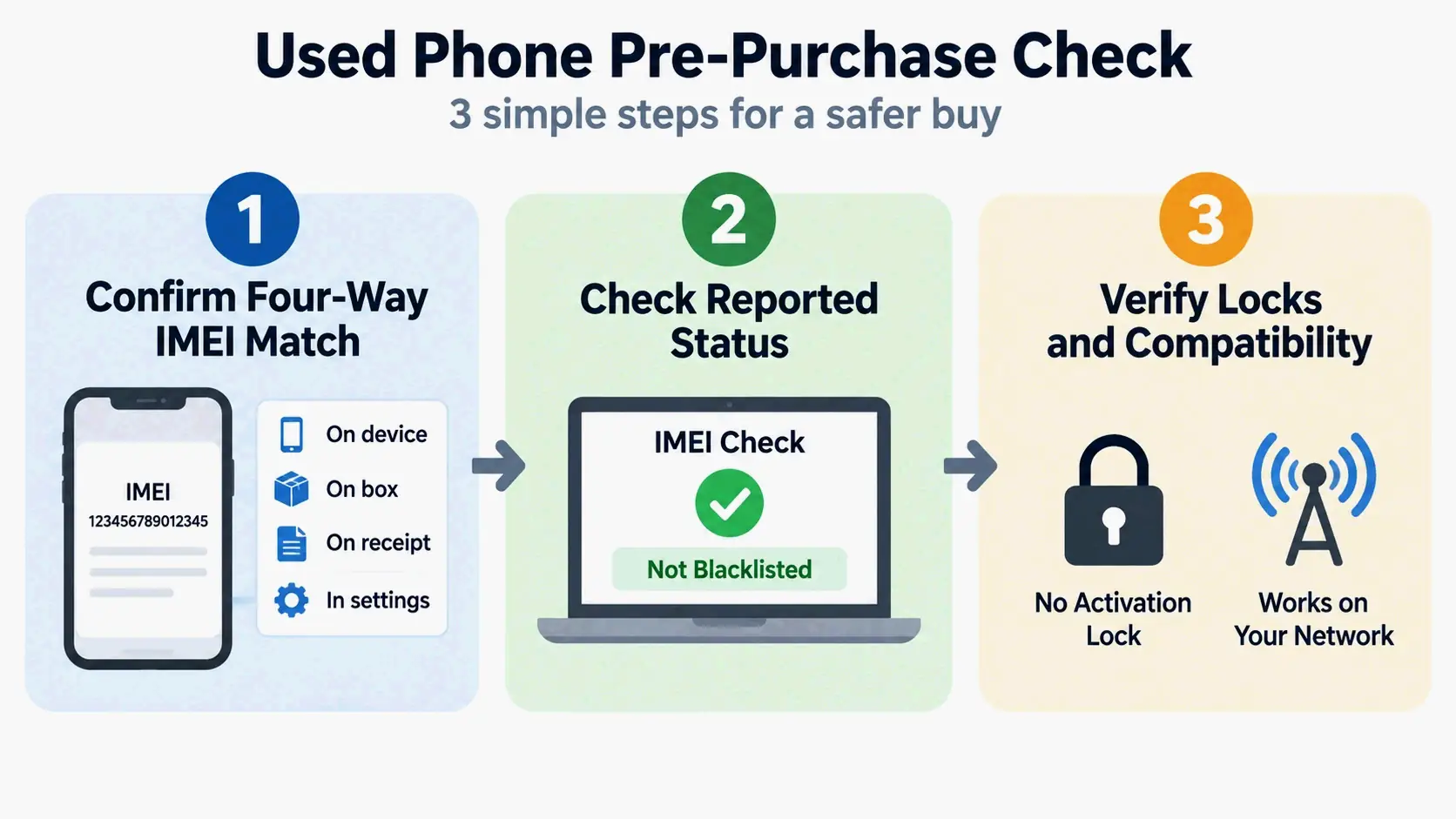
    Three-step pre-purchase IMEI check: match, status, locks

    Finally, be clear about what the IMEI check does not replace. A clean IMEI does not mean the phone is free of debt, free of an activation lock, or free of internal damage. It is one input among several, not a guarantee.

    IMEI vs. Serial Number, Phone Number, MEID/ESN, and EID

    Four identifiers get mixed up with the IMEI constantly. The differences are structural, not cosmetic.

    IMEI vs. Serial Number

    The IMEI is a network-side identity used to authorize a cellular device on a network. The serial number is a manufacturer’s asset tag used for warranty, service, inventory, and technical support (imeichanger.net). A smartphone commonly has both, plus a model number.

    Apple Watch illustrates the split cleanly. On GPS + Cellular models, Apple Support lists both a serial number and an IMEI; on models without cellular, only the serial number appears (Apple Support). Do not paste a serial number into a field that asks for an IMEI — the formats and the databases behind them differ.

    MEID and ESN: The CDMA Legacy in the U.S.

    Older CDMA phones used an ESN (Electronic Serial Number) and later a MEID (Mobile Equipment Identifier) rather than an IMEI (Phone Scoop). The MEID uses the same basic format as the IMEI but allows more flexibility in allocation sizes and usage, and it is hexadecimal rather than decimal — a MEID always begins with 0xA0 or a larger hexadecimal value, which is one quick way to tell the two apart (Wikipedia).

    In the U.S., these identifiers still appear in older documentation and in the records of devices from the CDMA era. As carriers migrated to LTE, IMEI became the dominant device identifier, and MEID and ESN gradually receded. Seeing a MEID today usually means you are dealing with an older device or an older record.

    eSIM and EID

    An EID identifies an eSIM chip. It is not an alternative to the IMEI and does not replace it — an eSIM-capable phone typically displays both, because the two numbers describe different hardware. The IMEI identifies the device; the EID identifies the embedded SIM.

    The simple way to keep four identifiers straight: IMEI and MEID identify the device, IMSI and EID relate to subscriber-side identity, and the serial number identifies the manufacturer’s asset.

    Two Things an IMEI Cannot Do

    Two persistent myths generate more confusion than any other IMEI topic. Both are worth correcting directly.

    Myth 1: Can an IMEI Track Your Phone in Real Time?

    No. An IMEI is a device identifier, not a positioning system. It contains no GPS capability and no location data, and an ordinary IMEI lookup will never return live coordinates. Any website promising that a 15-digit IMEI alone will show a phone’s exact current location should be treated as a red flag.

    What is true is narrower. A carrier can tell, on the network side, roughly which cell site a device is attached to, and law enforcement and intelligence services can use an IMEI as an input for tracking systems with accuracy of a few meters (Wikipedia). That is an internal network and investigative capability, not a consumer tool. To locate your own lost phone, use the official device-location service for your platform and contact your carrier.

    Changing an IMEI is not an “unlock trick,” and tools marketed as IMEI generators are not the same thing. A generator built for QA work produces random but format-valid numbers using a real 8-digit TAC, a 6-digit serial, and a computed check digit, and its own documentation states the generated numbers are intended strictly for testing and educational purposes and should not be used to alter or clone real device identifiers (TestMu AI). It exists so testers can simulate devices without touching real hardware — the same reason QA teams use random phone number generators for SMS-verification testing.

    On the law, the United States is different from the UK. Under the UK’s Mobile Telephones (Re-programming) Act 2002, changing the IMEI of a phone — or possessing equipment capable of changing it — is an offense under some circumstances (Wikipedia). In the United States, a bill introduced by Senator Chuck Schumer in 2012 would have made changing an IMEI unlawful, but it was not enacted. There is therefore no dedicated federal IMEI-rewriting statute, though rewriting typically accompanies fraud, and fraud and telecommunications laws can still apply. IMEI modification should never be treated as a way to defeat a blocklist.

    Conclusion

    An IMEI identifies the hardware in your hand — never the person holding it — and that single distinction drives everything from carrier activation to theft blocklisting.

    Take thirty seconds now to record yours. Dial *#06# and screenshot it, or copy the number off the box or invoice, then store it somewhere outside the device: a cloud note, a password manager, a paper record. If your phone is lost, stolen, or simply won’t power on, that 15-digit number is the only thing that proves which device is yours when you call your carrier, file a police report, or submit an insurance claim. Before buying a used phone, run its IMEI through the CTIA or GSMA official checker first.

    FAQ

    Can an IMEI number track my phone’s location or show where a lost phone is?

    No. An IMEI is not a positioning system and carries no GPS data. A free IMEI lookup returns model and TAC information, not a live location. Carriers can judge roughly which cell site a device is attached to, but that is an internal network capability that consumers cannot access. Use your platform’s official device-location service instead.

    Can I find my IMEI if my phone is lost, stolen, or won’t turn on?

    Yes, but only from sources outside the device: the original packaging, the purchase invoice, carrier account records, and insurance documents. iPhone users can find it in the device list on their iCloud account, and Android users can check their Google account’s device page. Recording your IMEI in advance shortens the reporting process considerably, so save a screenshot somewhere other than the phone.

    Why does my phone show two IMEI numbers?

    Because it is a dual-SIM device, and each SIM slot has its own independent hardware identity. IMEI 1 and IMEI 2 correspond to the two cellular connections, and dialing *#06# displays both at once. Some models that support eSIM show two physical-slot IMEIs plus an additional IMEI associated with the eSIM profile.

    Does changing my SIM card or phone number change my IMEI?

    No. The IMEI is bound to the hardware, while the SIM card and phone number are bound to the subscription. Swapping SIM cards, changing your number, switching carriers, and performing a factory reset all leave the IMEI untouched. Only replacing the device itself gets you a new IMEI.

    There is no dedicated federal ban — the 2012 bill that would have prohibited it was not enacted. However, rewriting an IMEI usually accompanies fraudulent intent, which can trigger telecommunications fraud and related laws. By comparison, the UK’s Mobile Telephones (Re-programming) Act 2002 explicitly makes changing an IMEI a criminal offense in certain circumstances.

    Which devices don’t have an IMEI at all?

    Wi-Fi-only tablets, laptops, and other non-cellular devices have no IMEI. Apple Watch provides an IMEI only on GPS + Cellular models; the non-cellular version has just a serial number. Devices that rely on eSIM typically carry both an IMEI and an EID, since the two numbers identify different hardware components.
  • Random Phone Number Generator: Testing, SMS Verification & DevOps Integration

    Random Phone Number Generator: Testing, SMS Verification & DevOps Integration

    A random phone number generator creates valid-looking synthetic numbers for database seeding and UI testing — but these numbers cannot receive SMS messages. For actual verification (OTP codes, account signups), you need real-time non-VoIP temporary numbers connected to cellular infrastructure. This guide covers both use cases and explains why modern platforms block synthetic numbers.

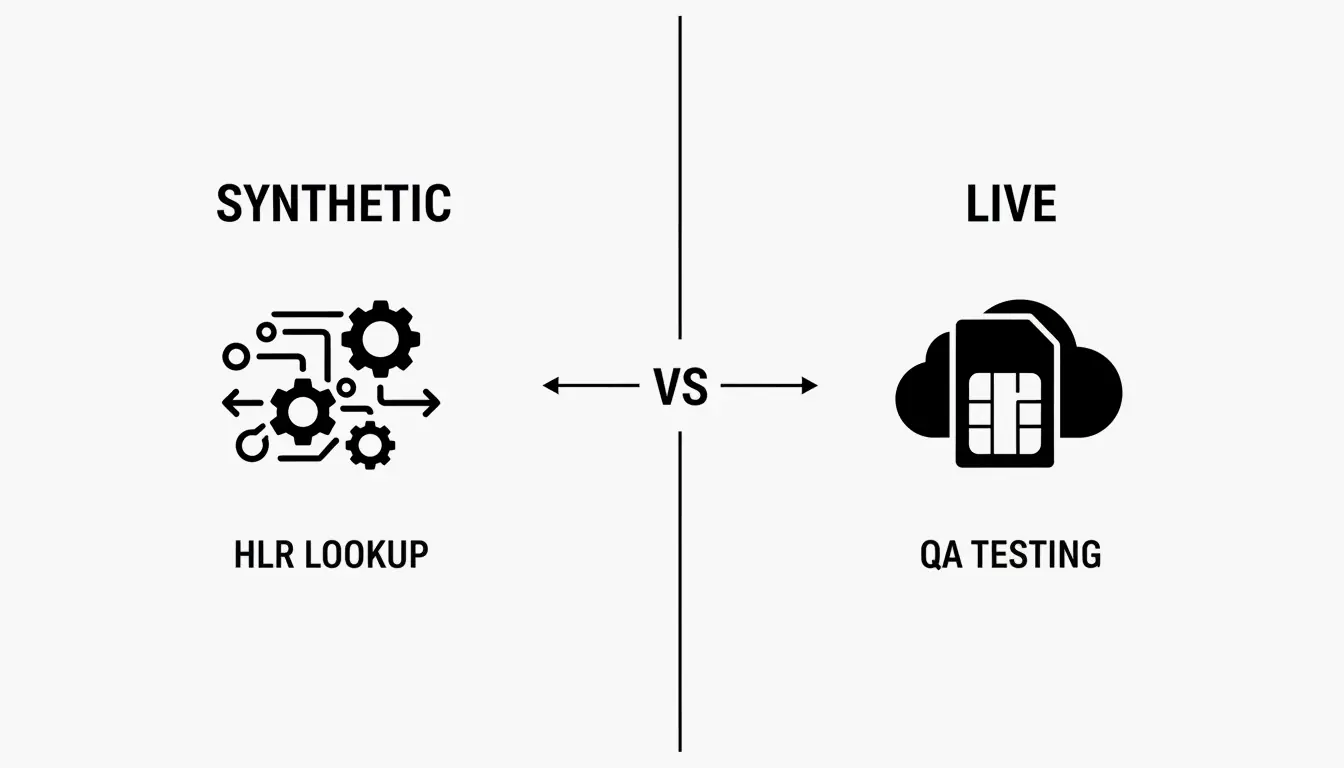
    Synthetic Numbers vs. Live Numbers: Two Different Tools

    Property Synthetic (Generated) Live (Rented Non-VoIP)
    Connected to network No Yes — cellular infrastructure
    Can receive SMS/OTP No Yes
    Cost Free Paid service
    Best for DB seeding, UI testing, stress tests SMS verification, account signups
    Format compliance Follows NANP/E.164 rules Real carrier-assigned number

    As Quackr puts it: a generated number is a “prop”; a verification number is “infrastructure.”

    A simple 2-node comparison between Synthetic Data and Live Infrastructure.

    Generating Valid Test Data: E.164 and CSPRNG

    The E.164 Standard

    For global compatibility, always use E.164 format: a + sign followed by country code, area code, and subscriber number — no spaces or dashes.

    Format Example Use Case
    E.164 +14155550100 Machine-readable, API/database standard
    National (415) 555-0100 Local display in apps
    International +1 415-555-0100 Human-readable with country code

    CSPRNG for Unbiased Test Data

    Use a Cryptographically Secure Pseudo-Random Number Generator (CSPRNG) to prevent predictable patterns in test datasets. Tools like Generate-Random.org use CSPRNG to ensure digits are not biased, which keeps automated tests statistically valid.

    GadegetKit reports that one fintech QA team cut end-to-end script setup time by 65% by using bulk synthetic datasets in staging environments.

    Code Examples for Your CI/CD Pipeline

    Python — Generate NANP-compliant area codes:

    import secrets
    
    area_code = str(secrets.randbelow(8) + 2)  # 2-9
    exchange = str(secrets.randbelow(800) + 200)  # 200-999
    subscriber = f"{secrets.randbelow(10000):04d}"
    phone = f"+1{area_code}{exchange}{subscriber}"
    

    JavaScript — Browser-side generation with crypto.getRandomValues():

    const buf = new Uint32Array(1);
    crypto.getRandomValues(buf);
    const areaCode = 200 + (buf[0] % 800);  // 200-999
    

    Reserved Ranges for Safe Testing

    In the US and Canada, 555-0100 to 555-0199 is specifically reserved for fictional use. Always use these ranges for documentation and testing to avoid accidentally contacting real people.

    Why Platforms Block Verification: HLR and VoIP Filters

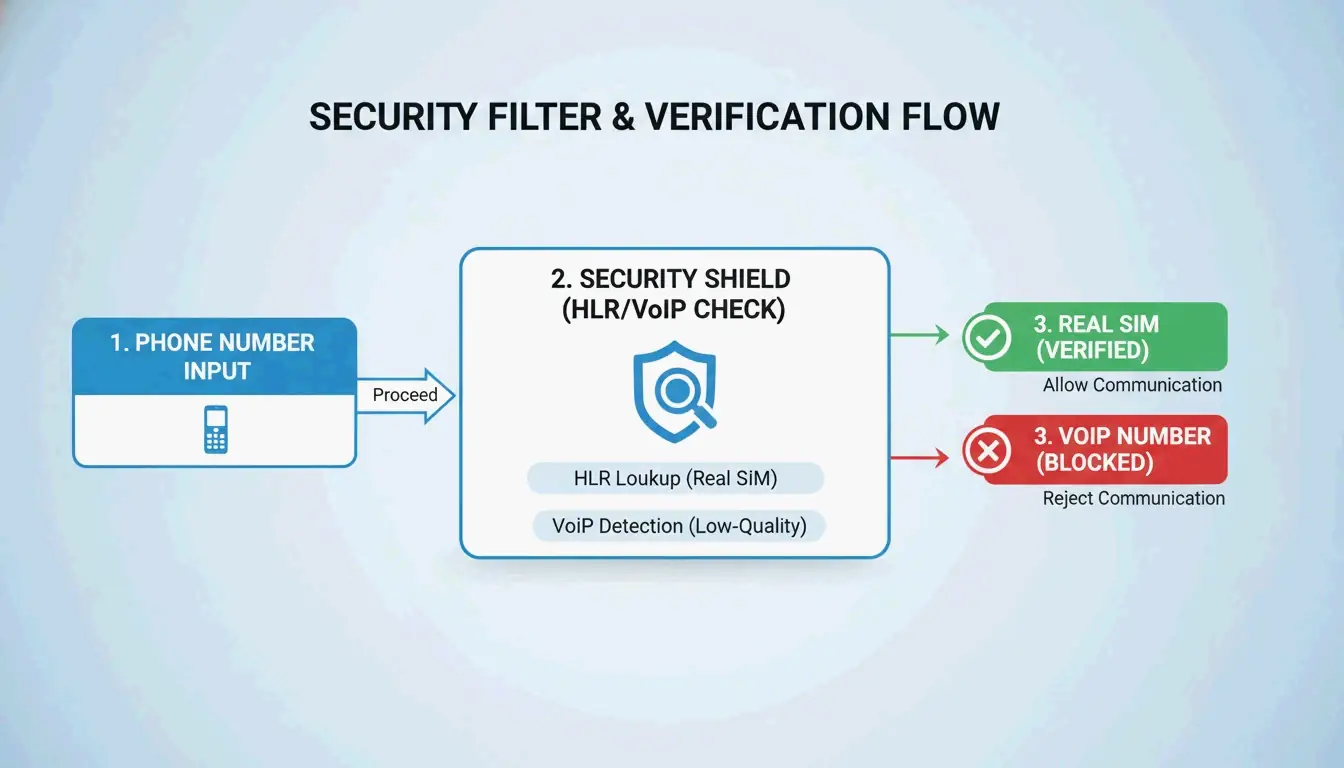
    If you have ever tried a free virtual number for WhatsApp or Instagram and received an “invalid number” error, you hit a VoIP filter. Modern platforms distinguish between:

    • VoIP numbers — routed over the internet, easily obtained in bulk, frequently used for spam
    • Non-VoIP numbers — tied to physical SIM cards and cell towers, with legitimate carrier signatures

    In 2026, major services use HLR (Home Location Register) lookups to verify a number is assigned to a real subscriber before sending an SMS. A 2023 study by the IMDEA Software Institute analyzed 70 million SMS messages and found that public Disposable Phone Number (DPN) platforms are a major fraud vector. As a result, social media and banking apps now require non-VoIP cellular numbers for verification.

    A 3-step verification check: Number Input -> HLR/VoIP Check -> Access Granted/Denied.

    Database Seeding at Scale

    For bulk data, tools like CodeItBro generate region-specific numbers (Ontario +1-416, California +1-213) and export them as CSV or JSON for SQL/NoSQL databases — simulating diverse user bases without touching real data.

    DevOps Integration: Automated QA Workflows

    The TRNG technology market is growing at 10.98% CAGR, projected to reach $9.19 billion by 2032 according to GadegetKit. This reflects the demand for high-entropy data in QA environments.

    Best Practices for 2026

    1. Label synthetic data clearly in staging environments so production systems never accidentally contact generated numbers
    2. Use bulk JSON generation (up to 1,000 numbers) for automated regression tests
    3. Validate format compliance — ensure all generated numbers pass E.164 regex checks
    4. Separate test pipelines — synthetic data for internal QA, rented non-VoIP numbers for live verification testing

    Conclusion

    Synthetic phone number generators are essential for database seeding and UI testing — use E.164 format and CSPRNG for valid, unbiased data. But they cannot receive SMS. For actual verification, you need non-VoIP cellular numbers that pass HLR checks. The best 2026 approach: synthetic generators for internal QA speed, rented non-VoIP numbers for live verification testing.

    FAQ

    Can a randomly generated phone number receive a verification code?

    No. Synthetic numbers are formatted strings of digits — they have no SIM card, no network route, and no carrier assignment. To receive an SMS or OTP, you need a live temporary number or non-VoIP service actively routed by a cellular carrier.

    What is the difference between E.164, National, and International formats?

    • E.164: Global machine-readable standard — +14155550101 (no spaces)
    • National: Local display format — (415) 555-0101 in the US
    • International: Human-readable with country code — +1 415-555-0101

    Always use E.164 for databases and APIs.

    Why do apps like WhatsApp or Instagram block temporary phone numbers?

    These platforms use HLR lookups and DPN (Disposable Phone Number) databases to identify VoIP signatures and bulk-registered number ranges. In 2026, they prioritize non-VoIP numbers tied to physical cellular infrastructure to prevent bot-driven spam and fraud.

    Is it legal to use fake phone numbers for online signups?

    Synthetic numbers are legal for software testing, design mockups, and privacy protection. However, using them to violate a platform’s Terms of Service, commit fraud, or harass others is illegal. For testing and documentation, always use reserved ranges (like 555-01XX) to avoid contacting real people.

  • SME Inventory Management: Build a Low-Cost Fixed Asset Barcode System in 2026

    SME Inventory Management: Build a Low-Cost Fixed Asset Barcode System in 2026

    Building a low-cost fixed asset barcode system for your SME in 2026 means cataloging assets in a cloud platform, generating unique QR codes for each item, printing durable labels, and scanning with smartphones or AI-powered devices. The payoff: inventory accuracy jumps from 63% to 99%, according to Team Unicommerce.

    Here is a practical five-step blueprint to get there without an enterprise budget.

    5 Steps to Build a Low-Cost Fixed Asset Barcode System

    Step 1: Define Your SKU Architecture

    Every fixed asset — a laptop, a drill press, a company vehicle — needs its own unique identifier so you can track its full history (purchase date, maintenance log, depreciation). Standard inventory items, by contrast, can share a common SKU for bulk tracking.

    As QuickBooks explains, a logical SKU system (like TS-WHITE-S for a small white T-shirt) is the foundation for every automation layer you add later.

    Asset Type Labeling Strategy Example SKU
    Fixed asset (unique) One QR code per unit LAPTOP-2026-0042
    Inventory (bulk) One barcode per product variant TS-WHITE-S

    Step 2: Pick Low-Cost Cloud Software

    You do not need enterprise ERP. These cloud platforms cover SME needs:

    Platform Best For Free Tier
    Zoho Inventory Beginners, multi-channel selling Up to 50 orders/month
    inFlow Inventory Custom label printing + mobile scanning Limited free plan
    Sortly Visual tracking with photo attachments Free for small teams

    Step 3: Internal vs. GS1 Barcodes

    For internal asset tracking, generate barcodes for free using Code 128 or QR codes from your software. You only need GS1-registered barcodes (about $30 each in small batches) if you sell through major retailers like Amazon or Walmart, notes inFlow Inventory.

    Recommendation for most SMEs: Standard QR codes generated by your inventory software are the most flexible and cost-effective choice.

    Step 4: Choose Your Hardware

    Option Cost Best For
    Smartphone + AI scanning app $0 extra Low-to-medium volume, mobile teams
    USB barcode scanner $50–$150 Desktop checkout or receiving dock
    Bluetooth wearable scanner $150–$300 Warehouse workers needing hands-free operation

    Step 5: Build a Scanning Workflow

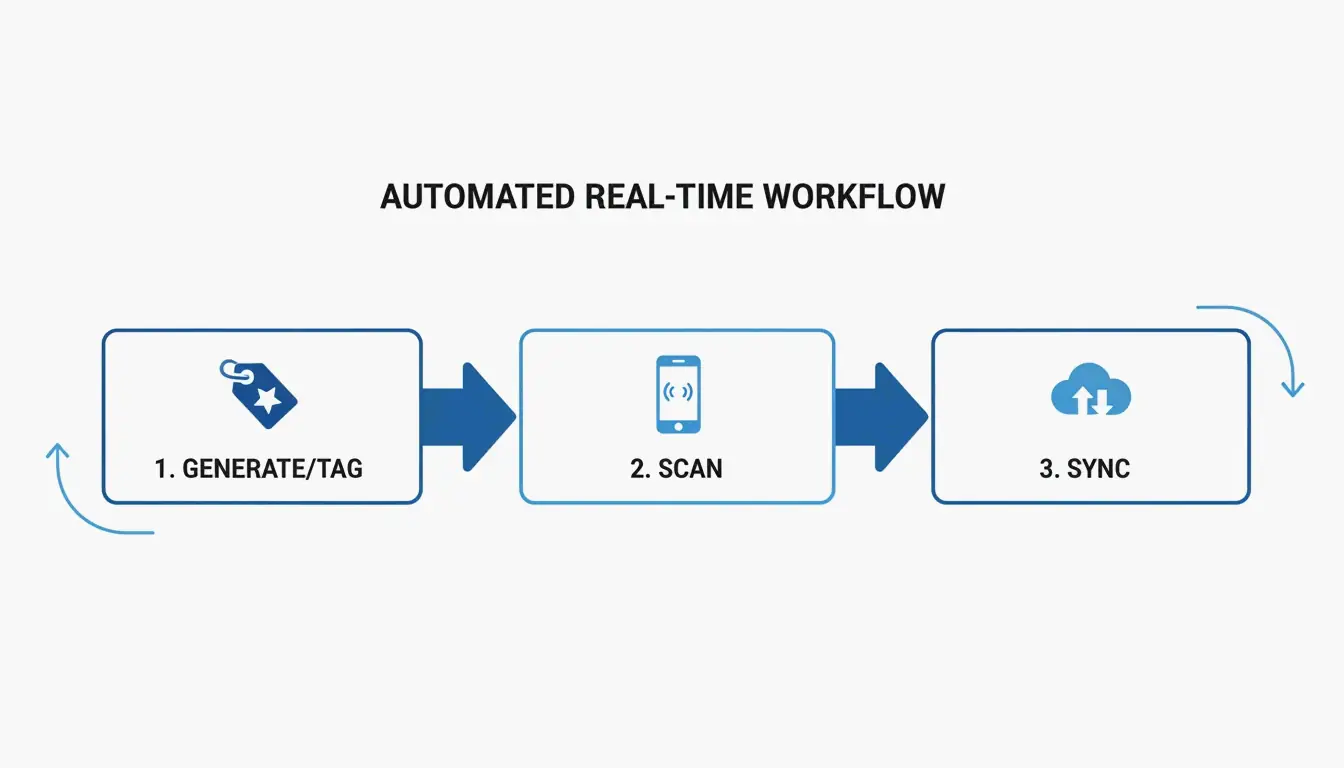
    Make scanning part of daily operations — every receive, move, and dispose event gets logged instantly. This creates real-time visibility across all locations. A basic professional setup (scanner + label printer + software subscription) typically costs $200–$800, according to inFlow Inventory.

    A simple 3-step workflow: Tag Asset -> Scan with Phone -> Real-time Update.

    1D vs 2D Barcodes: Which One for Fixed Assets?

    The choice comes down to data capacity:

    • 1D barcodes (classic black stripes) work for basic SKU identification — 20–80 characters.
    • 2D QR codes store up to 4,000 characters and can embed maintenance links, batch data, and serial numbers.

    QuickBooks recommends 2D codes for fixed assets because they support richer data that stays useful throughout the asset’s full lifecycle.

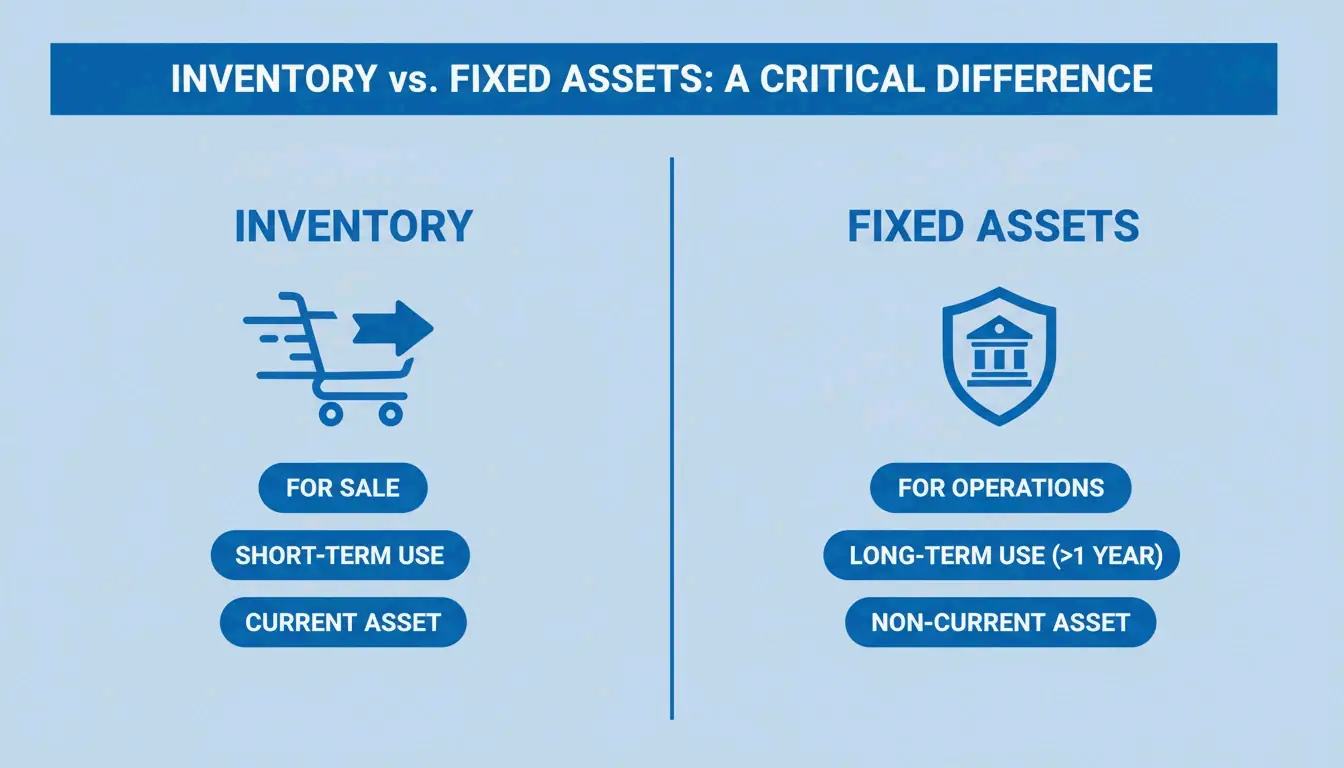
    Fixed Assets vs. Inventory: Different Labeling Strategies

    A common SME mistake is treating fixed assets and inventory the same way. They are fundamentally different:

    Property Inventory Fixed Assets
    Lifecycle Fast — items are sold Long — items stay with the company
    Financial impact Revenue Depreciation over time
    Label durability Standard labels Industrial-grade, weather-resistant

    A clean side-by-side comparison of 'Inventory' (Fast/Sold) vs 'Fixed Assets' (Stay/Depreciate).

    GSM Barcoding stresses that quality labels keep barcodes readable for years, even in harsh environments. Proper asset tracking can cut operational costs by 20% by preventing loss and improving utilization, per TAG Samurai.

    Automatic Depreciation Updates

    Modern systems link physical scans to your financial software through ERP/POS integration. A single scan updates accounting platforms like QuickBooks or Xero, giving finance teams real-time asset values and automated depreciation schedules — no manual data entry.

    2026 Hardware: Smart Scanners and Wearables

    Hardware has moved beyond corded scanners:

    • AI-powered smartphones: 2026 mobile apps use computer vision to scan multiple codes simultaneously, even in dark warehouses.
    • Wearable scanners: Ring or glove-mounted devices let workers move items while logging data — hands-free.
    • RFID: More expensive than barcodes but gaining traction for high-value assets. No line-of-sight needed — audit an entire room in seconds.

    Cost-Benefit: Low-Cost Software vs. Enterprise ERP

    For most SMEs, a dedicated inventory app ($20–$50/month) outperforms a complex enterprise ERP. While free open-source options like myWMS or Openboxes exist, they require significant technical skill to maintain.

    The Retail Exec warns that the “hidden cost” of free software often appears as security vulnerabilities or lack of support during critical audits.

    Look for these essential features:
    – Low stock alerts
    – Cloud syncing across devices
    – Multi-user permissions
    – Bulk import from spreadsheets

    Conclusion

    A barcode-based fixed asset system is no longer optional for SMEs that want accuracy and efficiency. The five-step approach — define SKUs, pick cloud software, choose internal QR codes, select affordable hardware, and build a daily scanning workflow — can lift accuracy from 63% to 99% for under $800.

    Next step: Audit your current assets, pick a scalable platform (Zoho, inFlow, or Sortly), and run a small QR code pilot on one asset category. Scale from there.

    FAQ

    What is the cost difference between internal barcodes and GS1-registered barcodes in 2026?

    Internal barcodes (Code 128 or QR codes) are free to generate using your inventory software. GS1 barcodes require an annual membership plus roughly $30 per barcode for small batches. You only need GS1 codes if you sell through major global retailers like Walmart or Amazon.

    Can I use a smartphone as a professional barcode scanner for fixed asset audits?

    Yes. 2026 smartphone cameras paired with AI scanning apps handle low-to-medium volume audits efficiently, with zero additional hardware cost. For high-volume scanning or rugged environments (construction sites, warehouses), a dedicated handheld or wearable scanner is recommended for durability, speed, and battery life.

    How do I transition from spreadsheets to an automated barcode system without downtime?

    Start with a pilot program on one asset category. Use your new software’s bulk-upload feature to import existing spreadsheet data before printing labels. Conduct physical tagging during off-peak hours to avoid disrupting daily operations. Once the pilot runs smoothly, expand category by category.

  • How Truly Random Numbers Are Generated: TRNG, PRNG, and CSPRNG Explained

    How Truly Random Numbers Are Generated: TRNG, PRNG, and CSPRNG Explained

    True random number generation works by harvesting physical entropy — thermal noise, atmospheric static, quantum decay — and converting those chaotic analog signals into digital bits. Unlike algorithm-based generators, hardware-driven systems measure non-deterministic environmental variables to produce sequences that are mathematically unpredictable and pattern-free.

    Here is how the technology works, where it fails, and how to pick the right approach for your use case.

    How a TRNG Works: From Physical Chaos to Digital Bits

    A True Random Number Generator (TRNG) — also called a Hardware Random Number Generator (HRNG) — does not follow a formula. It bridges the unpredictable physical world and the rigid logic of digital systems by capturing an external entropy source and converting its analog signal into a binary stream.

    As John von Neumann warned in 1951: “Anyone who considers arithmetical methods of producing random digits is, of course, in a state of sin.”

    Three Common Entropy Sources

    Source What It Measures Device Example
    Thermal noise Voltage fluctuations from electron movement in circuits Smartphone Secure Enclaves (Apple A-series, Google Tensor)
    Atmospheric noise Radio static from natural events like lightning Dedicated RNG servers
    Quantum phenomena Radioactive decay, vacuum fluctuations ANU Quantum RNG, enterprise servers

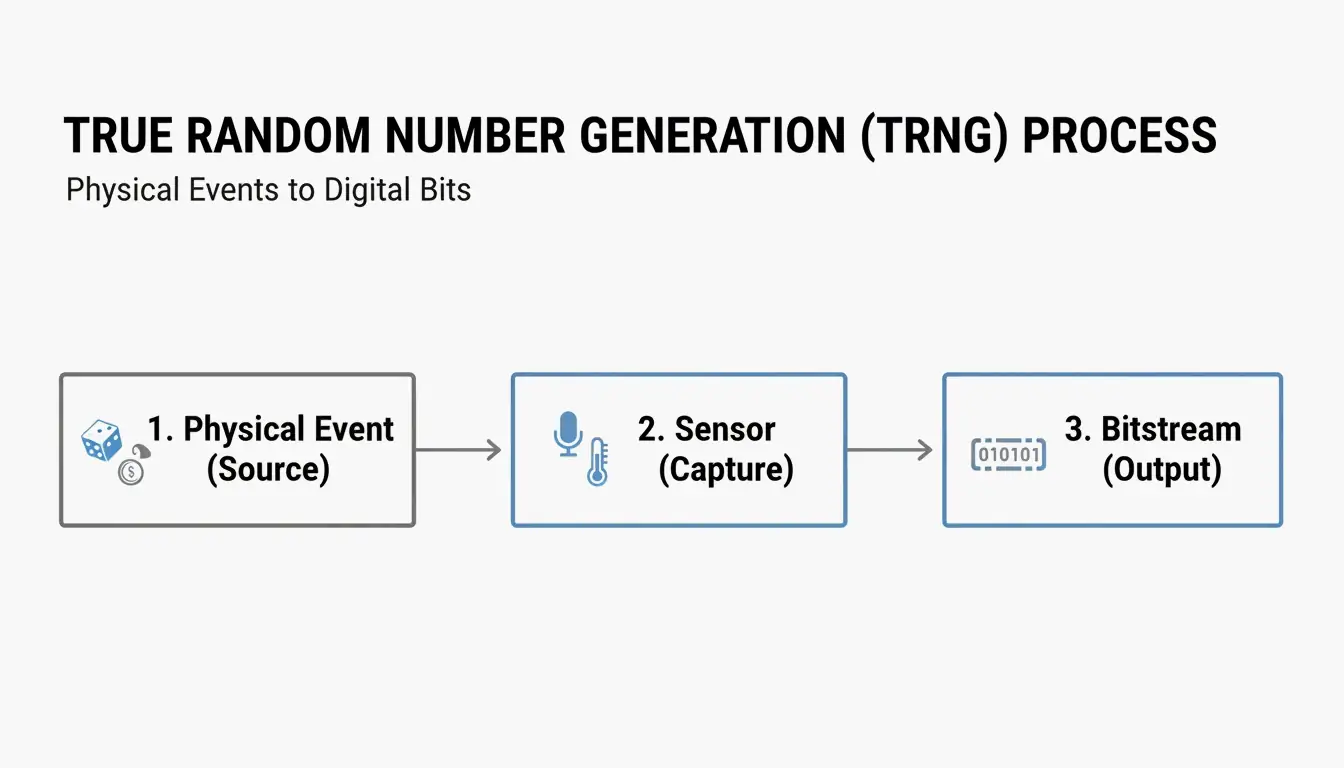
    A simple 3-step pipeline: Physical Source -> Sensor/Digitizer -> Binary Output.

    The pipeline is simple: Physical Source → Sensor/Digitizer → Binary Output. Raw entropy goes in one end; clean random bits come out the other.

    TRNG vs PRNG: The Deterministic Divide

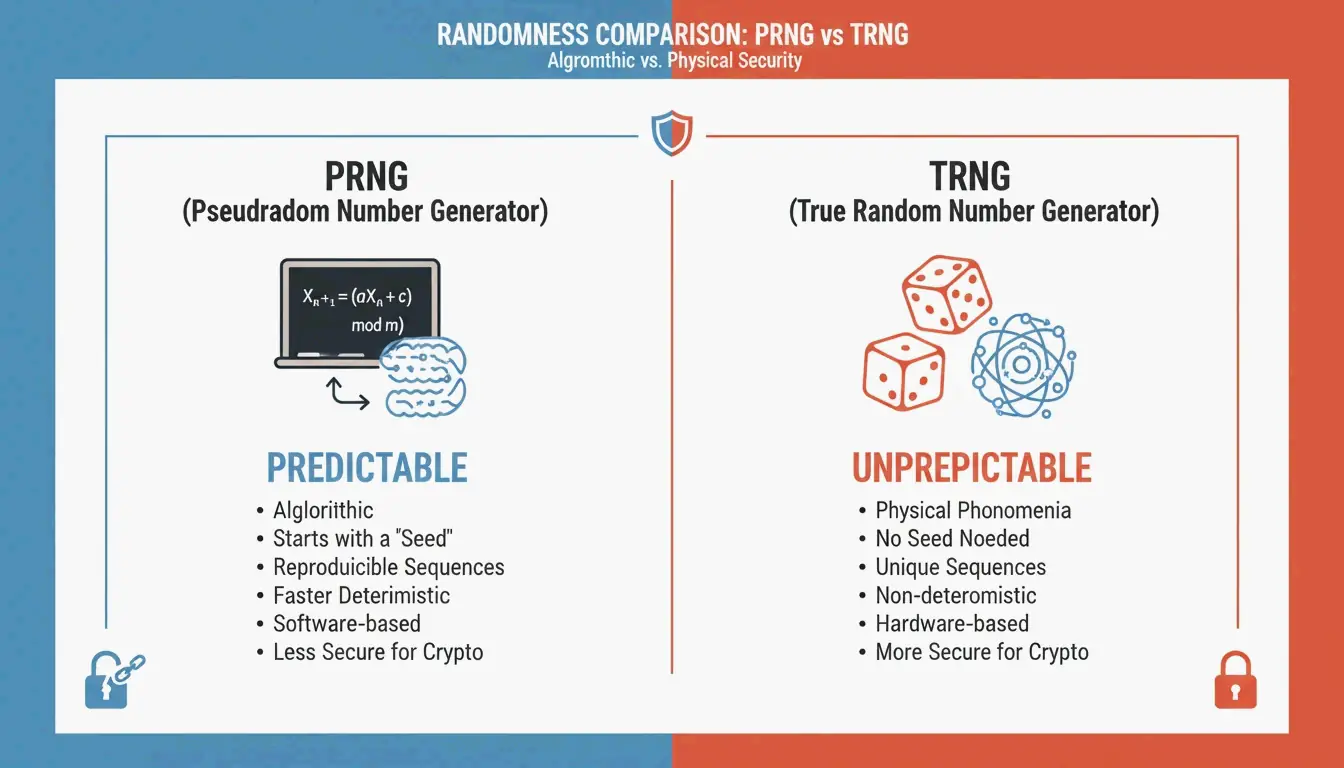
    The core split in random number generation is between physical entropy and algorithmic logic.

    Property TRNG (Hardware) PRNG (Algorithmic) CSPRNG (Hybrid)
    Source Physical entropy Mathematical formula Hardware seed + algorithm
    Predictable? No Yes — if seed is known Extremely difficult
    Speed Slower (blocking) Very fast Fast
    Reproducible? No Yes (same seed = same output) No
    Use case Encryption keys, security tokens Simulations, games Production security systems

    When PRNGs Fail: The Hot Lotto Fraud

    A PRNG uses a seed value as a starting point for a mathematical formula. The output looks random but is entirely deterministic. If someone knows the seed and the formula, they can predict every number.

    This is not theoretical. In the Hot Lotto Fraud Scandal, an insider installed malware that forced the PRNG to use a predictable seed during maintenance — rigging a $16.5 million jackpot.

    A clean comparison between PRNG (Deterministic/Fast) and TRNG (Non-deterministic/Secure).

    When PRNGs Are the Right Choice

    PRNGs are actually better for tasks where speed and reproducibility matter. In Monte Carlo simulations, scientists need to run the same sequence repeatedly to verify results. Because you can reuse the same seed, the simulation stays consistent — something a blocking TRNG cannot do.

    The Hybrid Solution: CSPRNG

    Most modern systems use a Cryptographically Secure Pseudorandom Number Generator (CSPRNG) — a hybrid that pulls a small amount of true hardware entropy to seed a fast algorithm. This gives the unpredictability of a TRNG with the speed of a PRNG.

    The industry standard is NIST SP 800-90A, which defines how these generators must be built for government and industrial use.

    Developer Guide: Which Library to Use

    Language Insecure (PRNG) Secure (CSPRNG)
    Python random (Mersenne Twister) secrets (reads from /dev/urandom)
    JavaScript Math.random() crypto.getRandomValues()
    Go math/rand crypto/rand
    Java java.util.Random java.security.SecureRandom

    The rule: use secrets / crypto / SecureRandom for anything security-related. Use random / Math.random() only for games and simulations.

    TRNGs in 2026 Consumer Hardware

    By 2026, hardware entropy has moved from enterprise servers into everyday devices. Modern smartphone chips include dedicated TRNGs inside their Secure Enclaves, harvesting thermal noise directly from the processor to generate encryption keys for FaceID, digital wallets, and secure messaging.

    For enterprise security, the frontier is Quantum Random Number Generation. Systems like those at the Australian National University generate numbers from quantum vacuum fluctuations — a level of randomness that even future quantum computers likely cannot crack.

    Whitening: From Raw Noise to Clean Data

    Raw entropy is rarely uniform. A thermal sensor might produce slightly more 1s than 0s due to a temperature drift. To fix this bias, the data goes through whitening — typically an XOR operation or cryptographic hash — to smooth out patterns and ensure an even distribution.

    This post-processing step is required by NIST SP 800-90B for any entropy source used in a certified system.

    A Brief History of Harvesting Chaos

    • 1927: L.H.C. Tippett published a table of 41,600 digits drawn manually from census records.
    • 1955: RAND Corporation published A Million Random Digits using an electronic pulse machine.
    • 2013: The Dual_EC_DRBG scandal revealed that the NSA had placed a backdoor in a NIST-certified generator, allowing them to crack SSL connections. This incident pushed the industry toward multi-source entropy mixing — no single point of failure.

    Conclusion

    Truly random numbers are the foundation of digital trust. They require physical hardware to bridge predictable code and chaotic reality. Whether it is thermal noise in your phone or quantum fluctuations in a server room, the shift from pseudo-randomness to hardware-verified entropy is essential for security in 2026.

    For developers: use secrets (Python) or crypto.getRandomValues() (JavaScript), never random or Math.random() for security. For organizations: hardware TRNGs are no longer optional — they are a baseline requirement for encryption.

    FAQ

    Is my computer’s internal clock a source of true randomness?

    No. The clock is predictable and is often used as a PRNG seed precisely because it changes. But if an attacker knows roughly when a number was generated, they can narrow the possibilities. True randomness requires timing non-deterministic events — keystroke intervals, thermal noise — followed by statistical whitening.

    Can a human generate a truly random sequence?

    Humans are poor at randomness. We avoid clusters (like “1, 1, 1”) even though they occur naturally in random sets, and we switch between options too frequently. Statistical tests detect these patterns easily, which is why human input is acceptable for seeding but insufficient for security-critical tasks.

    What statistical tests verify true randomness?

    The NIST Statistical Test Suite (STS) is the gold standard. Other frameworks include Dieharder tests and the AIS 31 standard. These tests hunt for repeating patterns, long runs of identical bits, and other anomalies that indicate bias or predictability.

  • How to Pick a Raffle Winner Fairly: The Ultimate Guide to Random Legal Draws

    How to Pick a Raffle Winner Fairly: The Ultimate Guide to Random Legal Draws

    Running a fair raffle involves two equally important sides: the technical (using a genuinely random selection method) and the legal (meeting IRS reporting requirements, state registration rules, and nonprofit eligibility criteria). Miss either one and your raffle could be challenged — or worse, deemed illegal.

    This guide covers both. You’ll learn how to set up a provably fair digital draw using CSPRNG, navigate 2026 tax thresholds, and follow state-specific rules from California to Ohio.

    The Technical Gold Standard: CSPRNG for Unbiased Selection

    “Fairness” in a digital draw means the outcome is impossible to predict or rig. Many simple apps use Math.random() — a pseudo-random generator that follows a predictable pattern over time. Fine for casual games, but not secure enough for a legal raffle.

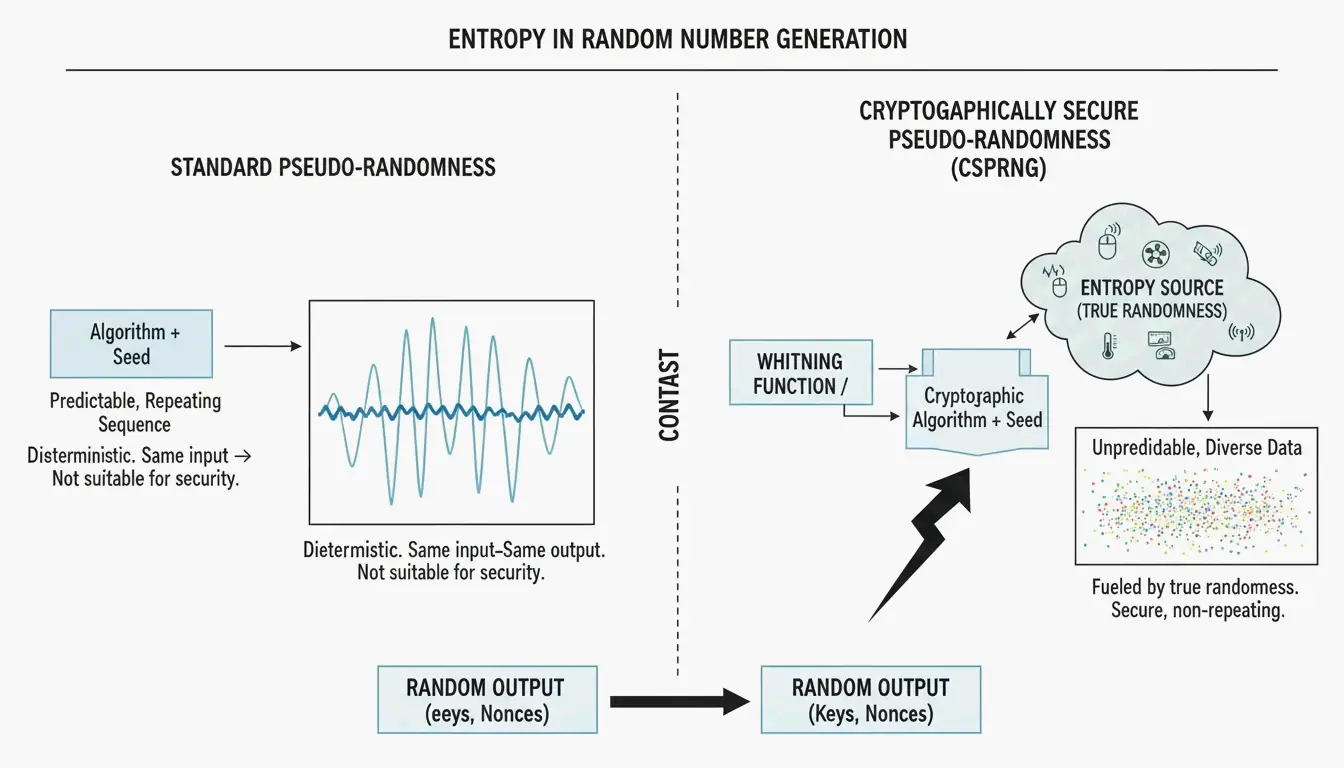
    The industry standard is CSPRNG (Cryptographically Secure Pseudo-Random Number Generator). Unlike basic generators, a CSPRNG taps into high-entropy sources — hardware timings, mouse movements, keyboard delays — to produce truly unpredictable results.

    As Wheel of Names explains, using crypto.getRandomValues() ensures that past results have no influence on future ones. Every draw is an independent event.

    Setting Up a Verifiable Draw

    1. Clean your data — Remove duplicate entries and empty lines. Every participant needs exactly the same chance.
    2. Use a verified tool — Choose a platform that provides a public record. RandomPicker notes that a screenshot isn’t enough to defend your results — you need a permanent, timestamped URL.
    3. Run a randomness audit — For major events, simulate 10,000 draws to prove winners are distributed evenly.

    CSPRNG与普通随机生成器的熵源对比

    When Physical Draws Are Legally Required

    Some laws still mandate old-school methods. Zeffy notes that in Ohio, you can sell tickets online, but the winner must be drawn from a physical receptacle (drum, box). Until modernization laws pass, fully digital drawings remain illegal in certain jurisdictions.

    2026 Legal Compliance: Tax Thresholds and Reporting

    The IRS treats raffle prizes as gambling winnings, which triggers specific reporting and withholding obligations.

    Threshold Requirement
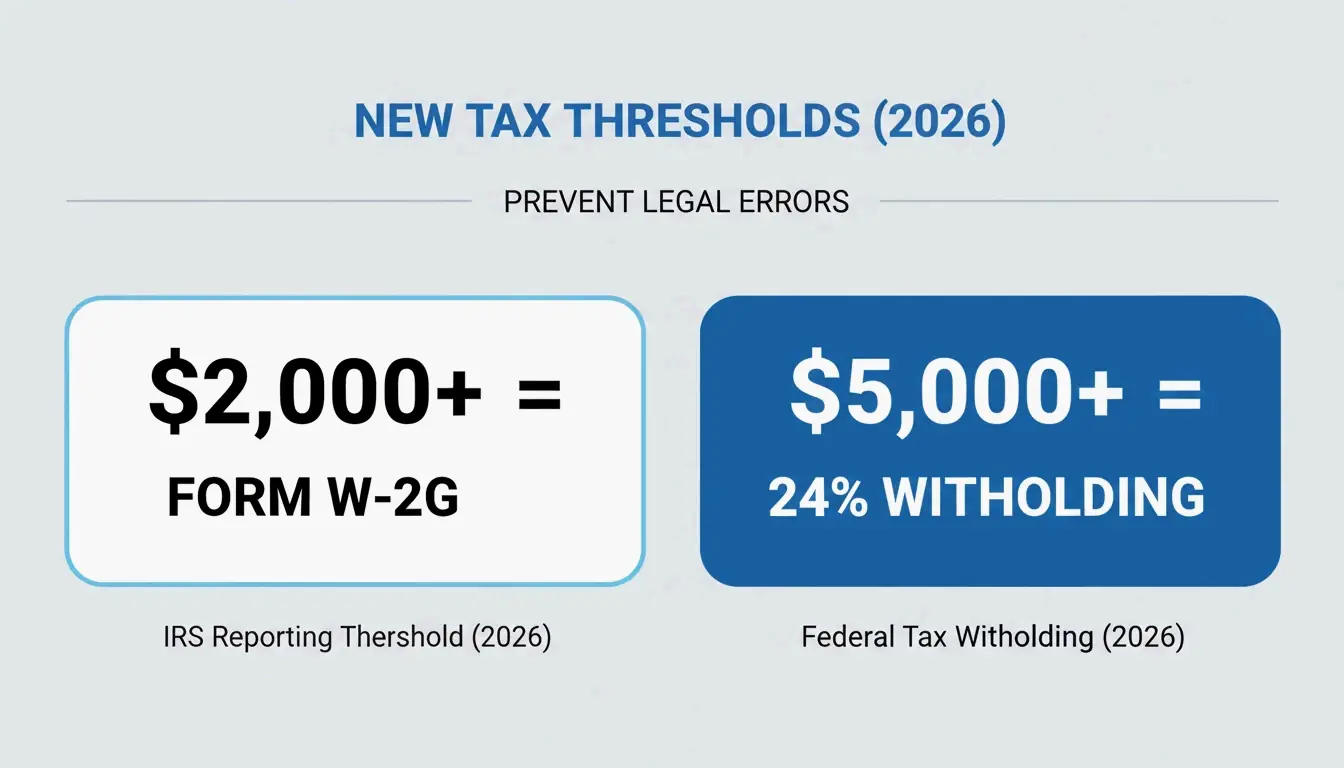
    Prize ≥ $2,000 (and ≥ 300× ticket price) File IRS Form W-2G to report the winnings
    Prize > $5,000 (minus ticket cost) Withhold 24% federal income tax before awarding the prize
    Non-cash prizes (cars, etc.) Winner may need to pay the 24% in cash to the organization before taking ownership

    The $2,000 reporting threshold (up from $600) reflects 2026 inflation adjustments reported by LegalClarity. The 24% withholding rate applies per Zeffy.

    2026年税务起征点与代扣代缴比例视觉总结

    The 90% Rule (California and Others)

    In California, at least 90% of gross ticket revenue must go to the charitable cause — only 10% can cover prizes and overhead.

    Nonprofit Eligibility: Who Can Run a Raffle?

    In 47 U.S. states, raffles are restricted to 501(c)(3) organizations or similar nonprofits (501(c)(4), 501(c)(19)). For-profit businesses and individuals are generally banned from running raffles, even if proceeds go to charity.

    UBIT Risk

    Raffles are normally exempt from Unrelated Business Income Tax (UBIT) under IRC Section 513(f) — but only if:
    – The raffle isn’t “regularly carried on” like a business
    – It’s run by volunteers, not paid staff

    Hiring an outside company to manage the raffle could make the income taxable.

    Case Study: $19,500 Raised with a Reverse Raffle

    The Clinton Wrestling Club capped tickets at 200 and used an elimination-style draw where the last ticket remaining wins the grand prize. This format creates suspense and shows that scarcity can drive more revenue per ticket than a standard drawing.

    State-Specific Rules: California, Ohio, and 2026 Legislation

    State Key Restriction Source
    California Online ticket sales prohibited — can advertise online, but transactions must be in person Zeffy
    Ohio Physical drum required for draws; House Bill 476 pending to allow online raffles ORC Section 2915.092
    Most states 501(c)(3) registration required; must file post-raffle reports State AG offices

    Violating state rules can result in misdemeanor charges, fines, or permanent loss of raffle privileges.

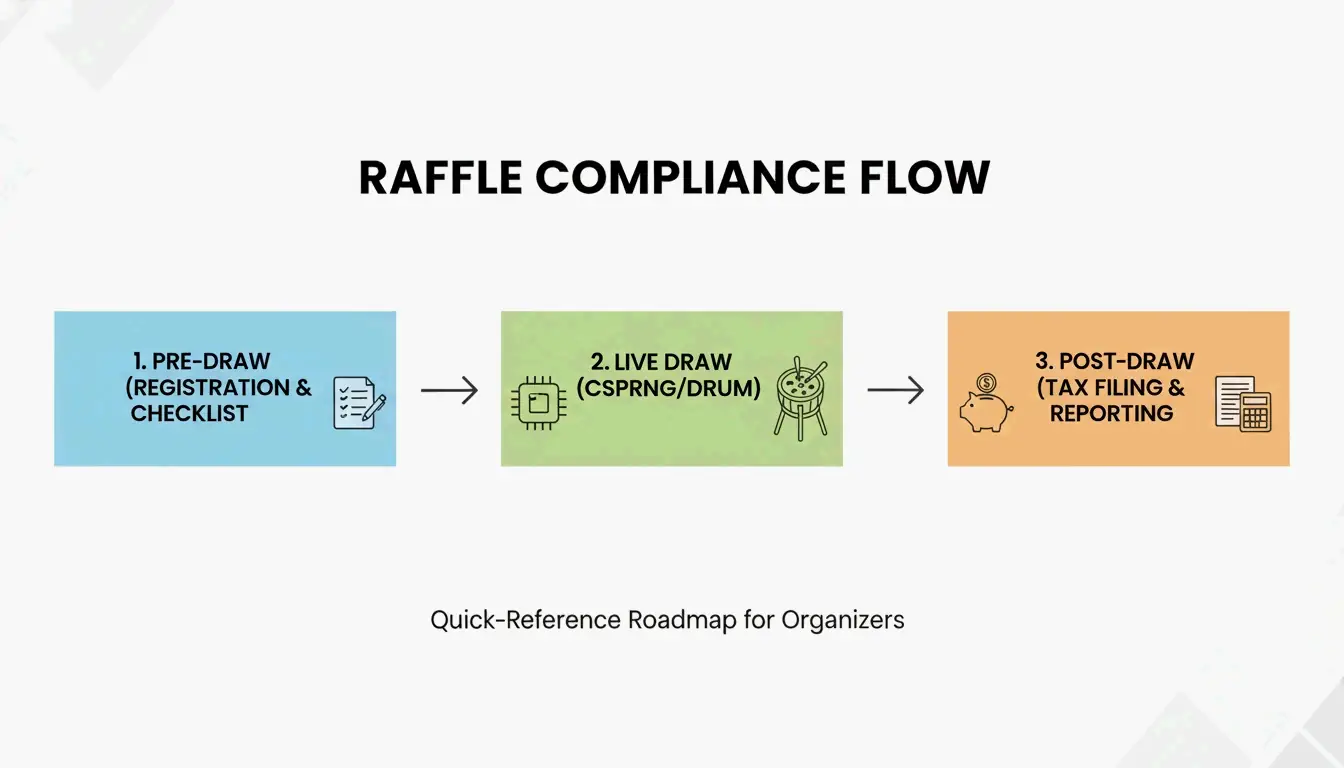
    Three-Phase Framework for a Fair & Legal Draw

    Phase 1: Pre-Draw Compliance

    • Confirm 501(c)(3) status and register with your state’s Attorney General or local Sheriff
    • Ensure tickets list: organization name, drawing date, prize fair market value
    • Verify state-specific rules (physical draw requirements, online sales restrictions)

    Phase 2: Live Draw Execution

    • Use a CSPRNG-based tool or physical container with thorough mixing
    • Record your screen during digital draws for audit trail
    • For physical draws, use a clear container and mix tickets thoroughly

    Phase 3: Post-Draw Obligations

    • Send Form W-2G for prizes ≥ $2,000
    • Collect 24% withholding for prizes > $5,000
    • File post-raffle reports (e.g., California’s Form CT-NRP-2 by February 1 deadline)

    抽奖活动合规三阶段简化流程

    Creating a Permanent Audit Trail

    RandomPicker creates a public record page with a unique URL showing the entry list, winner, and timestamp — proving the result was locked in and wasn’t tampered with.

    Conclusion

    Running a fair raffle means combining technical rigor (CSPRNG) with strict legal compliance (IRS thresholds, state registration, nonprofit eligibility). The 2026 landscape has updated tax thresholds ($2,000 W-2G, 24% withholding over $5,000) and pending legislation that could reshape digital draws in states like Ohio.

    Before your next raffle: Verify your drawing software is CSPRNG-compliant, confirm your nonprofit status for your operating state, and budget for the 24% withholding on prizes over $5,000.

    FAQ

    Is it legal to sell raffle tickets online in California in 2026?

    Generally no. California Penal Code 320.5 prohibits online ticket sales, trades, or redemptions. You can advertise on social media, but the transaction and drawing must happen in person. Always verify the 90/10 rule before proceeding.

    What is the IRS reporting threshold for raffle winnings in 2026?

    $2,000 — up from the previous $600 due to inflation adjustments. File IRS Form W-2G if the prize hits this value and is at least 300 times the ticket cost.

    Can a for-profit business host a raffle for charity?

    In most states, no. Only 501(c)(3) nonprofits can hold raffles. A for-profit business can sponsor a raffle where the nonprofit holds the license, or run a Sweepstakes (no purchase required to enter), which falls under different legal rules.

  • How to Create a Unique Username with Numbers: Aesthetic Ideas and Security Tips

    How to Create a Unique Username with Numbers: Aesthetic Ideas and Security Tips

    With over 2 billion active Instagram accounts, almost every common name was claimed years ago. In 2026, standing out requires more than appending your birth year to your first name — that approach is both generic and a security risk.

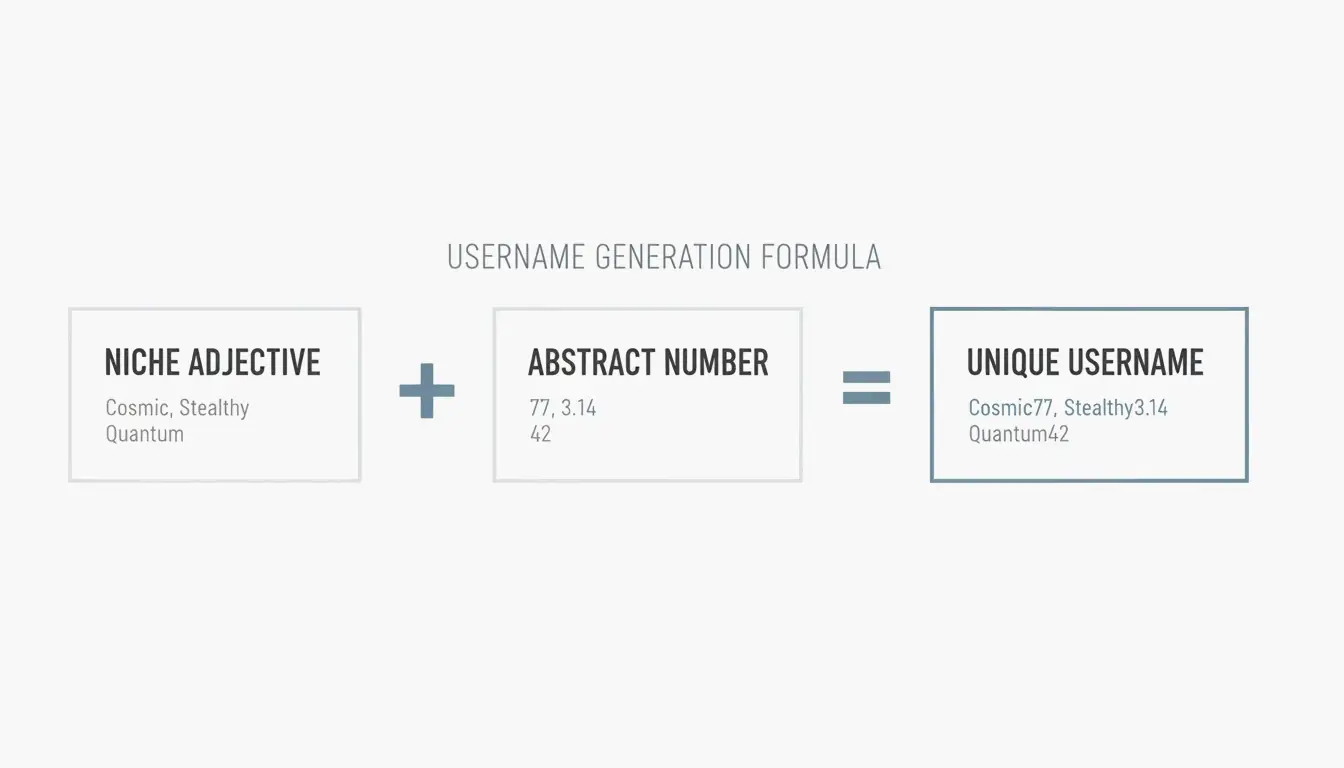
    This guide covers a formula-based method for creating usernames that look great and keep you safe: [Niche Adjective] + [Abstract Number], plus platform-specific formatting tips and security practices that are non-negotiable.

    The 2026 Username Formula

    The most effective strategy right now is combining a mood-specific word with a non-obvious number:

    [Niche Adjective] + [Abstract Number]
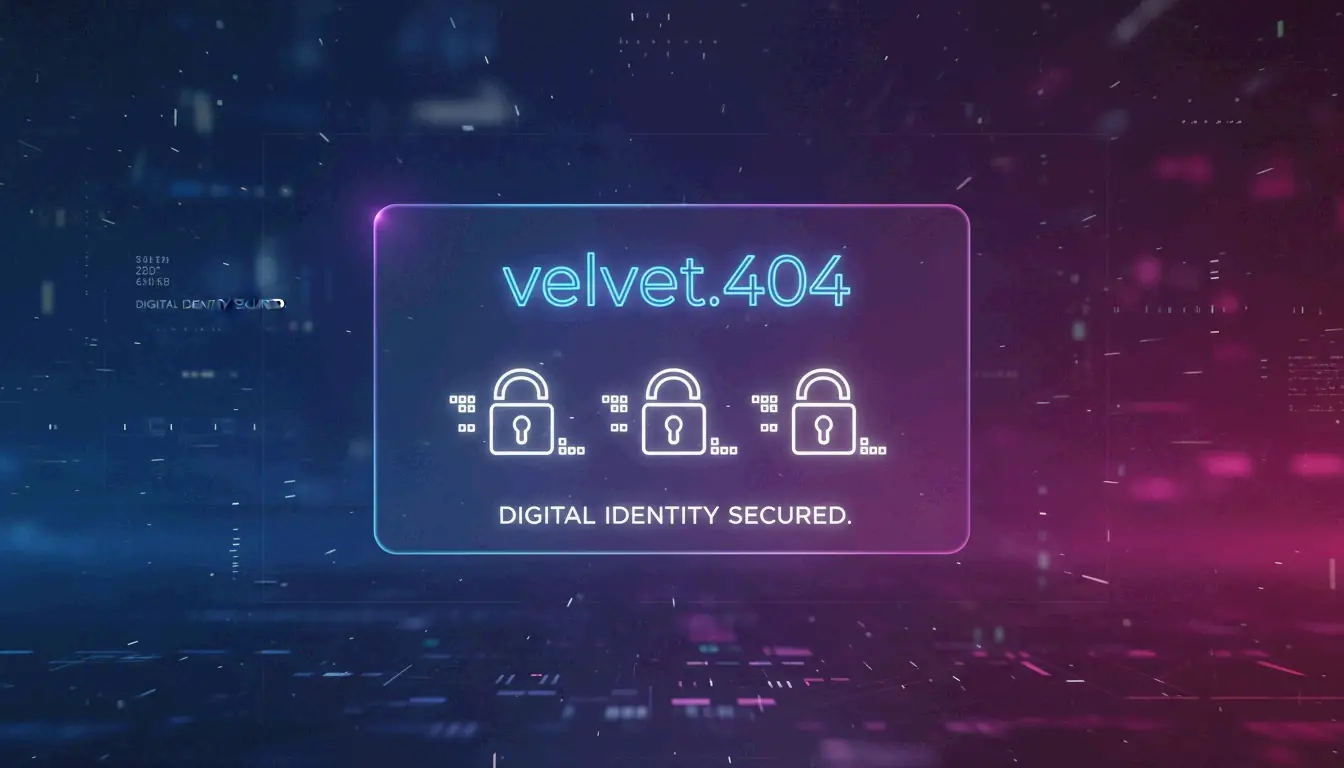
    Example: velvet404, dusk000, pulse777
    

    This beats the old “Name + Birth Year” format in two ways: it’s visually cleaner, and it doesn’t leak personal information. Aim for the 12–18 character sweet spot — long enough to be unique, short enough for people to remember and type.

    A simple 3-node diagram showing the 2026 username formula

    Step 1: Pick Your Aesthetic Style

    Style Example Words Best Platforms
    Minimalist Base, Form, Still, Mono, Zero LinkedIn, professional portfolios
    Lo-fi / Dreamy Vapor, Velvet, Dusk, Ethereal, Satin Instagram, Pinterest, Tumblr
    Tech / Cyber Neon, Pulse, Syntax, Node, Hex Discord, Steam, GitHub
    Gamer Shadow, Cyber, Phantom, Apex Xbox, PlayStation, Twitch

    CodeItBro suggests matching your aesthetic to the platform — visual apps favor dreamy styles, gaming platforms favor bold or edgy ones.

    Step 2: Add Numbers That Look Intentional

    Avoid long random strings like user123456 — Zeptempmail warns these look like bot accounts. Instead, use numbers that add visual balance:

    Number Why It Works Example
    000 or 777 Symmetrical, balanced dusk000, neon777
    404 Tech-savvy nod to “not found” velvet404
    99 Clean minimalist suffix form99
    101 Academic / tutorial vibe syntax101

    Security: Why CSPRNG and PII Avoidance Are Non-Negotiable

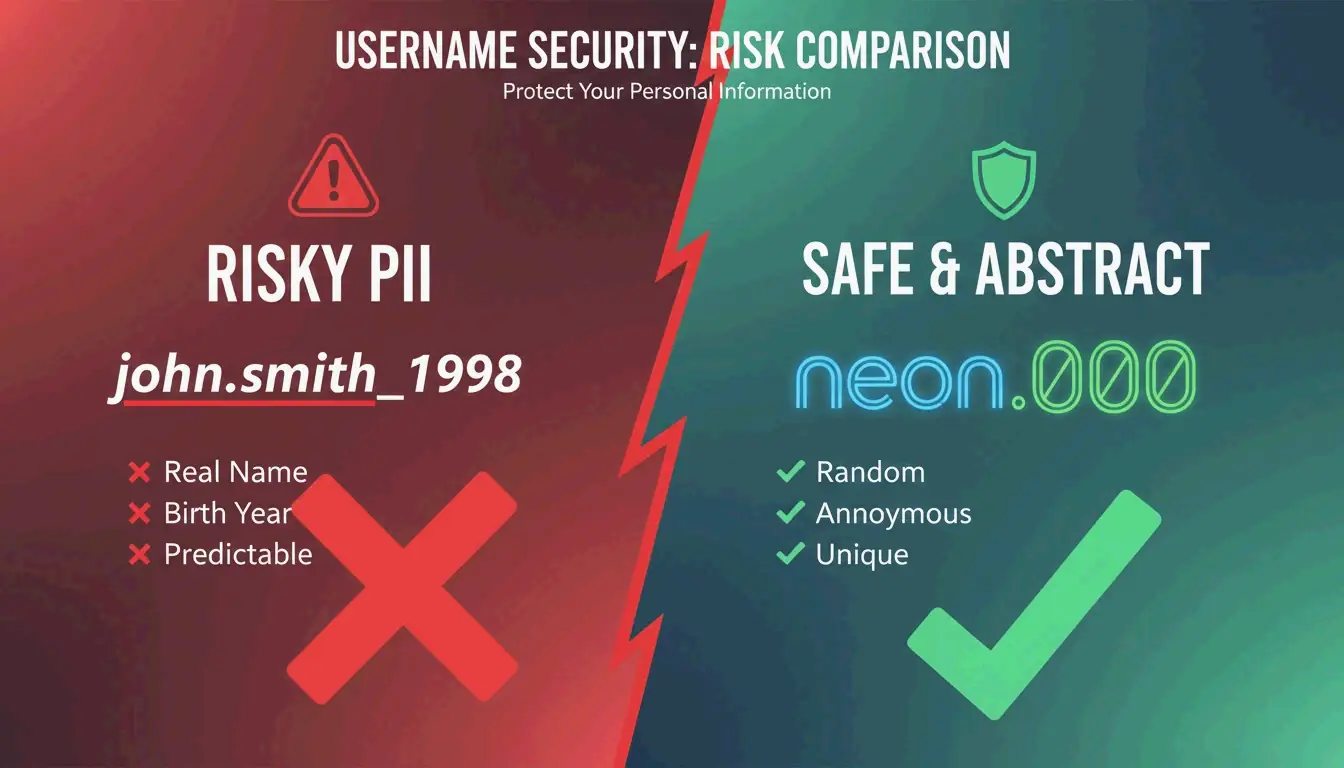
    Putting your birth year, full name, or location in a username makes you a target for Username Harvesting — bad actors collecting data across sites to build a profile for doxing or phishing.

    For high-security accounts, use a CSPRNG (Cryptographically Secure Pseudo-Random Number Generator). According to Generate-Random.org, this ensures your combinations are truly random, not based on predictable patterns.

    A high-contrast comparison between 'Bad/Risky' and 'Good/Safe' username patterns

    The Security-Aesthetic Matrix

    Number Choice Aesthetic Value Security Rating
    Birth year (e.g., 1998) Low — feels dated High Risk (PII)
    Repeating (e.g., 000) High — symmetrical Low Risk
    Abstract (e.g., 404) High — tech vibe Low Risk
    CSPRNG random Moderate Maximum Security

    Don’t Reuse Usernames Across Sensitive and Public Platforms

    Dashlane notes that a unique username is only the first step. If your aesthetic Instagram handle is the same one you use for banking or crypto, a data leak on one site could lead attackers straight to your financial accounts.

    Rule: Your financial/crypto usernames should be completely different from your social ones — use a high-randomness handle generated by a password manager or CSPRNG tool.

    Cross-Platform Consistency

    Building a recognizable brand means using the same (or very similar) handle everywhere. If you’re @velvet.404 on Instagram but @velvet_404_official on TikTok, you lose brand recognition.

    The Social Cat recommends using tools like Namechk to scan availability across multiple platforms before committing.

    Platform Formatting Differences

    Platform Character Limit Style Notes
    Instagram 30 chars Periods (.) feel more editorial/professional
    TikTok 30 chars Same rules as Instagram
    Discord 32 chars Underscores (_) common in lo-fi/gamer communities
    Gaming (Xbox/Steam) 15 chars Edgier prefixes work well (Shadow, Cyber, Neon)

    If your handle is taken on one platform, CodeItBro suggests slightly tweaking the number or adding a minimalist suffix (.co, .edit, hq) to maintain the vibe.

    Advanced: Privacy-First Sign-ups and Rare Handles

    Temporary Email for Sign-ups

    Zeptempmail suggests using a temporary email for social sign-ups to prevent your primary email from entering the advertising ecosystems of Meta or ByteDance. This keeps your real identity separate from your social persona.

    Hunting Rare Handles (4-Letter Names)

    Short usernames are highly prized. If you find a 4-letter handle available, register it on every major platform immediately — even ones you don’t plan to use yet. These names appreciate in value and become unavailable quickly.

    The Crypto/Finance Rule

    Never use your social media handle for financial or crypto accounts. BYDFI and security experts warn that linking financial assets to a public aesthetic handle makes you a phishing target. Use a completely different, high-randomness handle for money-related services.

    Conclusion

    Creating a unique username in 2026 means balancing visual appeal with real security:

    1. Pick your aesthetic — Minimalist, Lo-fi, Tech, or Gamer
    2. Add an abstract number — 000, 404, 777, 99
    3. Check availability everywhere — Use Namechk or similar tools
    4. Separate identities — Social handles ≠ financial handles
    5. Use temp emails for sign-ups to protect your primary identity

    The formula [Niche Adjective] + [Abstract Number] gives you a name that’s memorable, visually clean, and doesn’t leak your personal information.

    FAQ

    Are underscores or periods better for Instagram username aesthetics?

    Periods (.) look cleaner and more editorial — popular with photographers and lifestyle creators. Underscores (_) fit lo-fi, grunge, and gamer aesthetics. Both work as visual breaks, but avoid mixing them in a single name — it looks cluttered.

    How many characters can an Instagram or TikTok username have?

    Both platforms allow up to 30 characters. For SEO and brand recall, stay under 20. The sweet spot is 12–18 characters — unique enough to stand out, short enough to remember.

    Is it safe to use my real name in a crypto wallet username?

    No. Using your real name or social handle links financial assets to your real-world identity. Publicly searchable financial usernames increase the risk of phishing, doxing, and social engineering. Use a completely different, non-aesthetic handle for all financial services.

    How can I check username availability across all platforms?

    Use aggregation tools like Namechk or Social Cat to scan multiple databases at once. If your desired name is taken on a specific platform, tweak it with an abstract number or minimal suffix without losing the aesthetic. Register on major platforms immediately — even ones you don’t plan to use yet.

  • VIN Barcode Guide: How to Locate, Scan, and Generate Vehicle Barcodes

    VIN Barcode Guide: How to Locate, Scan, and Generate Vehicle Barcodes

    Every vehicle has a unique fingerprint — a 17-character Vehicle Identification Number (VIN) that encodes its manufacturer, model, engine type, and production sequence. Whether you’re sourcing parts, running a history check, or processing vehicle intake at a dealership, the VIN is the key that unlocks everything.

    This guide covers where to find the VIN barcode, how to scan it with modern OCR tools (99.8% accuracy), how to generate compliant barcodes, and what’s changing with the 2026 EU Digital Product Passport.

    Locating Your VIN: Where to Look

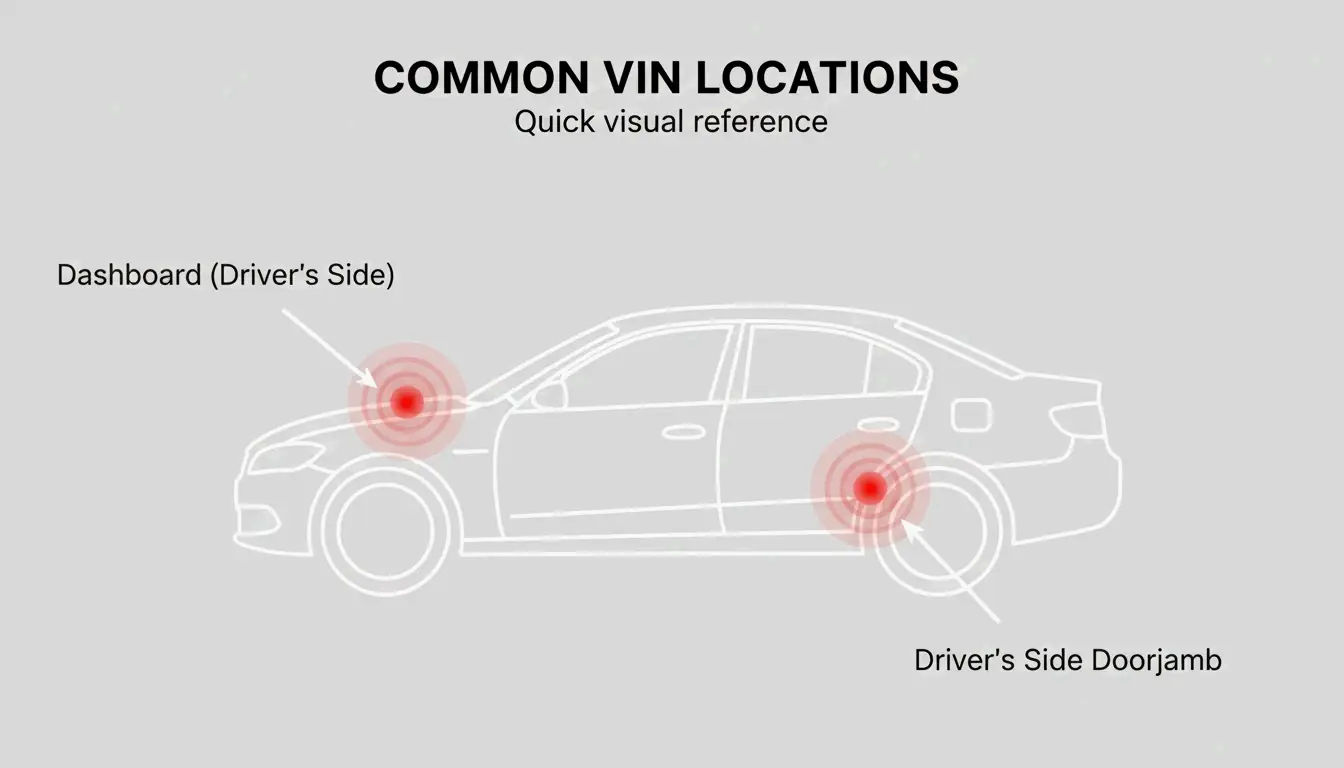
    Since 1981, every vehicle sold in the U.S. carries a standardized 17-character VIN. You’ll typically find the barcode or stamped plate in two primary locations:

    Location How to Find It
    Dashboard (driver’s side) Stand outside the car, look through the bottom corner of the windshield at the metal plate where the dash meets the hood
    B-pillar doorjamb Open the driver’s door, check the post for a compliance sticker listing the VIN, tire pressure, and manufacture date

    Minimalist diagram showing the two primary VIN locations on a car outline.

    For vehicles where these aren’t accessible:

    Vehicle Type Alternative Location
    Trucks / SUVs Front-right frame rail
    Motorcycles Steering head tube
    Trailers Tongue (front hitch area)

    If physical tags are missing or damaged, the NHTSA suggests checking the engine block, spare tire well, or your state registration card, insurance policy, or vehicle title.

    Troubleshooting: Faded or Missing Tags

    For rusted frames or damaged plates, FatBoysOffroad recommends using a wire brush to clear grime and rust from the chassis stamp. If the physical tags are completely gone, your registration card, insurance policy, or vehicle title will have the VIN.

    Scanning Technology: OCR at 99.8% Accuracy

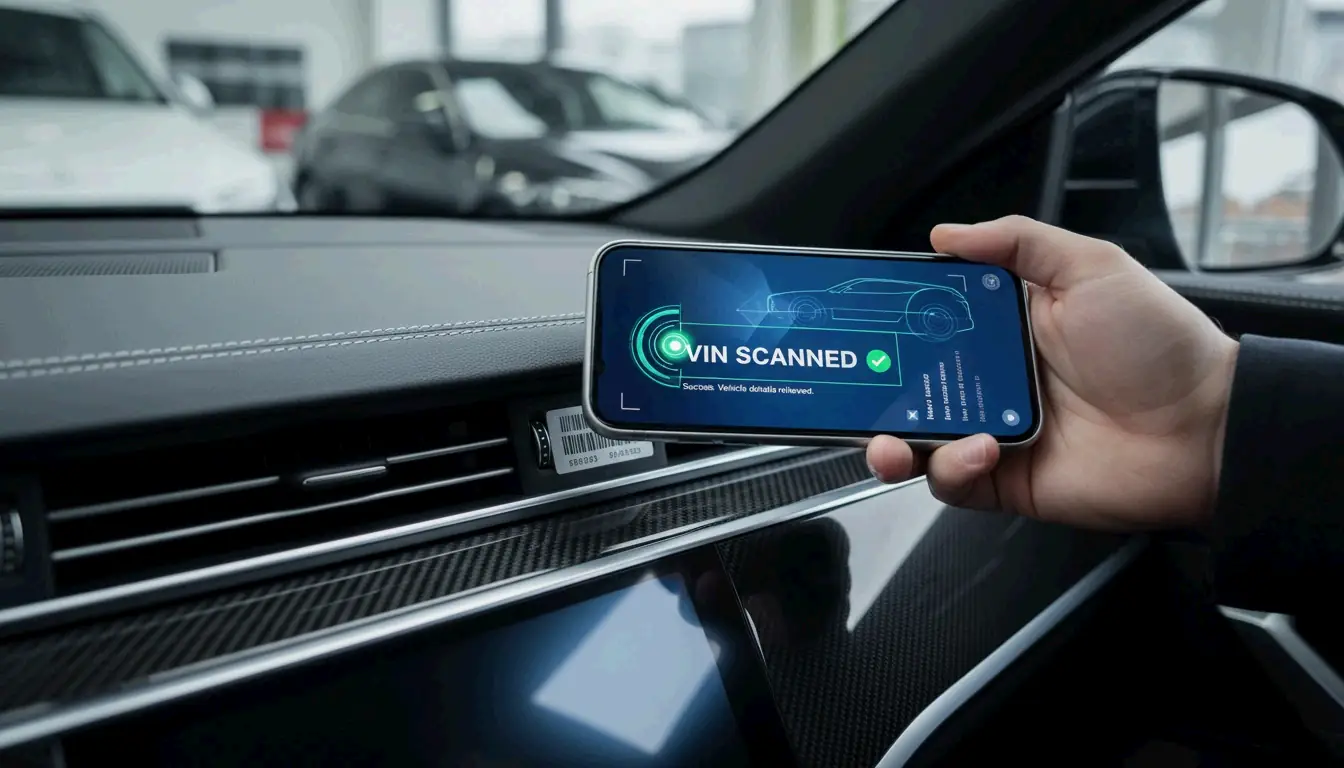
    Typing 17-character codes by hand is error-prone and slow. Modern scanning uses Optical Character Recognition (OCR) to convert a photo into digital text. According to Vincario, professional scanners in 2026 hit a 99.8% accuracy rate — eliminating the typos that lead to wrong parts orders or incorrect valuations.

    Top Tools for 2026

    Tool Type Strength
    Vincario Business platform Decodes VINs + shows market values
    GroupDocs Online scanner Upload photos or use webcam
    Carketa Dealership API Integrated with Dealer Management Systems

    The time savings are significant. Vincario reports dealerships cut manual processing time by ~48% using integrated scanners during vehicle intake and auctions.

    Tips for Scanning Damaged Barcodes

    Scanning through a windshield or reading a faded code can be tricky. GroupDocs uses AI algorithms to reconstruct partial patterns. For best results:

    • Ensure plenty of light but no direct glare on the surface
    • If the barcode won’t scan, switch to “text” mode to read the alphanumeric characters printed beside the barcode lines
    • Try a high-contrast filter within the app

    How to Generate ISO 3779 Compliant VIN Barcodes

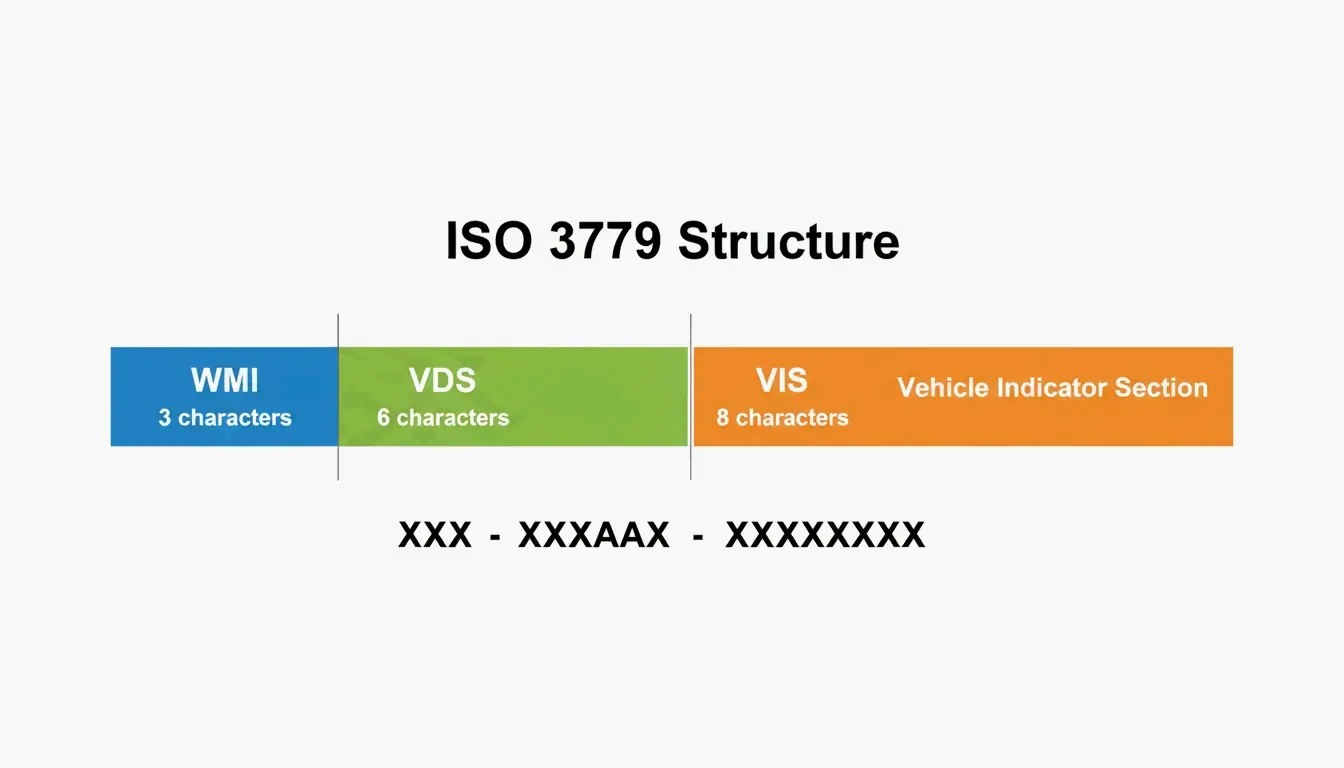
    Generating a VIN barcode for industrial or official use requires following international standards. ISO 3779 defines the 17-character structure:

    Segment Characters What It Encodes
    WMI (World Manufacturer Identifier) 1–3 Country and manufacturer
    VDS (Vehicle Descriptor Section) 4–9 Model, engine type, body style
    VIS (Vehicle Identifier Section) 10–17 Model year, assembly plant, production number

    A simple 3-segment breakdown of a 17-character VIN string.

    Critical Rule: No I, O, or Q

    ISO 3779 bans the letters I, O, and Q to prevent confusion with the numbers 1 and 0. This applies whether you’re typing, printing, or scanning.

    Barcode Format Options

    Format Best For Notes
    Code 39 DMV, insurance, government work Industry standard for official documents
    Code 128 Small labels, high-density needs More compact than Code 39

    Tools like Abundera can generate these codes, though web-based tools typically limit you to 500 codes per session.

    The Check Digit (Character 9)

    The 9th character of a North American VIN is a Check Digit — a number (0–9) or the letter “X” calculated from the other characters to verify accuracy. The EAN Check team notes that U.S. and Chinese markets require this check digit to prevent fraud, while European and Japanese manufacturers follow it less consistently.

    NHTSA 2024 WMI Update

    In a 2024 update, the NHTSA clarified that automakers can use U.S.-issued WMIs for vehicles built outside the U.S. under certain conditions. Some Fords built overseas, for example, still carry a U.S. WMI (starting with 1, 4, or 5). To determine where a car was actually assembled, check the 11th digit, which identifies the specific assembly plant.

    Industrial Applications: Marking and Digital Passports

    Permanently marking a VIN onto a chassis requires specialized techniques:

    Method How It Works Best For
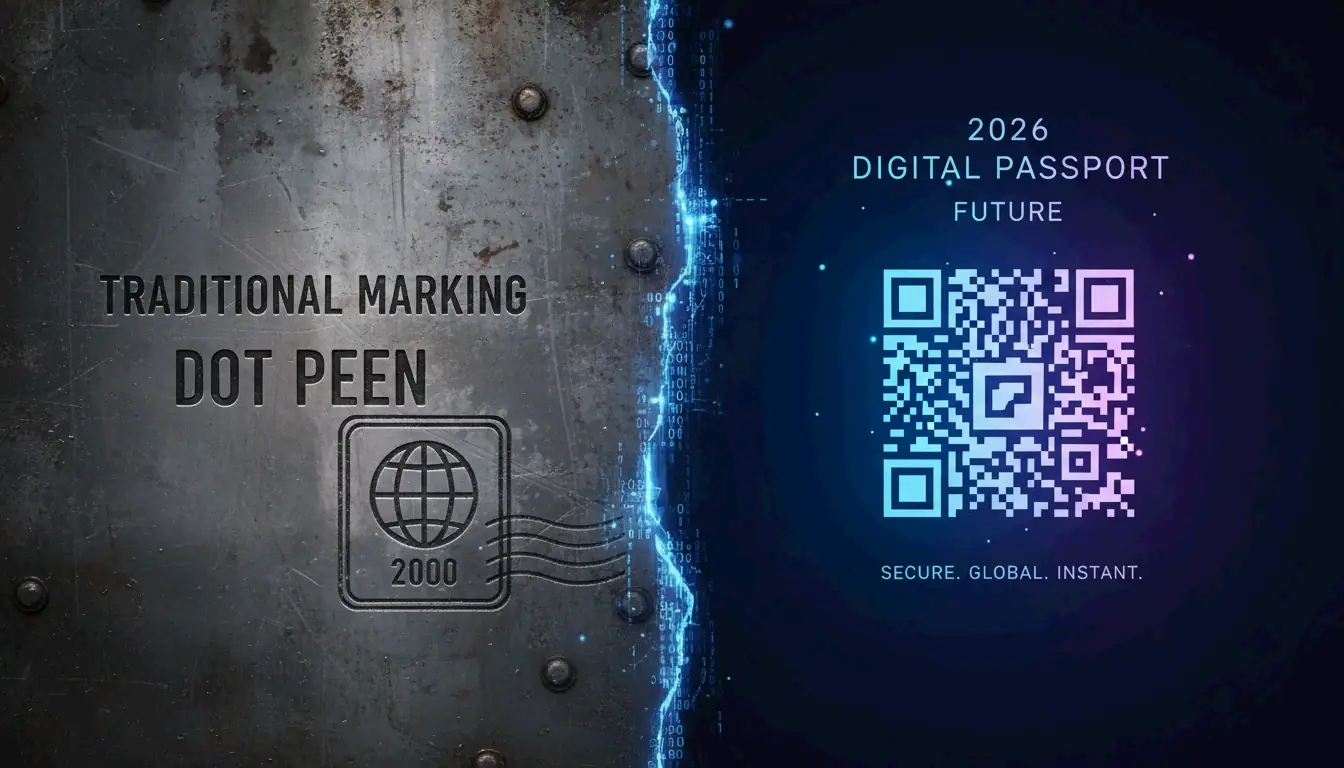
    Dot peen marking Metal pin dents the code into metal Chassis — survives painting and powder-coating (HeatSign)
    Laser engraving Etches the code onto the surface Dashboard plates, engine parts — clean, high-contrast finish

    Visual contrast between industrial dot peen marking and digital QR code passports.

    The EU Digital Product Passport (2026)

    As of July 19, 2026, the EU Digital Product Passport (DPP) is reshaping global standards. Under Regulation (EU) 2024/1781, automotive parts sold in the EU must carry a scannable QR or Data Matrix code linking to digital product data. The industry is moving toward a “Digital Passport” for every vehicle.

    Paper Labels vs. Metal Marking

    Feature Paper/Vinyl Labels Metal Dot Peen/Engraving
    Durability Low — can peel or fade Permanent — forged into metal
    Location Doorjambs, windows Chassis, engine block, frame
    Use case Consumer info, tire specs Anti-theft, legal identification
    2026 trend Moving toward QR/DPP Standard for heavy industrial use

    For developers, creating random VINs for testing is legal and common. Tools like the Random VIN Generator produce ISO 3779-compliant strings without using real vehicle data.

    Conclusion

    From the moment a VIN is generated under ISO rules to the day it’s scanned by a mechanic or dealership, it’s the single most important piece of data attached to a vehicle. In 2026:

    • Personal use — A good OCR scanner app with 99.8% accuracy is your best tool
    • Business use — Ensure your tools comply with the 2024 NHTSA rulings and 2026 EU Digital Product Passport standards
    • Generation — Follow ISO 3779 strictly (no I/O/Q, validate check digits), choose Code 39 for official use or Code 128 for compact labels

    FAQ

    Where is the VIN barcode on a motorcycle or trailer?

    Motorcycles: Steering head tube or frame near the engine mount. Trailers: Tongue (front hitch area) or front-left frame rail. If the sticker is missing, look for a physical stamp on the metal chassis.

    Why are the letters I, O, and Q never used in a VIN?

    They’re excluded by ISO 3779 to prevent confusion with the numbers 1 and 0. Removing these visually similar characters significantly improves accuracy during both manual entry and automated OCR scanning.

    Can I scan a damaged VIN barcode with a smartphone?

    Yes — 2026 AI-enhanced OCR apps can reconstruct partial patterns. Ensure good lighting without glare, and try high-contrast filters. If the barcode is unreadable, most apps can use OCR on the alphanumeric characters printed next to the code.

  • Everything About Your Xbox Gamertag: How to Change It, Rules for 2026, and the Asha Sharma Controversy

    Everything About Your Xbox Gamertag: How to Change It, Rules for 2026, and the Asha Sharma Controversy

    The Xbox ecosystem in 2026 looks very different from even a year ago. Under new CEO Asha Sharma, the brand has dropped the “Microsoft Gaming” label, restructured Game Pass pricing, and modernized its identity systems. Your gamertag now serves as a unified ID across consoles, PCs, phones, and cloud setups — part of a platform that has grown to over 500 million players.

    This guide covers everything: the 12-character naming rules, how to change your gamertag on any device, the new shared account policies, and the leadership changes reshaping Xbox.

    The Post-Spencer Era: Who Is Asha Sharma?

    In February 2026, the gaming world saw a major leadership shift when Asha Sharma replaced Phil Spencer as Xbox CEO. Coming from executive roles at Meta (VP of Messenger and Instagram Direct) and Instacart (COO), with a background leading Microsoft’s CoreAI division, Sharma was a surprising pick — beating out internal favorites like Sarah Bond.

    GeekWire reports her appointment was driven by a “Challenger Mindset” — a push for aggressive growth after years of flat console sales.

    The initial controversy centered on her background outside of gaming. Critics questioned whether someone from social media and grocery delivery could protect Xbox’s identity. Sharma addressed this directly in a company-wide memo, vowing to reject “soulless AI slop” and refocus on creators.

    As Asha Sharma wrote in her “We Are Xbox” message:

    “Xbox will be where the world plays and creates… we will build a global platform that connects players and creators everywhere.”

    The “We Are Xbox” Memo: 10 Core Principles

    Sharma and Chief Content Officer Matt Booty rolled out ten guiding principles for the team. The central theme: “Makers over managers” — cutting corporate red tape to prioritize game development and the player experience. With slogans like “Earn every player,” “Protect our art,” and “Stay rebellious,” the company is trying to recapture its 2001 roots as the scrappy underdog of the living room.

    "创作者优先"的视觉隐喻:打破官僚束缚

    Xbox Gamertag Rules for 2026

    By 2026, your Xbox gamertag functions as a single identity across the entire ecosystem. According to Xbox Wire, the updated system keeps your name, friends list, and progress synced across consoles, PCs, mobile apps, and cloud sessions.

    The core rules:

    Rule Detail
    Character limit 12 characters for the base name (spaces included)
    Suffix system If your name is taken, Xbox adds #1234 automatically — doesn’t count toward the 12-char limit
    International support Non-Latin scripts and alphabets supported
    Classic tags Legacy 15-character tags remain valid if never changed
    First change Free
    Subsequent changes $9.99 USD, with a 30-day cooldown

    The suffix system is especially important as Xbox expands into emerging markets like China — it allows millions of new players to use display names they want without global name conflicts.

    Personal vs. Shared: The New Account Policy

    A notable 2026 update addresses Personal Gamertags versus Shared Home Accounts. This became a talking point after a small controversy involving Sharma’s own tag, AMRAHSAHSA, which displayed a mix of achievements from different players. Sharma explained on X that she had been using a “shared home account” with her family.

    The 2026 rules now recommend:
    – Individual profiles for personal achievements and saves
    – “Project Helix” sharing to distribute your full game library to everyone in the household

    How to Change Your Xbox Gamertag in 2026

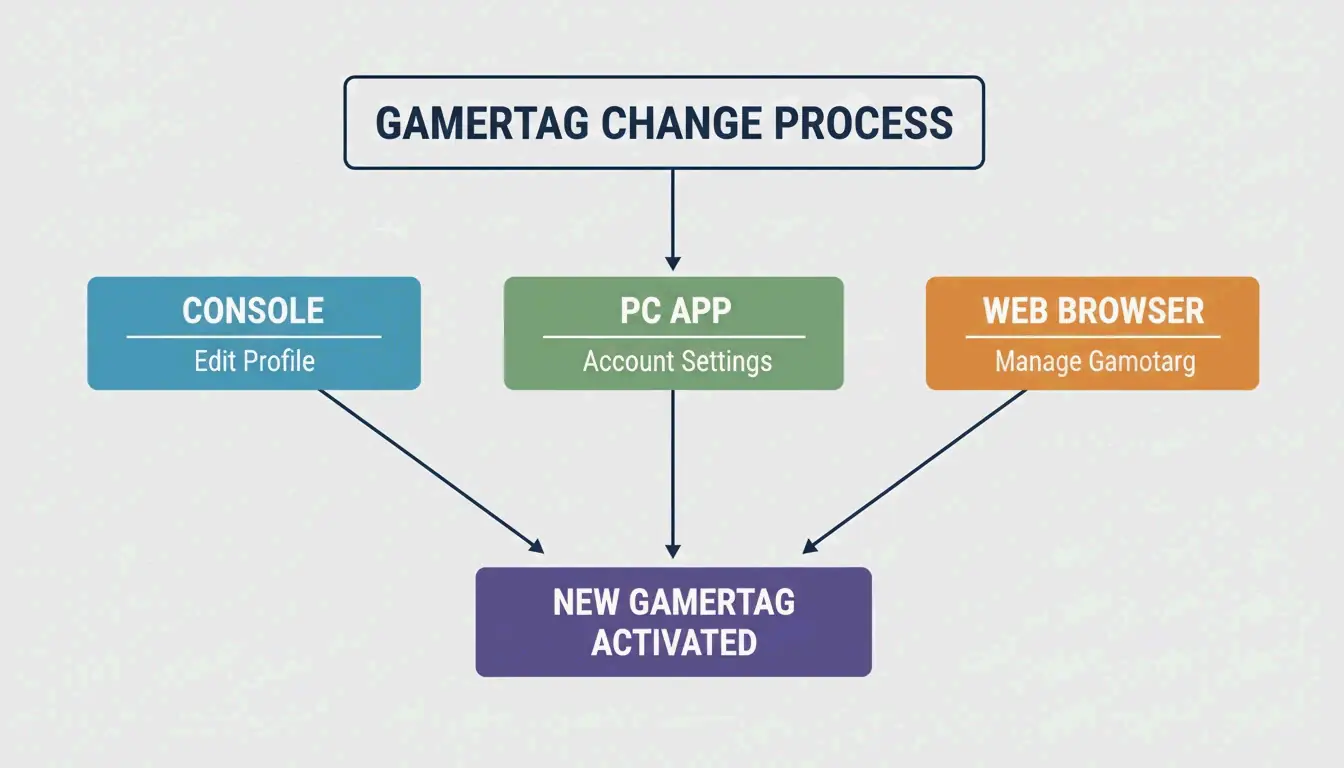
    The process works across all devices. Your cloud saves, friends list, and game purchases are tied to a hidden internal ID — changing your display name won’t affect any of them.

    On Console (Series X|S or Project Helix)

    1. Press the Xbox button to open the guide
    2. Go to Profile & system → select your profile
    3. Choose My profile → Customize profile
    4. Click your current gamertag and type the new one
    5. Confirm

    On PC (Xbox App)

    1. Click your profile photo (top-left corner)
    2. Go to Settings → Change Gamertag
    3. Complete the change on the secure web page

    On the Web

    1. Go to xbox.com and sign in
    2. Navigate to your profile and follow the prompts

    修改Gamertag的三个核心渠道流程

    Updating on Project Helix Hardware

    If you’re using Project Helix — the 2026 initiative to make consoles and PCs perform identically — name changes propagate instantly. Your updated gamertag appears in multiplayer lobbies and friend lists across all active sessions without needing a restart.

    Why Is Xbox Game Pass Changing?

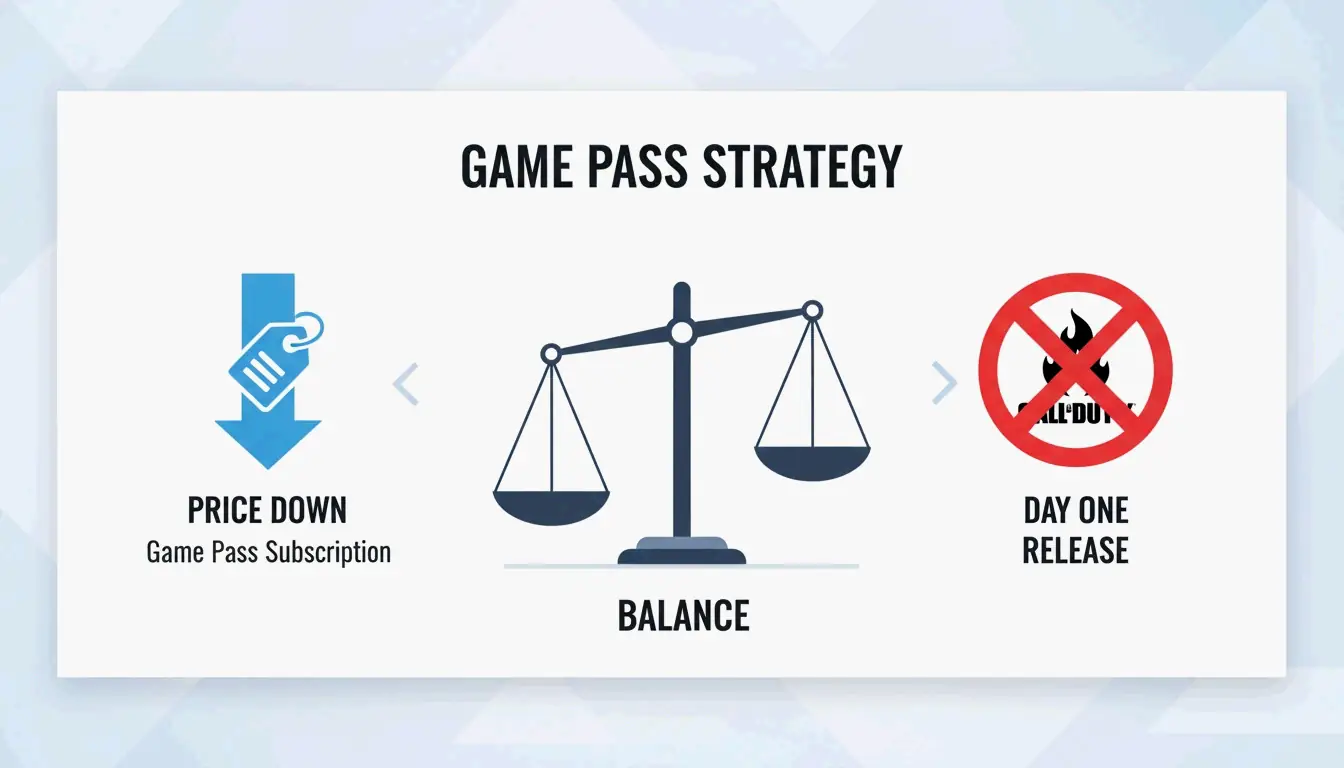
    Under Sharma, Game Pass has seen its biggest shake-up yet. The most controversial move: Microsoft stopped putting new Call of Duty games on the service on “Day One.”

    Change Detail
    Call of Duty on Game Pass No longer available on release day
    Reason Drive direct sales for Activision Blizzard titles, help recoup the $69.7B acquisition
    Subscription price Lowered in early 2026, reversing a 50% hike from 2025
    Success metric Shifted from subscriber count to daily active users (DAU)

    In Game News reports the CoD decision was made to increase direct sales. To offset the loss, Sharma lowered subscription prices — Pure Xbox notes the goal is to make Game Pass “affordable and open” again.

    2026年Game Pass策略对比:价格下降 vs 独占权调整

    Additionally, leadership is taking a “data-driven” approach to exclusives — evaluating which titles might perform better on other platforms to reach wider audiences, rather than locking everything behind the Xbox brand.

    Conclusion

    The 2026 Xbox era is defined by a return to the “Xbox” identity and a more sustainable business model. By moving away from the “Microsoft Gaming” corporate feel and adjusting Game Pass pricing, the company is trying to recapture its challenger energy.

    For players, it’s a good time to:
    – Review your gamertag settings — Make sure they align with the new shared home account rules
    – Reevaluate Game Pass — The 2026 price drops may change the value equation for you
    – Watch for Project Helix — Cross-device identity syncing is coming

    Even though losing Day-One Call of Duty is a disappointment for some, the focus on affordability and creators suggests a more stable path forward for the 500 million people playing on Xbox.

    FAQ

    Is Call of Duty still available on Xbox Game Pass on day one in 2026?

    No. Starting in early 2026, under CEO Asha Sharma’s new strategy, Call of Duty titles no longer launch on Game Pass on their release date. This change was made to increase direct sales for Activision Blizzard’s biggest games.

    Who is Asha Sharma and what is her professional background?

    Asha Sharma became Xbox CEO in February 2026, replacing Phil Spencer. Before this, she led Microsoft’s CoreAI division and held major leadership roles at Instacart (COO) and Meta (VP of Messenger and Instagram Direct).

    What is “Project Helix” and how does it affect Xbox hardware?

    Project Helix is a 2026 hardware initiative focused on unifying the experience across Xbox consoles and PCs. Players get the same performance, identity, and progress tracking on any high-end device — gamertag changes propagate instantly across all sessions.

    How much does it cost to change an Xbox Gamertag in 2026?

    Your first gamertag change is free. After that, it costs $9.99 USD with a 30-day cooldown between changes. Changing your name won’t affect your achievements, friends list, cloud saves, or game purchases.

  • How to Make QR Codes for Websites: A 2026 Guide to Secure and Custom Designs

    How to Make QR Codes for Websites: A 2026 Guide to Secure and Custom Designs

    A QR code on a flyer, business card, or storefront window is a direct bridge from the physical world to your website. In 2026, the process is straightforward: copy your URL, paste it into a generator like Bitly or Adobe Express, customize the look, and download an SVG for print.

    But doing it well — with proper tracking, brand consistency, and security — takes a bit more thought. This guide walks through the full process: from preparing your URL and choosing between static and dynamic codes, to preventing quishing attacks and getting the print size right.

    The 2026 Framework: 4 Steps to a Professional Website QR Code

    Data from QR Code AI 2026 shows that custom-branded QR codes get up to 30% more scans than plain black-and-white ones. Here’s how to get there.

    Step 1: URL Preparation and UTM Tagging

    Before you generate anything, prepare your destination URL:

    1. Use HTTPS — Always. An HTTP link will trigger browser security warnings that scare users away.
    2. Add UTM parameters — Append tags like ?utm_source=flyer&utm_campaign=spring_sale to track exactly which QR code drove the traffic in Google Analytics.
    3. Shorten long URLs — For static codes, a shorter URL produces a simpler, faster-scanning pattern. Use a URL shortener before generating the code.

    Step 2: Customize for Brand Identity

    Modern generators (Canva, Bitly, Adobe Express) go well beyond the basic black-and-white grid. You can:

    • Add your brand colors to the foreground modules
    • Place a logo in the center of the code
    • Include a Call to Action frame like “Scan to Order” or “Scan for Menu”
    • Use AI-powered tools to blend the QR pattern with artistic brand imagery

    The key is making the code feel like part of your design, not an afterthought bolted onto the corner.

    Step 3: Pre-Print Security Audit

    Don’t send anything to print until you’ve verified:

    • The destination URL is live and loading correctly
    • Any redirects are functioning as expected
    • The code is not vulnerable to quishing (QR phishing — where scammers swap your code for a malicious one)
    • The exported file is SVG format, which stays sharp at any print size

    3-step creation process: Secure URL, Custom Brand, Security Audit

    Step 4: Choose Your Format (Static or Dynamic)

    This decision shapes everything else — see the detailed comparison below.

    Static vs. Dynamic QR Codes: Which Should You Choose?

    As the DoItQR Industry Guide puts it, “A URL is invisible on a printed surface” — which is why the flexibility of your format matters so much.

    Feature Static QR Code Dynamic QR Code
    Data storage Baked into the pattern Uses a redirect link
    Change URL after printing? No — permanent Yes — anytime
    Scan tracking Not available Time, location, device
    Pattern complexity Depends on URL length Always clean (short redirect)
    Cost Free Typically paid plan
    Best for Permanent links (“About Us” page) Campaigns, menus, promotions

    Simple comparison: Static (Fixed) vs Dynamic (Flexible/Trackable)

    In 2026, most professional creators default to dynamic codes for the flexibility and analytics — unless the use case is truly permanent and doesn’t need tracking.

    Advanced Design: Error Correction, Logos, and the Quiet Zone

    Good QR code design is a balance between looking great and actually scanning. Statista reported nearly 100 million US users scanning codes by 2025 — your design needs to work on every device.

    Error Correction and Logo Placement

    QR codes use Reed-Solomon error correction, which allows the code to remain readable even when partially covered or damaged — up to 30% in the highest setting.

    Level Tolerance When to Use
    L 7% Digital screens only
    M 15% Standard marketing (default)
    Q 25% Small logo in center
    H 30% Logo overlay or heavy customization

    If you’re placing a logo in the center, you must use Level H to ensure scanners can still read the data hidden behind the logo.

    The Quiet Zone and Sizing Rules

    Two physical requirements that trip people up:

    1. Quiet Zone — Every QR code needs a blank white border on all sides (at least 4 module widths). Without it, scanners can’t find the code’s edges.
    2. The 10:1 distance rule — The code’s size should be roughly 1/10th of the scanning distance.
    Use Case Scanning Distance Minimum Code Size
    Business card ~8 in (20 cm) 0.8 × 0.8 in (2 × 2 cm)
    Table tent ~20 in (50 cm) 2 × 2 in (5 × 5 cm)
    Poster ~40 in (1 m) 4 × 4 in (10 × 10 cm)

    Never go smaller than 0.8 × 0.8 inches (2 × 2 cm) on a business card — anything smaller and older phone cameras will struggle.

    2026 Security: Preventing Quishing (QR Phishing)

    With the global QR market projected to hit $33 billion by 2030 (DoItQR), security is no longer optional. Quishing — QR phishing — happens when fraudsters replace legitimate codes with malicious ones that steal data or install malware.

    Three rules for 2026:

    1. Enforce HTTPS everywhere — Never link to an unencrypted (HTTP) page.
    2. Use preview-capable generators — Tools that show a safety preview or diagnostic report before the user reaches the destination add a trust layer.
    3. Automate with controlled platforms — For bulk projects, use tools like Zapier to generate unique, trackable codes in a controlled environment rather than creating them manually across multiple services.

    Conclusion

    Making a QR code for a website is simple. Making one that’s professional, trackable, and secure takes a bit more work — but it’s worth it. Follow the four-step framework:

    1. Prepare your URL — HTTPS + UTM tags + shorten if needed
    2. Customize the design — Brand colors, logo, CTA frame
    3. Audit security — Verify the link, check for quishing risks
    4. Pick the right format — Dynamic for campaigns, static for permanent links

    Start with a dynamic QR code, set error correction to Level H if you’re adding a logo, and always test on multiple phones before printing.

    FAQ

    Do QR codes for websites ever expire?

    Static QR codes never expire — the data is hardcoded into the pattern. They only become useless if the destination URL is deleted. Dynamic QR codes don’t technically expire either, but the redirect will stop working if your subscription to the generator service ends.

    Can I change the destination URL after printing?

    Only with dynamic QR codes. Static codes embed the URL directly into the pixel pattern — if the URL changes, you need to generate and reprint a completely new code.

    Why is my QR code not scanning correctly?

    The usual culprits: low contrast between code and background, a missing Quiet Zone (white border), or — for static codes — a URL that’s too long, making the pattern too dense for older phone cameras to resolve.

    Is it possible to track website QR scans for free?

    Yes — add UTM parameters to your URL and monitor the traffic in Google Analytics. While some free generators offer basic scan counts, detailed analytics (device type, location, time) typically require a premium dynamic plan.

  • How Can I Make a QR Code? A Complete Guide to Free & Custom Generators (2026 Update)

    How Can I Make a QR Code? A Complete Guide to Free & Custom Generators (2026 Update)

    Need a QR code? You’re closer than you think. Open a free generator like QR Code Generator or Adobe Express, paste your link, tweak the design if you want, and download it as a PNG or SVG. In 2026, you can even create one straight from Chrome or Safari’s built-in Share menu — no extra tools required.

    Whether you’re putting a QR code on a business card, a restaurant menu, or a conference banner, this guide walks through every method, helps you pick the right type (static vs. dynamic), and shows you how to make sure it actually scans every time.

    The Fastest Way to Make a QR Code (Step-by-Step)

    Creating a QR code has become a basic digital skill. According to Wikipedia, 89 million US users scanned a QR code in 2022 — a 26% increase from 2020 — mostly to open digital menus or make payments.

    Method 1: Online Generators (Best for Customization)

    Online tools give you the most control over branding, format, and image quality. According to QR Code Generator, the standard workflow is three steps:

    1. Select the data type — Choose what you want to share: a URL, vCard (contact info), plain text, or WiFi credentials.
    2. Enter your information — Paste your link or type your text. If your URL is very long, Freetool24 recommends using a URL shortener first. Shorter URLs produce simpler patterns that are easier for older phones to scan.
    3. Customize and download — Adjust colors, add a frame, or choose your format. Use PNG for digital use (emails, social media) and SVG for anything that will be printed — vector files stay sharp at any size.

    3-step creation process: Select Data -> Input Info -> Customize/Download

    Pro tip: Always test the scan on your screen before you finalize. If it takes more than two seconds to register, try increasing the contrast or simplifying the design.

    Method 2: Built-in Browser Tools (Chrome & Safari)

    If you just need a quick code for a webpage, your browser already has this built in:

    • Chrome (Desktop): Go to the page → three-dot menu → “Cast, Save, and Share” → “Create QR Code.”
    • Chrome / Safari (Mobile): Tap the Share icon in the address bar → “Create a QR Code.”

    This is the fastest option for instant sharing, though customization is limited to the standard black-and-white pattern (plus the occasional Chrome dinosaur logo).

    Static vs. Dynamic QR Codes: Which Should You Choose?

    This is the most important decision for any QR code you plan to use long-term.

    Feature Static QR Code Dynamic QR Code
    Data storage Baked directly into the pattern Uses a redirect short link
    Can change the URL later? No — permanent once printed Yes — update anytime
    Expires? Never Only if subscription ends
    Scan analytics Not available Location, time, device type
    Cost Free Typically requires paid plan

    Side-by-side comparison of Static (permanent) vs Dynamic (editable) codes

    According to QR Code AI, custom-branded codes can produce a +30% marketing engagement lift over plain black-and-white designs. That said, be aware of “quishing” (QR phishing). By 2026, security best practices recommend using dynamic links from reputable providers that offer encrypted, GDPR-compliant redirection to prevent malicious link swaps.

    Optimizing for Scannability: The 10:1 Rule and Error Correction

    A QR code that looks great but doesn’t scan is wasted space. Most scanning failures come down to two things: size and error correction.

    The 10:1 Distance Rule

    Your QR code’s physical size should be about 1/10th of the expected scanning distance:

    Use Case Scanning Distance Minimum QR Code Size
    Business card ~20 cm 2 × 2 cm
    Table tent / menu ~50 cm 5 × 5 cm
    Poster on a wall ~1 meter 10 × 10 cm
    Billboard ~5 meters 50 × 50 cm

    Visualization of the 10:1 ratio between scanning distance and QR code size

    Error Correction Levels (L, M, Q, H)

    QR codes use Reed-Solomon error correction, which acts as a built-in backup system. The code remains scannable even when partially damaged or covered.

    Level Damage Tolerance Best For
    L 7% Digital screens — always clear, no damage risk
    M 15% General marketing materials (default choice)
    Q 25% Adding a small logo in the center of the code
    H 30% Heavy customization, outdoor signage, harsh environments

    If you’re adding a logo overlay, use Level Q or H to compensate for the data area you’re covering.

    Advanced Use Cases: vCards, WiFi, and Design Integration

    QR codes aren’t limited to URLs — they can trigger specific actions on a smartphone:

    vCard / Digital Business Card
    Instead of a link, encode your name, phone, and email. When scanned, the phone prompts “Add to Contacts.” SkyToolz recommends the vCard 3.0 format for the best cross-platform compatibility between iPhones and Androids.

    WiFi Credentials
    Let guests join your network without typing a password. Use this format:

    WIFI:S:NetworkName;T:WPA;P:Password;;
    

    Scan it and the phone connects automatically.

    Design Integration
    Tools like Canva and Adobe Express now let you generate QR codes directly inside your design project. This makes it easy to match the code’s colors to your brand while keeping the Quiet Zone (the required white border) intact.

    The global reach of QR technology is remarkable — Wikipedia notes that China had an 83% QR payment adoption rate as far back as 2018.

    Conclusion

    Making a QR code comes down to three steps: choose your data, generate the pattern, and download the file. The key decisions are:

    • Static vs. Dynamic — Use static for simple, permanent links; use dynamic if you need to track scans or update the URL later.
    • PNG vs. SVG — PNG for digital, SVG for print.
    • Size it right — Follow the 10:1 distance rule and test before you print.

    With the right generator and a basic understanding of error correction, anyone can create a professional, reliable QR code in under a minute.

    FAQ

    Do QR codes expire?

    Static QR codes never expire — the data is hardcoded into the pattern. They’ll work as long as the destination (your website) stays online. Dynamic QR codes may stop working if your subscription to the generator service ends or if the provider deletes the redirect link from their database.

    Why is my QR code not scanning?

    The most common culprits: low contrast (light-colored code on a light background), the code being too small for the scanning distance, or a missing Quiet Zone (the white border around the code). For print, always use SVG files — pixelation from raster images is a leading cause of scan failures.

    Can I track QR code scans for free?

    Most free generators only track scans for dynamic codes, which typically require a paid plan. A practical workaround for static codes: use a free URL shortener with built-in analytics (like Bitly) as your destination link. You won’t track the QR scan itself, but you’ll see every click that came through it.