Author: SectoJoy

  • How Truly Random Numbers Are Generated: TRNG, PRNG, and CSPRNG Explained

    How Truly Random Numbers Are Generated: TRNG, PRNG, and CSPRNG Explained

    True random number generation works by harvesting physical entropy — thermal noise, atmospheric static, quantum decay — and converting those chaotic analog signals into digital bits. Unlike algorithm-based generators, hardware-driven systems measure non-deterministic environmental variables to produce sequences that are mathematically unpredictable and pattern-free.

    Here is how the technology works, where it fails, and how to pick the right approach for your use case.

    How a TRNG Works: From Physical Chaos to Digital Bits

    A True Random Number Generator (TRNG) — also called a Hardware Random Number Generator (HRNG) — does not follow a formula. It bridges the unpredictable physical world and the rigid logic of digital systems by capturing an external entropy source and converting its analog signal into a binary stream.

    As John von Neumann warned in 1951: “Anyone who considers arithmetical methods of producing random digits is, of course, in a state of sin.”

    Three Common Entropy Sources

    Source What It Measures Device Example
    Thermal noise Voltage fluctuations from electron movement in circuits Smartphone Secure Enclaves (Apple A-series, Google Tensor)
    Atmospheric noise Radio static from natural events like lightning Dedicated RNG servers
    Quantum phenomena Radioactive decay, vacuum fluctuations ANU Quantum RNG, enterprise servers

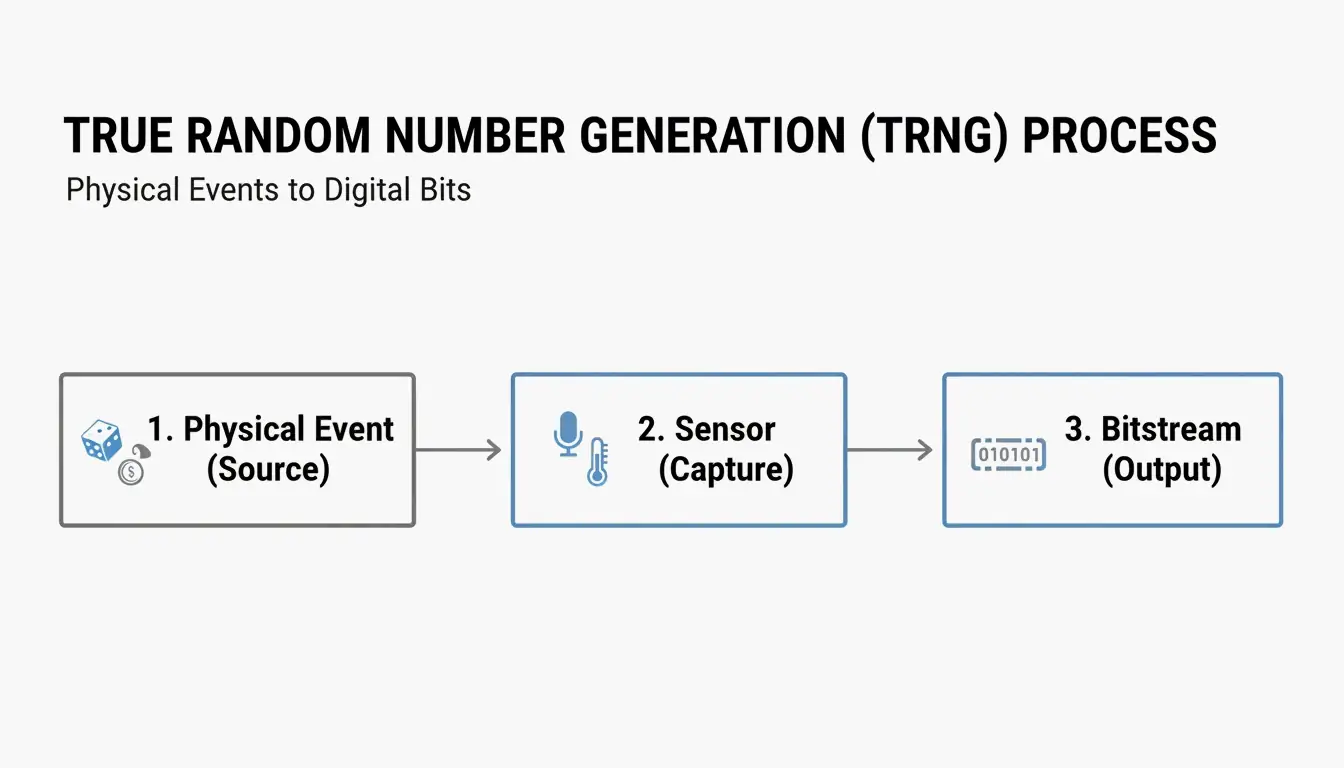
    A simple 3-step pipeline: Physical Source -> Sensor/Digitizer -> Binary Output.

    The pipeline is simple: Physical Source → Sensor/Digitizer → Binary Output. Raw entropy goes in one end; clean random bits come out the other.

    TRNG vs PRNG: The Deterministic Divide

    The core split in random number generation is between physical entropy and algorithmic logic.

    Property TRNG (Hardware) PRNG (Algorithmic) CSPRNG (Hybrid)
    Source Physical entropy Mathematical formula Hardware seed + algorithm
    Predictable? No Yes — if seed is known Extremely difficult
    Speed Slower (blocking) Very fast Fast
    Reproducible? No Yes (same seed = same output) No
    Use case Encryption keys, security tokens Simulations, games Production security systems

    When PRNGs Fail: The Hot Lotto Fraud

    A PRNG uses a seed value as a starting point for a mathematical formula. The output looks random but is entirely deterministic. If someone knows the seed and the formula, they can predict every number.

    This is not theoretical. In the Hot Lotto Fraud Scandal, an insider installed malware that forced the PRNG to use a predictable seed during maintenance — rigging a $16.5 million jackpot.
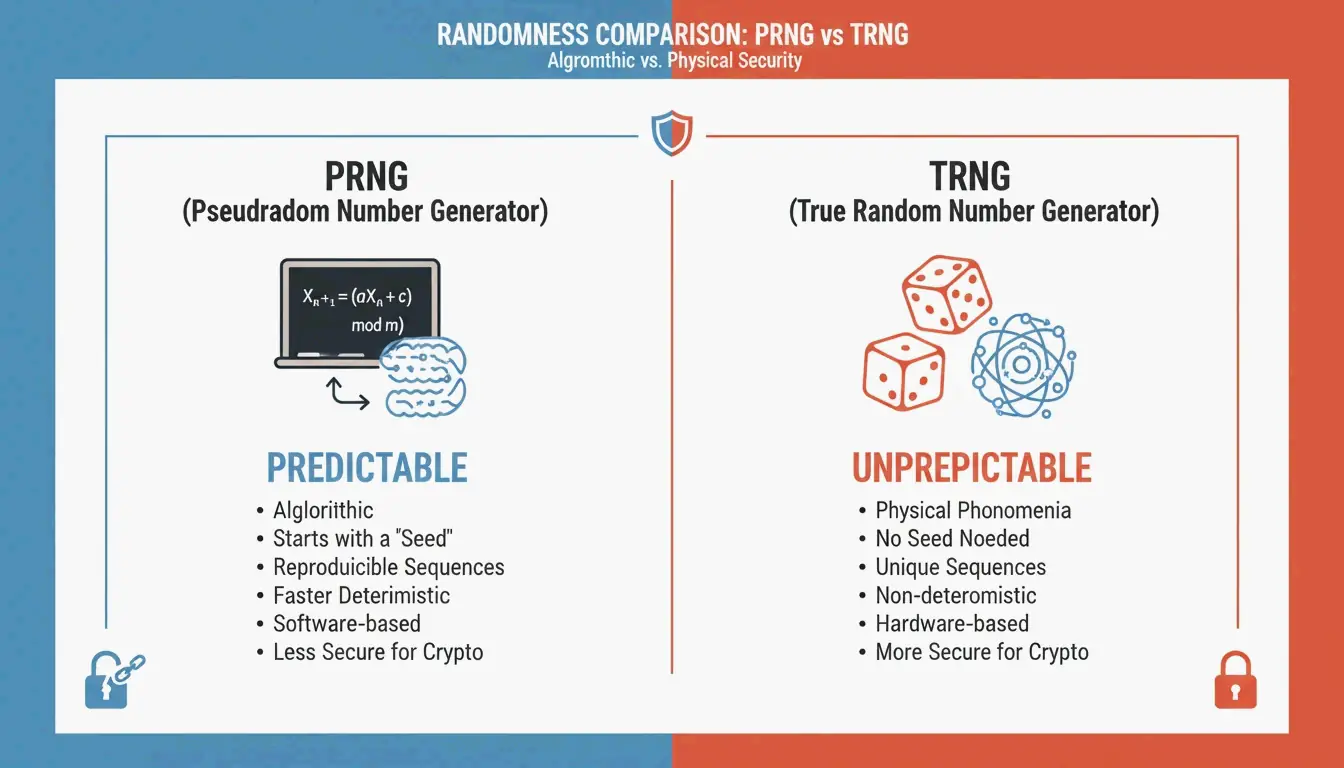
    A clean comparison between PRNG (Deterministic/Fast) and TRNG (Non-deterministic/Secure).

    When PRNGs Are the Right Choice

    PRNGs are actually better for tasks where speed and reproducibility matter. In Monte Carlo simulations, scientists need to run the same sequence repeatedly to verify results. Because you can reuse the same seed, the simulation stays consistent — something a blocking TRNG cannot do.

    The Hybrid Solution: CSPRNG

    Most modern systems use a Cryptographically Secure Pseudorandom Number Generator (CSPRNG) — a hybrid that pulls a small amount of true hardware entropy to seed a fast algorithm. This gives the unpredictability of a TRNG with the speed of a PRNG.

    The industry standard is NIST SP 800-90A, which defines how these generators must be built for government and industrial use.

    Developer Guide: Which Library to Use

    Language Insecure (PRNG) Secure (CSPRNG)
    Python random (Mersenne Twister) secrets (reads from /dev/urandom)
    JavaScript Math.random() crypto.getRandomValues()
    Go math/rand crypto/rand
    Java java.util.Random java.security.SecureRandom

    The rule: use secrets / crypto / SecureRandom for anything security-related. Use random / Math.random() only for games and simulations.

    TRNGs in 2026 Consumer Hardware

    By 2026, hardware entropy has moved from enterprise servers into everyday devices. Modern smartphone chips include dedicated TRNGs inside their Secure Enclaves, harvesting thermal noise directly from the processor to generate encryption keys for FaceID, digital wallets, and secure messaging.

    For enterprise security, the frontier is Quantum Random Number Generation. Systems like those at the Australian National University generate numbers from quantum vacuum fluctuations — a level of randomness that even future quantum computers likely cannot crack.

    Whitening: From Raw Noise to Clean Data

    Raw entropy is rarely uniform. A thermal sensor might produce slightly more 1s than 0s due to a temperature drift. To fix this bias, the data goes through whitening — typically an XOR operation or cryptographic hash — to smooth out patterns and ensure an even distribution.

    This post-processing step is required by NIST SP 800-90B for any entropy source used in a certified system.

    A Brief History of Harvesting Chaos

    • 1927: L.H.C. Tippett published a table of 41,600 digits drawn manually from census records.
    • 1955: RAND Corporation published A Million Random Digits using an electronic pulse machine.
    • 2013: The Dual_EC_DRBG scandal revealed that the NSA had placed a backdoor in a NIST-certified generator, allowing them to crack SSL connections. This incident pushed the industry toward multi-source entropy mixing — no single point of failure.

    Conclusion

    Truly random numbers are the foundation of digital trust. They require physical hardware to bridge predictable code and chaotic reality. Whether it is thermal noise in your phone or quantum fluctuations in a server room, the shift from pseudo-randomness to hardware-verified entropy is essential for security in 2026.

    For developers: use secrets (Python) or crypto.getRandomValues() (JavaScript), never random or Math.random() for security. For organizations: hardware TRNGs are no longer optional — they are a baseline requirement for encryption.

    FAQ

    Is my computer’s internal clock a source of true randomness?

    No. The clock is predictable and is often used as a PRNG seed precisely because it changes. But if an attacker knows roughly when a number was generated, they can narrow the possibilities. True randomness requires timing non-deterministic events — keystroke intervals, thermal noise — followed by statistical whitening.

    Can a human generate a truly random sequence?

    Humans are poor at randomness. We avoid clusters (like “1, 1, 1”) even though they occur naturally in random sets, and we switch between options too frequently. Statistical tests detect these patterns easily, which is why human input is acceptable for seeding but insufficient for security-critical tasks.

    What statistical tests verify true randomness?

    The NIST Statistical Test Suite (STS) is the gold standard. Other frameworks include Dieharder tests and the AIS 31 standard. These tests hunt for repeating patterns, long runs of identical bits, and other anomalies that indicate bias or predictability.
  • History of the Barcode: From Morse Code in the Sand to GS1 Sunrise 2027

    History of the Barcode: From Morse Code in the Sand to GS1 Sunrise 2027

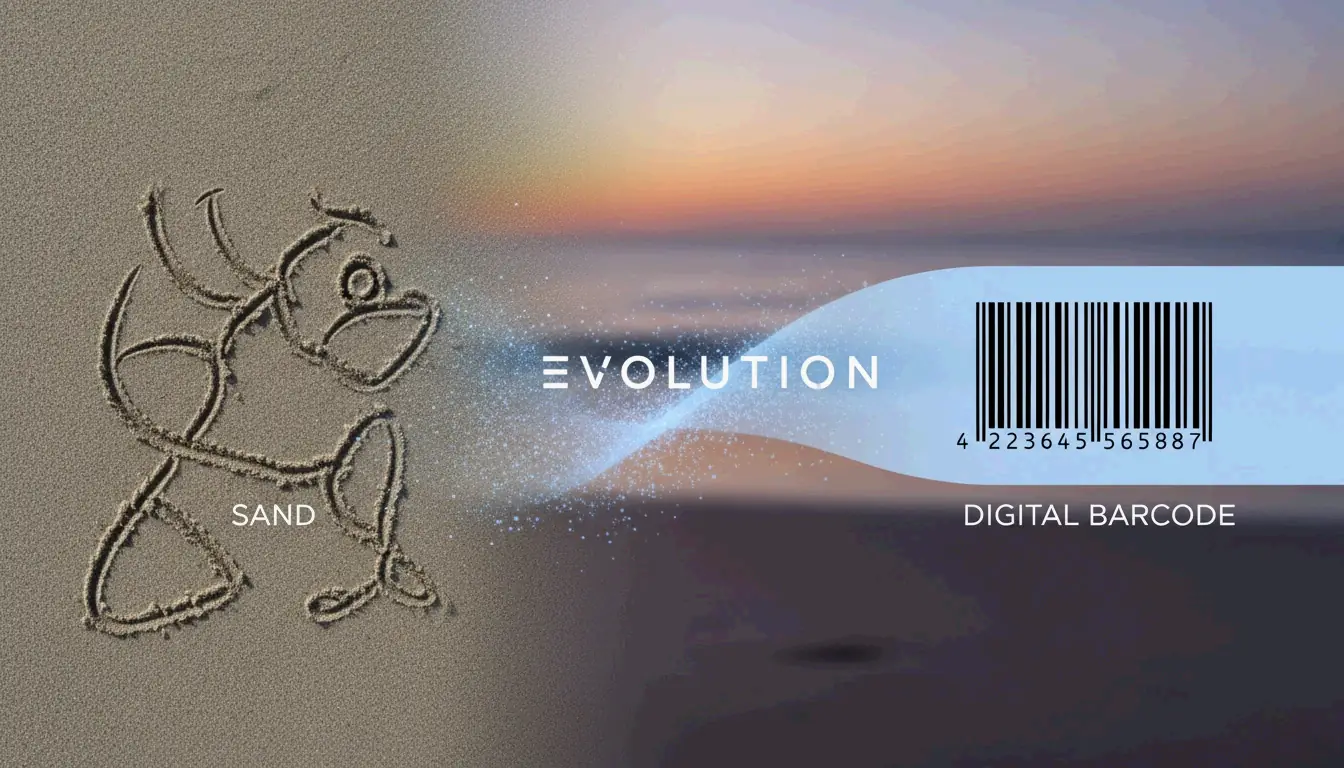
    The barcode started in 1948 when Norman Joseph Woodland sketched Morse code-inspired lines in Florida sand, was patented in 1952, and became the global retail standard when IBM’s UPC launched in 1973. Today, with over 10 billion scans per day worldwide, the industry is racing toward GS1 Sunrise 2027 — a full transition from 1D barcodes to 2D QR codes.

    Here is the full story, from that beach in Miami to the scanners at Tesco.

    The 2027 Sunrise: Why Retailers Are Switching to 2D Codes Now

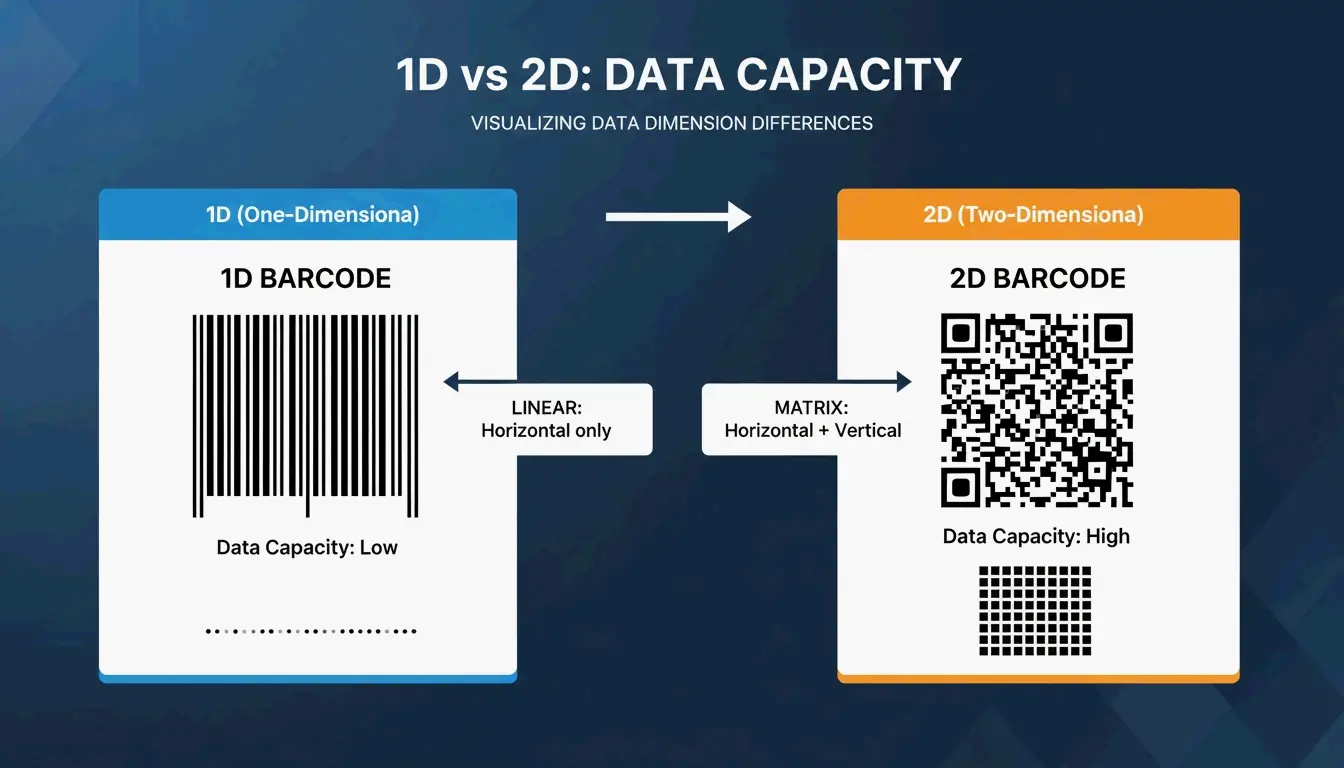
    The biggest shift since the 1970s is underway. Classic 1D barcodes identify a product and its manufacturer. Modern 2D QR codes can store expiration dates, batch numbers, allergen info, and web links — all in the same scan.

    Feature 1D Barcode (UPC) 2D QR Code
    Data capacity 20–80 numeric characters Up to 4,000 characters
    Content types Product ID + manufacturer URLs, batch numbers, dates, images
    Error correction Minimal Up to 30% damage tolerance
    Smartphone scannable Limited Native support on all modern phones

    Tesco became the first UK supermarket to make the switch. In April 2026, they began replacing barcodes with QR codes on own-brand sausages and fresh produce. Shoppers can scan a pack with their phone to check allergens or find recipes. The store gets better tracking of expiration dates to reduce food waste.

    Minimalist comparison between 1D barcodes and 2D barcodes (QR codes): data capacity and dimensions

    The Origin: Morse Code in the Sand (1948)

    The story begins at the Drexel Institute of Technology in Philadelphia. A grocery executive asked a dean to automate checkout. Bernard Silver overheard the conversation and told his friend Norman Joseph Woodland. Woodland became obsessed with solving it.

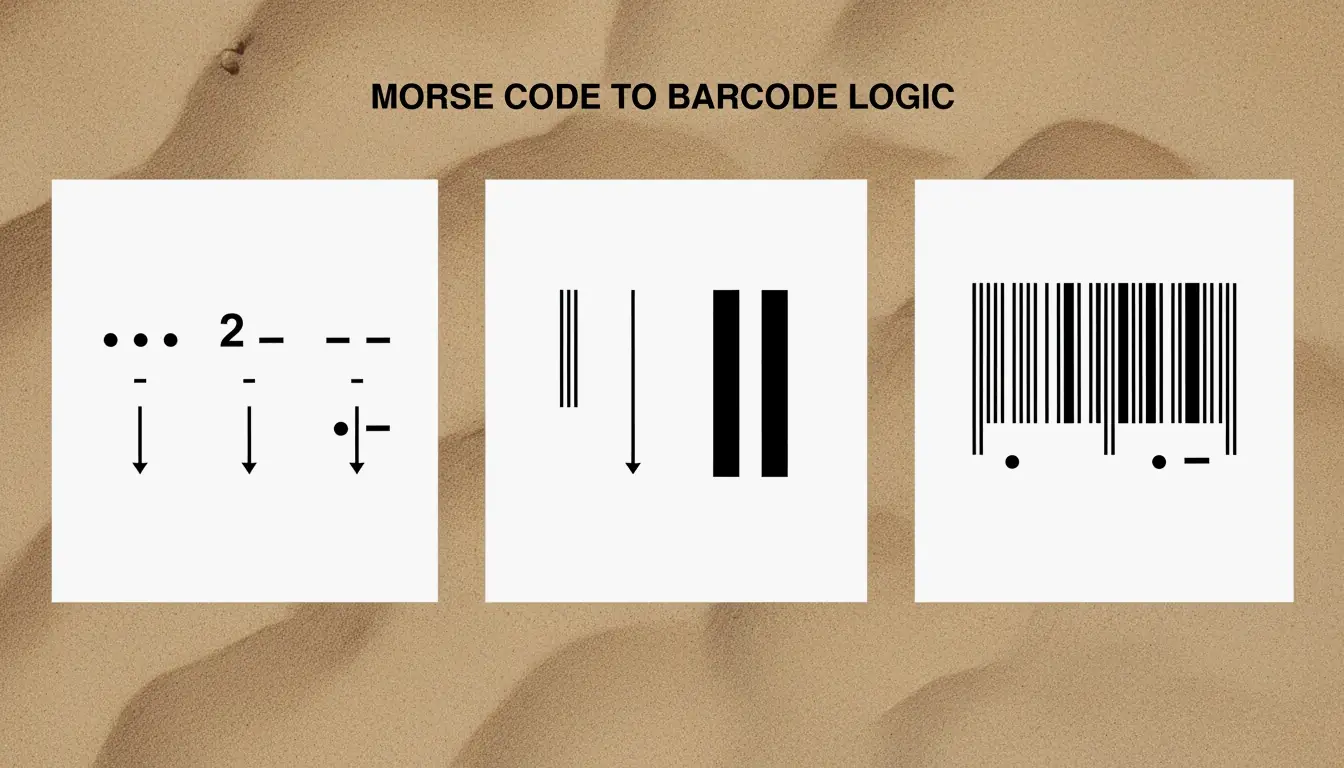
    The breakthrough came on a Miami beach. Woodland, a former Boy Scout, was thinking about Morse code. He pressed his fingers into the sand and drew dots and dashes, then pulled them downward to create vertical lines of different widths.

    “I just extended the dots and dashes downwards and made narrow lines and wide lines out of them.” — Norman Joseph Woodland, as cited by Wikipedia

    Minimalist diagram: how Morse code "dots and lines" stretch and transform into a barcode

    The Bullseye Design (1952 Patent)

    Woodland and Silver’s 1952 patent (US Patent 2,612,994) used a “bullseye” — concentric circles that could be scanned from any angle. The problem: high-speed printers smeared the ink. A smeared circle became unreadable. A smeared line just got taller, but its data-carrying width stayed the same. Linear designs won.

    IBM, George Laurer, and the UPC Standard (1973)

    Even with the patent, barcode technology gathered dust for two decades. The lights and computers needed to read codes were too expensive for most stores.

    By the early 1970s, the grocery industry formed a committee to pick a standard. RCA pushed the Bullseye. IBM had a different idea — George Laurer, working alongside Woodland at IBM, refined the linear concept into the Universal Product Code (UPC).

    On April 3, 1973, the committee chose Laurer’s design. It was easier to print and more reliable in the messy, fast-paced environment of a real supermarket.

    The First Scan: June 26, 1974, 8:01 AM

    At Marsh Supermarket in Troy, Ohio, cashier Sharon Buchanan scanned a 10-pack of Wrigley’s Juicy Fruit gum. It cost 69 cents. That single beep proved the system could handle small, everyday items — and it changed retail forever. The pack of gum is now in the Smithsonian Institution.

    1D vs 2D: Data Capacity and Real-World Impact

    The gap between 1D and 2D codes is not subtle.

    • 1D barcodes (like UPC) are linear. They hold 20–80 numeric characters — enough for a product ID.
    • 2D QR codes, invented by Denso Wave in 1994 for Toyota’s supply chain, use a grid pattern. They store up to 4,000 characters, including URLs and structured data.

    QR code usage in the U.S. reached 89 million people by 2022 and continues to climb. As Peter Draper from Tesco explains: “Moving to QR codes will help us reduce food waste, improve stock control and unlock new digital benefits for our customers.”

    GS1 and Global Standards in 2026

    GS1 manages Global Trade Item Numbers (GTINs) — ensuring a barcode scanned in London means the same thing in New York. This standardization has helped the warehouse tracking market grow toward an estimated $4.5 billion by 2033, according to GS1 data.

    In 2026, these standards are solving environmental problems too. Because 2D codes include expiration dates, supermarkets can automatically mark down food that is about to expire, reducing waste. By connecting barcodes with the Internet of Things (IoT), this 75-year-old invention remains the backbone of global trade.

    Conclusion

    The barcode has traveled from a Morse-code sketch in Florida sand to a system that handles 10 billion scans per day. From Woodland and Silver’s original bullseye patent, through Laurer’s UPC standardization, to the QR code transition driven by GS1 Sunrise 2027 — the technology keeps adapting.

    Businesses should audit their scanners and packaging now. The 2027 deadline means every checkout system will need to read 2D codes, and every product will carry a richer digital story.

    FAQ

    Who scanned the very first barcode in history?

    Sharon Buchanan, a cashier at Marsh Supermarket in Troy, Ohio. The event took place on June 26, 1974, at 8:01 AM. She scanned a 10-pack of Wrigley’s Juicy Fruit chewing gum (priced at 69 cents), now displayed at the Smithsonian Institution.

    Why is the retail industry switching from 1D barcodes to QR codes by 2027?

    The GS1 Sunrise 2027 initiative requires all checkout systems to read 2D barcodes. QR codes hold far more data than 1D codes — expiration dates, batch numbers, sustainability information — which improves food safety, reduces waste, and enables smartphone-based consumer engagement.

    How did Morse code influence the original barcode design?

    Norman Joseph Woodland, a Boy Scout proficient in Morse code, was sitting on a Miami beach in 1948 contemplating how to represent data visually. He drew dots and dashes in the sand, then pulled them downward to create vertical lines of varying widths. This visual translation of Morse code became the fundamental logic for all linear barcodes.

  • Fonts Generator: Create Unique Text Styles Easily in 2026

    Fonts Generator: Create Unique Text Styles Easily in 2026

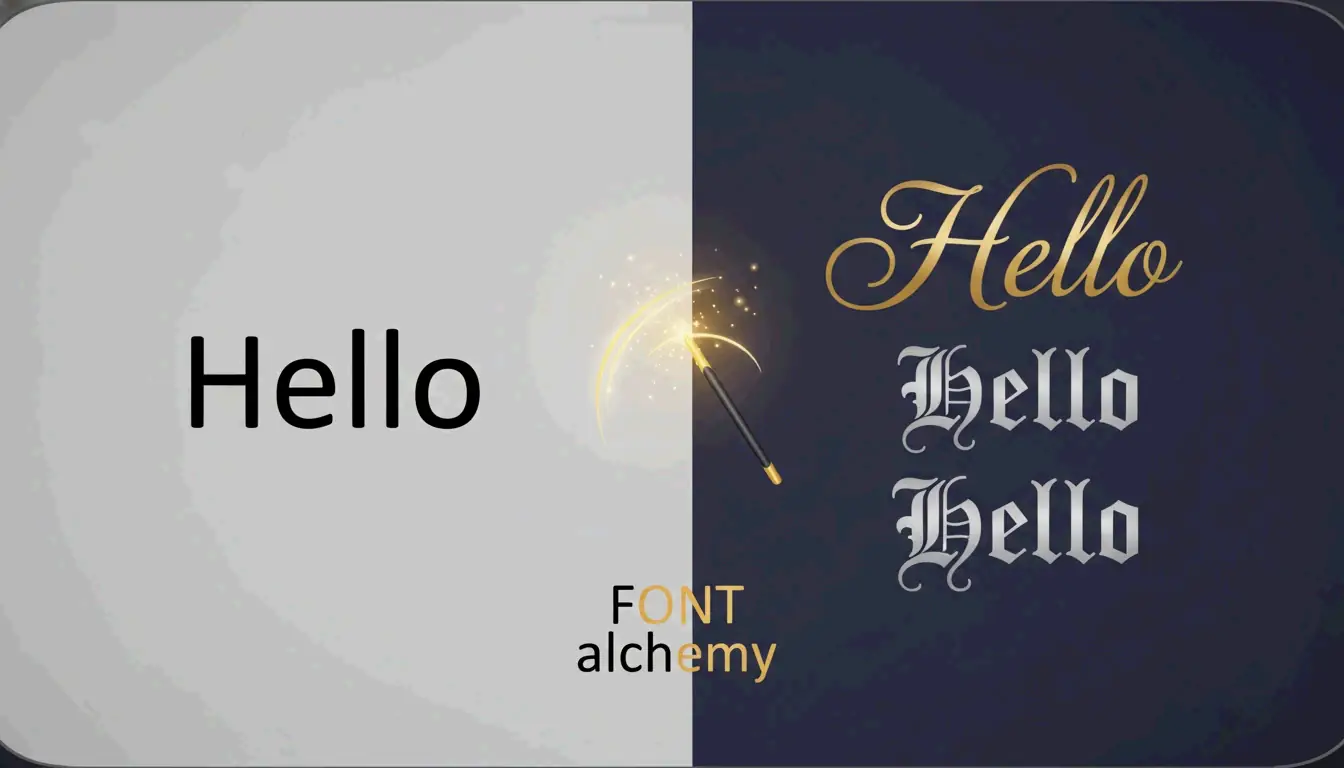
    A fonts generator converts ordinary text into decorative Unicode characters that you can copy and paste anywhere — Instagram bios, Discord nicknames, TikTok captions — without installing any software. The trick relies on the Unicode standard’s library of over 143,000 characters, which includes stylized alphabets that look like custom fonts to the human eye but are actually distinct symbols to your device.

    This guide walks through how these generators work, which styles make the biggest impact on social media, and how to stay accessible while looking great.

    How a Fonts Generator Works: Unicode, Not Font Files

    A fonts generator is not a font installer. It does not upload .ttf or .otf files to your device. Instead, it maps each letter you type to a visually similar character from the Unicode standard — a global encoding system that assigns a unique number to every character in every writing system.

    The key enabler is a Unicode block called Mathematical Alphanumeric Symbols. This block contains bold, italic, script, fraktur (gothic), and monospace versions of the Latin alphabet. Because your phone or browser treats these as “symbols” rather than “fonts,” they render correctly across iPhones, Androids, and desktop browsers without any special software.

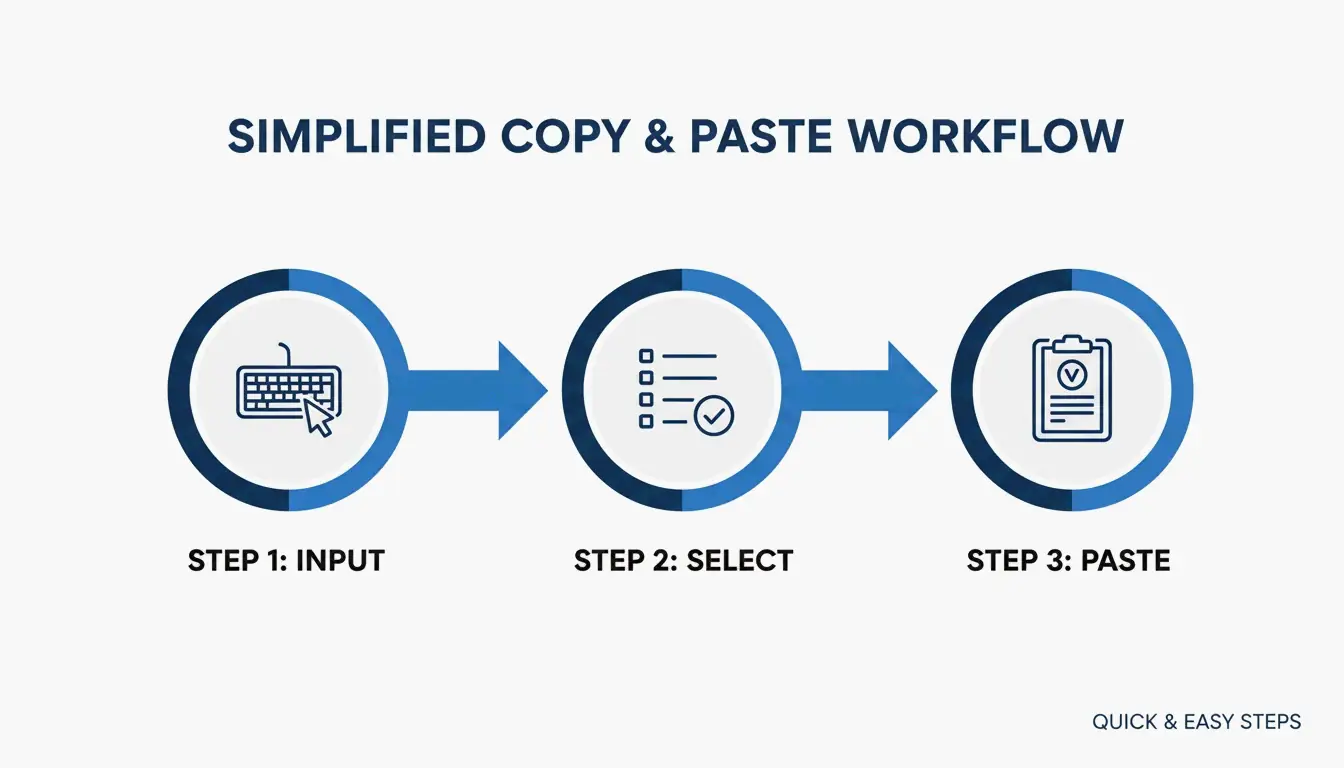
    The 3-Step Workflow

    1. Type your text into the generator’s input box.
    2. Browse the live preview list. Most tools, like Online Fonts Generator, offer 200+ styles — from elegant cursive to bubble letters to small caps.
    3. Copy and paste the result directly into Instagram, X (Twitter), Discord, or anywhere else.

    Simple 3-step process: Input, Select, and Paste.

    Which Styles Work Best? A Platform-by-Platform Guide

    Different platforms call for different visual strategies. Here is what tends to perform well where.

    Instagram Bios: Bold + Cursive Combo

    The most effective Instagram bios mix two styles at most:

    Element Recommended Style Example
    Name / Headline Bold sans-serif 𝗝𝗘𝗦𝗦𝗜𝗖𝗔
    Tagline or quote Cursive / Script 𝒥𝓇𝒾𝓋𝓎 𝒜𝓇𝓉𝒾𝓈𝓉
    Contact info / Links Plain text [email protected]

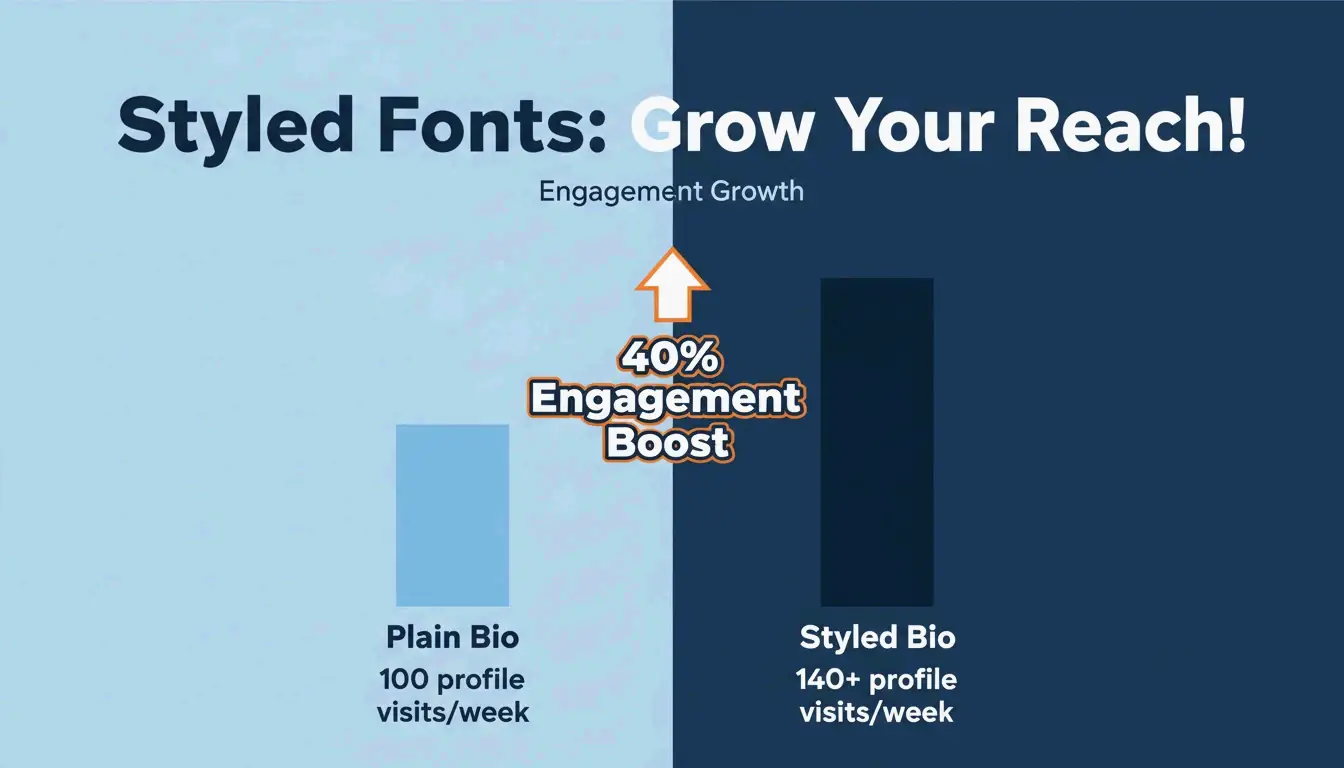
    According to Fonts Generator Pro, a user who updated their Instagram bio with styled fonts saw a 40% increase in profile visits within two weeks. Captions with styled headers outperformed plain text by 130–150% in comment growth, acting as a visual “pattern interrupt” that stops the scroll.

    Data visualization showing the 40% increase in profile visits and 130%+ growth in engagement.

    Discord and Gaming: Gothic, Glitch, and Identity Building

    In gaming communities — PUBG Mobile, Free Fire, Roblox — your username is your brand. Two styles dominate:

    • Gothic / Old English (Fraktur): Medieval-style characters that set a dark, dramatic tone. Ideal for RPGs and gothic-themed Discord servers. Example: 𝔉𝔯𝔬𝔰𝔱𝔎𝔦𝔫𝔤.
    • Glitch / Zalgo Text: Uses Unicode “combining characters” to stack diacritical marks above and below letters, creating a corrupted, horror-movie aesthetic.

    Safety check: Some games restrict excessive symbols to prevent “name spoofing” or UI glitches. Always verify your styled name displays correctly in the actual game lobby before committing.

    Accessibility: The Screen Reader Gap

    Styled Unicode text can create a serious accessibility problem. Screen readers for visually impaired users often read the technical Unicode name of each symbol rather than the letter it resembles. For example:

    • A user sees: 𝗔
    • A screen reader says: “Mathematical Bold Capital A”

    This makes long stretches of styled text unreadable for assistive technology users.

    The “Safe Mode” Font List

    Following W3C and WebAIM accessibility guidelines, these styles balance visual interest with readability:

    Safe Style Example Screen Reader Behavior
    Small Caps ꜱᴍᴀʟʟ ᴄᴀᴘꜱ Generally recognized
    Bold Serif 𝐁𝐨𝐥𝐝 Adds emphasis, minimal distortion
    Monospace 𝙼𝚘𝚗𝚘𝚜𝚙𝚊𝚌𝚎 Clean, widely supported

    Rule of thumb: Use decorative text as a highlight — for names, headers, or short taglines. Never style essential information like dates, addresses, or instructions. Keep contact details and links in plain text.

    Common Rendering Issues and How to Avoid Them

    The “Tofu” Problem

    If a styled character appears as an empty rectangle (□) or question mark, it means the recipient’s operating system or app does not support that Unicode block. This is called “tofu.” Older Android versions and outdated browsers are the most susceptible.

    Fix: Stick to widely supported styles — Bold, Small Caps, or Monospace. Avoid exotic Unicode blocks for content that needs to display reliably across all devices.

    Copyright and Safety

    Generated styles are not font files — they are Unicode symbols from an open, global standard. No licensing is required for personal or commercial use on social media platforms.

    Conclusion

    A fonts generator is a fast, free way to create unique text styles using Unicode — no design skills or software installs needed. The most effective approach is to use 2–3 complementary styles strategically: bold for headers, cursive for accents, plain text for utility. For gaming, gothic and glitch styles build memorable identities. And for accessibility, stick to the “Safe Mode” list (Small Caps, Bold Serif, Monospace) and never style essential information.

    Start with a subtle bold or small-cap style for your bio, check how it looks on different devices, and scale up from there.

    FAQ

    Why do some fancy fonts appear as boxes or question marks on my device?

    This is called “tofu” rendering. It happens when the recipient’s operating system or app lacks support for the specific Unicode block used. Older Android versions and outdated browsers are most affected. Switch to a more common style like Bold or Small Caps for reliable display.

    Are generated fonts safe to use and free from copyright?

    Yes. These are not actual font files — they are Unicode symbols from a global, standardized character set. No installation or licensing is needed for personal or commercial use on social media.

    Do styled fonts affect screen reader accessibility?

    Yes, significantly. Screen readers read the technical Unicode description (e.g., “Mathematical Bold Capital A”) instead of the letter “A.” Use styled fonts only for decorative accents — never for essential information like contact details or important announcements.

  • How to Pick a Raffle Winner Fairly: The Ultimate Guide to Random Legal Draws

    How to Pick a Raffle Winner Fairly: The Ultimate Guide to Random Legal Draws

    Running a fair raffle involves two equally important sides: the technical (using a genuinely random selection method) and the legal (meeting IRS reporting requirements, state registration rules, and nonprofit eligibility criteria). Miss either one and your raffle could be challenged — or worse, deemed illegal.

    This guide covers both. You’ll learn how to set up a provably fair digital draw using CSPRNG, navigate 2026 tax thresholds, and follow state-specific rules from California to Ohio.

    The Technical Gold Standard: CSPRNG for Unbiased Selection

    “Fairness” in a digital draw means the outcome is impossible to predict or rig. Many simple apps use Math.random() — a pseudo-random generator that follows a predictable pattern over time. Fine for casual games, but not secure enough for a legal raffle.

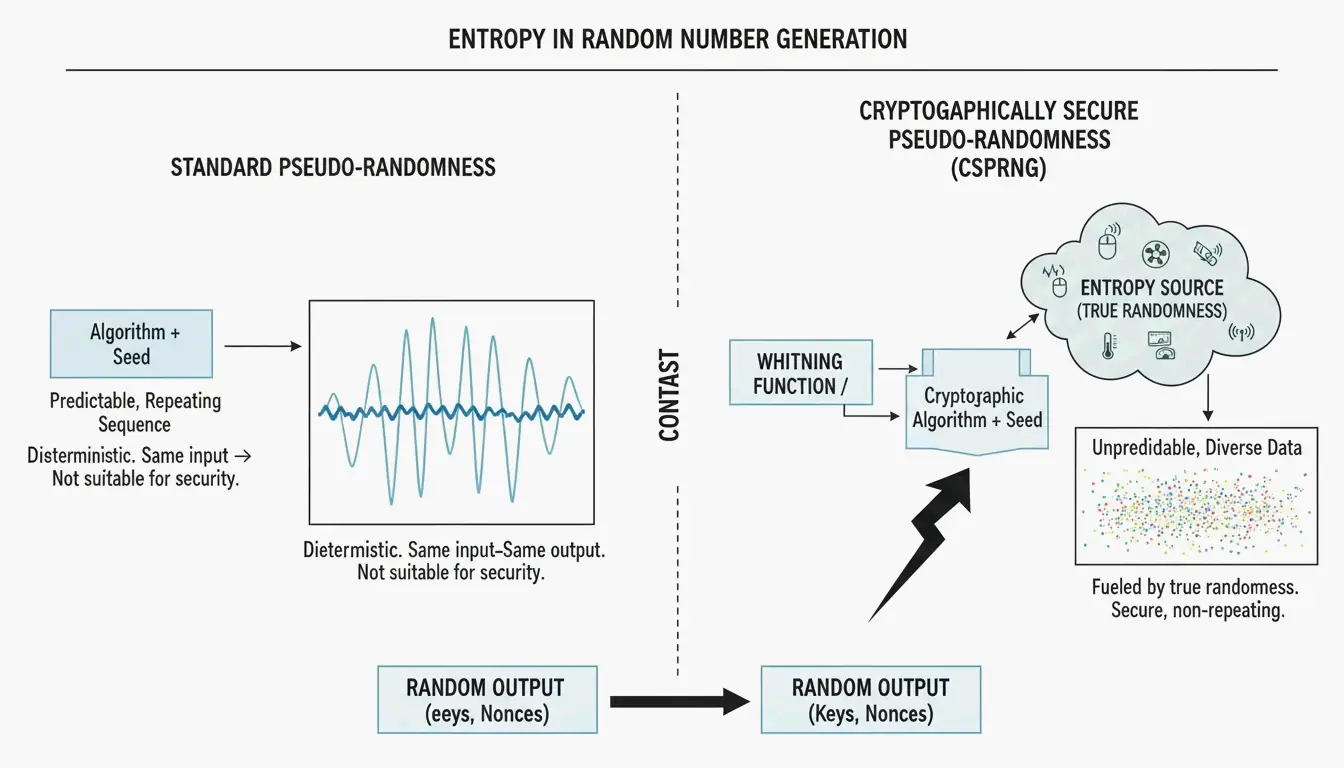
    The industry standard is CSPRNG (Cryptographically Secure Pseudo-Random Number Generator). Unlike basic generators, a CSPRNG taps into high-entropy sources — hardware timings, mouse movements, keyboard delays — to produce truly unpredictable results.

    As Wheel of Names explains, using crypto.getRandomValues() ensures that past results have no influence on future ones. Every draw is an independent event.

    Setting Up a Verifiable Draw

    1. Clean your data — Remove duplicate entries and empty lines. Every participant needs exactly the same chance.
    2. Use a verified tool — Choose a platform that provides a public record. RandomPicker notes that a screenshot isn’t enough to defend your results — you need a permanent, timestamped URL.
    3. Run a randomness audit — For major events, simulate 10,000 draws to prove winners are distributed evenly.

    CSPRNG与普通随机生成器的熵源对比

    When Physical Draws Are Legally Required

    Some laws still mandate old-school methods. Zeffy notes that in Ohio, you can sell tickets online, but the winner must be drawn from a physical receptacle (drum, box). Until modernization laws pass, fully digital drawings remain illegal in certain jurisdictions.

    2026 Legal Compliance: Tax Thresholds and Reporting

    The IRS treats raffle prizes as gambling winnings, which triggers specific reporting and withholding obligations.

    Threshold Requirement
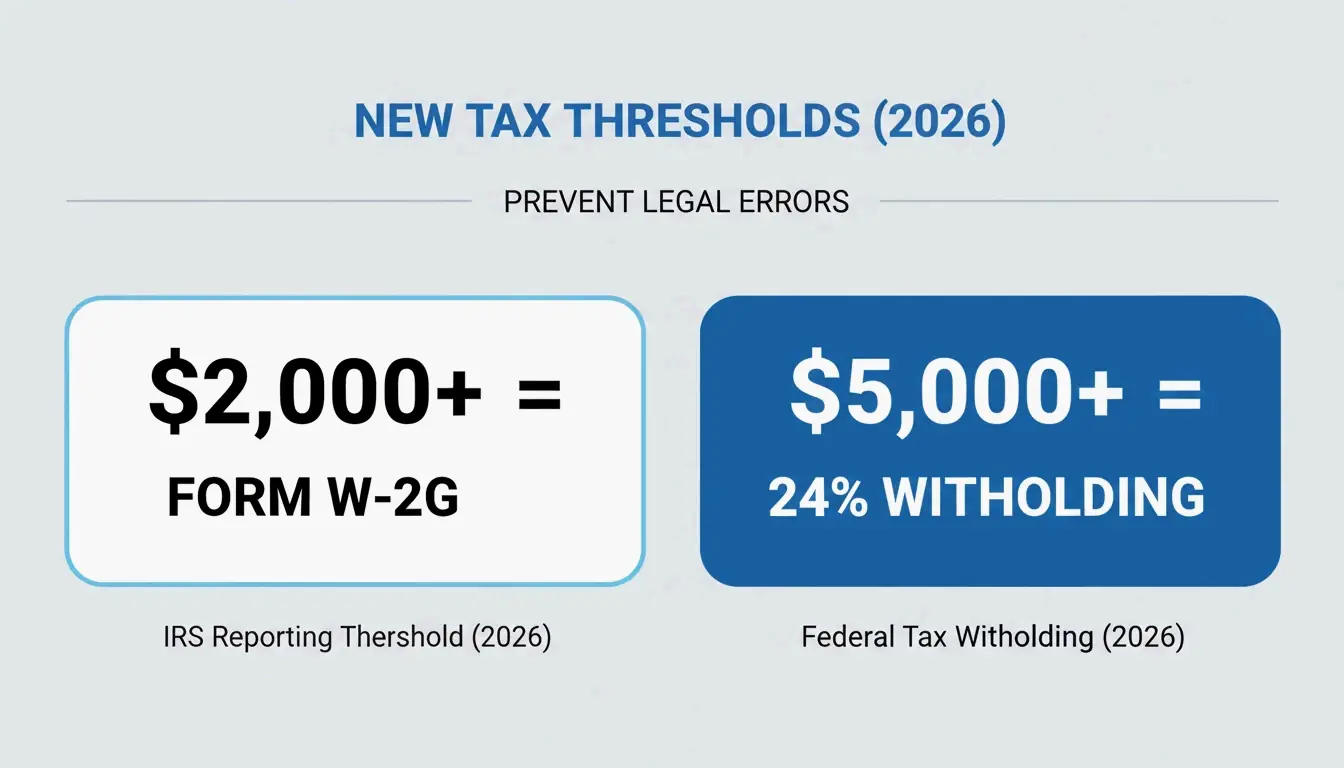
    Prize ≥ $2,000 (and ≥ 300× ticket price) File IRS Form W-2G to report the winnings
    Prize > $5,000 (minus ticket cost) Withhold 24% federal income tax before awarding the prize
    Non-cash prizes (cars, etc.) Winner may need to pay the 24% in cash to the organization before taking ownership

    The $2,000 reporting threshold (up from $600) reflects 2026 inflation adjustments reported by LegalClarity. The 24% withholding rate applies per Zeffy.

    2026年税务起征点与代扣代缴比例视觉总结

    The 90% Rule (California and Others)

    In California, at least 90% of gross ticket revenue must go to the charitable cause — only 10% can cover prizes and overhead.

    Nonprofit Eligibility: Who Can Run a Raffle?

    In 47 U.S. states, raffles are restricted to 501(c)(3) organizations or similar nonprofits (501(c)(4), 501(c)(19)). For-profit businesses and individuals are generally banned from running raffles, even if proceeds go to charity.

    UBIT Risk

    Raffles are normally exempt from Unrelated Business Income Tax (UBIT) under IRC Section 513(f) — but only if:
    – The raffle isn’t “regularly carried on” like a business
    – It’s run by volunteers, not paid staff

    Hiring an outside company to manage the raffle could make the income taxable.

    Case Study: $19,500 Raised with a Reverse Raffle

    The Clinton Wrestling Club capped tickets at 200 and used an elimination-style draw where the last ticket remaining wins the grand prize. This format creates suspense and shows that scarcity can drive more revenue per ticket than a standard drawing.

    State-Specific Rules: California, Ohio, and 2026 Legislation

    State Key Restriction Source
    California Online ticket sales prohibited — can advertise online, but transactions must be in person Zeffy
    Ohio Physical drum required for draws; House Bill 476 pending to allow online raffles ORC Section 2915.092
    Most states 501(c)(3) registration required; must file post-raffle reports State AG offices

    Violating state rules can result in misdemeanor charges, fines, or permanent loss of raffle privileges.

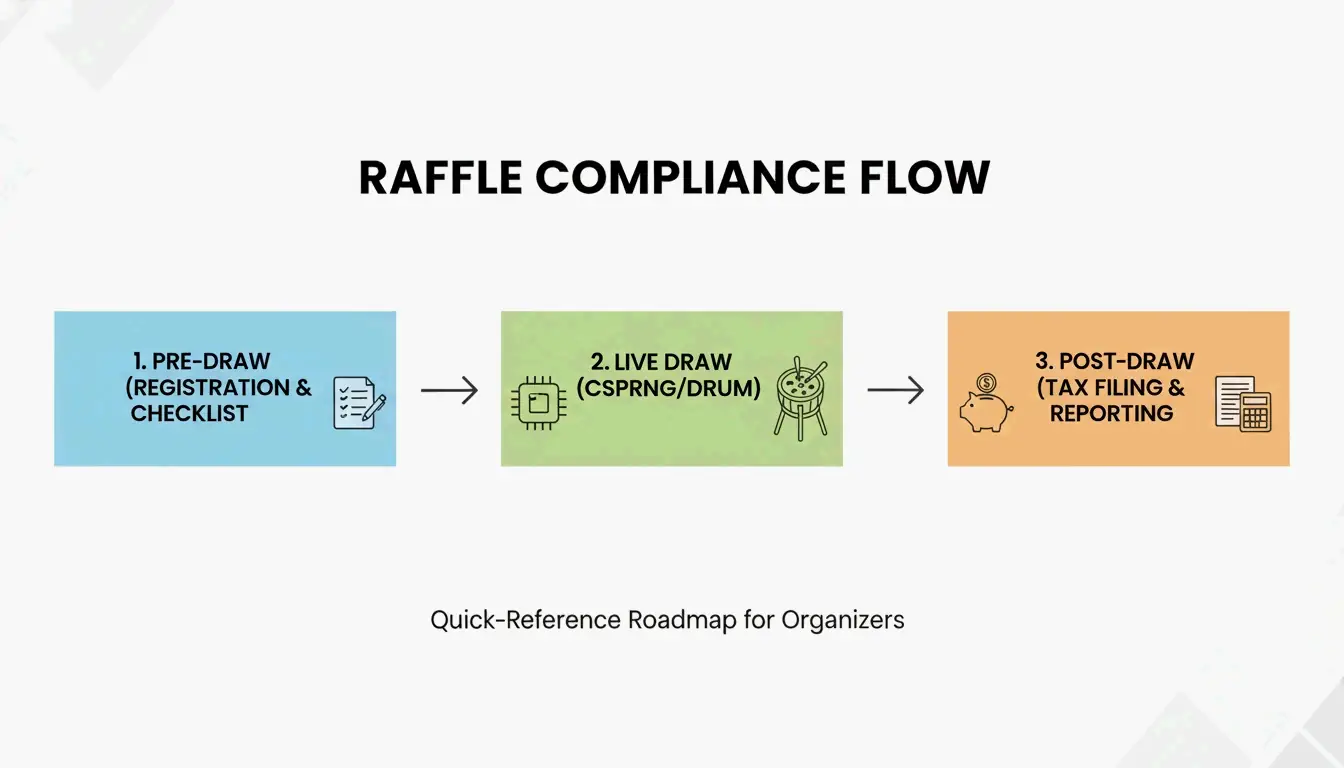
    Three-Phase Framework for a Fair & Legal Draw

    Phase 1: Pre-Draw Compliance

    • Confirm 501(c)(3) status and register with your state’s Attorney General or local Sheriff
    • Ensure tickets list: organization name, drawing date, prize fair market value
    • Verify state-specific rules (physical draw requirements, online sales restrictions)

    Phase 2: Live Draw Execution

    • Use a CSPRNG-based tool or physical container with thorough mixing
    • Record your screen during digital draws for audit trail
    • For physical draws, use a clear container and mix tickets thoroughly

    Phase 3: Post-Draw Obligations

    • Send Form W-2G for prizes ≥ $2,000
    • Collect 24% withholding for prizes > $5,000
    • File post-raffle reports (e.g., California’s Form CT-NRP-2 by February 1 deadline)

    抽奖活动合规三阶段简化流程

    Creating a Permanent Audit Trail

    RandomPicker creates a public record page with a unique URL showing the entry list, winner, and timestamp — proving the result was locked in and wasn’t tampered with.

    Conclusion

    Running a fair raffle means combining technical rigor (CSPRNG) with strict legal compliance (IRS thresholds, state registration, nonprofit eligibility). The 2026 landscape has updated tax thresholds ($2,000 W-2G, 24% withholding over $5,000) and pending legislation that could reshape digital draws in states like Ohio.

    Before your next raffle: Verify your drawing software is CSPRNG-compliant, confirm your nonprofit status for your operating state, and budget for the 24% withholding on prizes over $5,000.

    FAQ

    Is it legal to sell raffle tickets online in California in 2026?

    Generally no. California Penal Code 320.5 prohibits online ticket sales, trades, or redemptions. You can advertise on social media, but the transaction and drawing must happen in person. Always verify the 90/10 rule before proceeding.

    What is the IRS reporting threshold for raffle winnings in 2026?

    $2,000 — up from the previous $600 due to inflation adjustments. File IRS Form W-2G if the prize hits this value and is at least 300 times the ticket cost.

    Can a for-profit business host a raffle for charity?

    In most states, no. Only 501(c)(3) nonprofits can hold raffles. A for-profit business can sponsor a raffle where the nonprofit holds the license, or run a Sweepstakes (no purchase required to enter), which falls under different legal rules.

  • Random Number Generator: The Ultimate Guide to Fair Choices

    Picking a random number sounds simple — but doing it in a way that’s truly fair, verifiable, and trustworthy requires more than clicking a “randomize” button. In 2026, running a fair digital draw means using the right algorithm (CSPRNG), the right settings (unique mode), and providing transparent proof of the result.

    This guide covers the practical framework for unbiased digital selection — from raffles and classroom picks to corporate giveaways and simulations.

    The 2026 Fairness Framework: Setting Up a Random Draw

    According to Wheel of Names, these tools are in massive demand — the platform recorded over 462 million wheel spins in 2026 alone. At that scale, keeping things fair requires a structured setup.

    Step 1: Choose Your Mode

    Mode Best For Key Feature
    Integer mode Raffles, giveaways, classroom picks Supports “Unique Mode” — prevents duplicate picks
    Decimal mode Simulations, probability testing Precision up to 10 decimal places (MyClickTools)

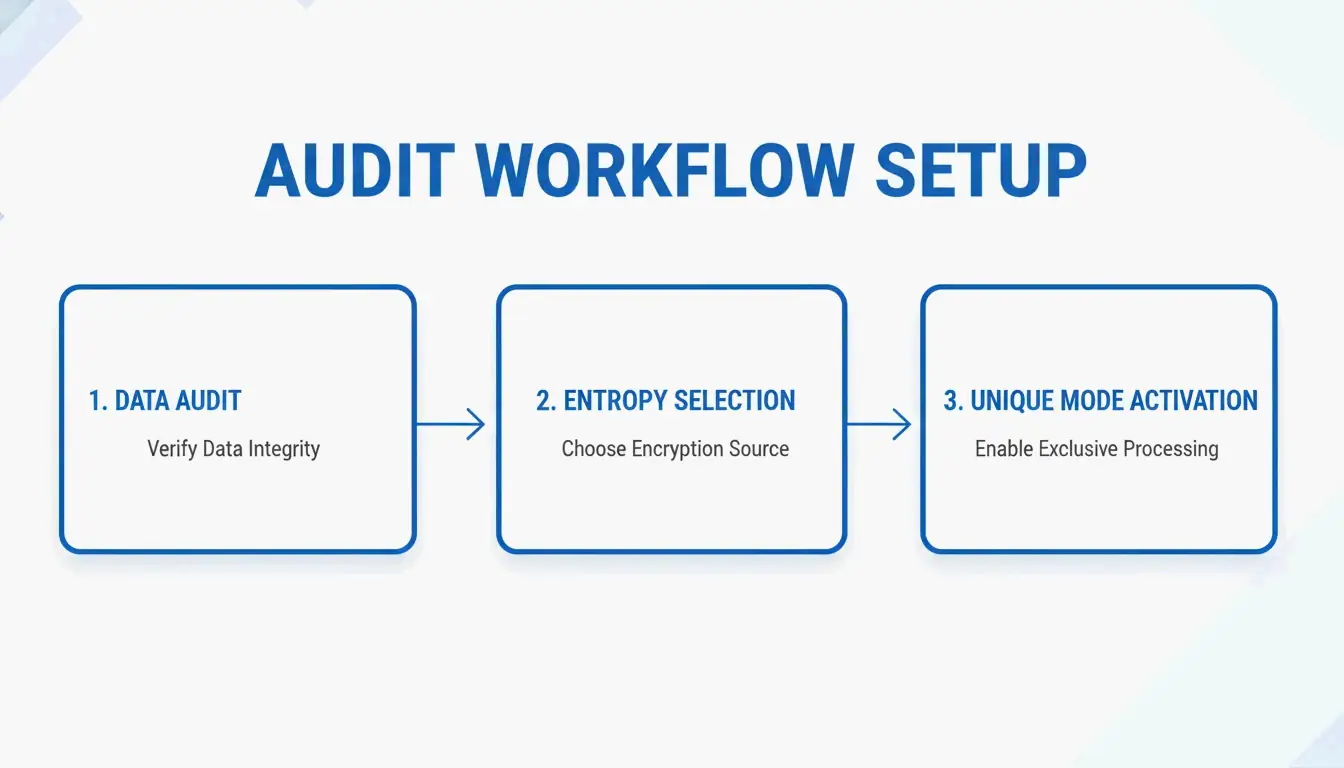
    Step 2: Pre-Draw Audit Checklist

    Before hitting “generate,” run through this checklist:

    1. Check your entry list — Remove accidental duplicates from your data.
    2. Pick a secure entropy source — Choose “Secure (Crypto)” mode over basic Math.random. Tools like GadgetKit let you toggle between fast and secure modes.
    3. Enable Unique Mode — For giveaways, disable “Allow Duplicates.” A good tool should warn you if you try to pick 11 unique winners from a pool of 10.
    4. Choose sorting — Decide whether results display randomly or sorted (ascending/descending) for easier auditing.

    极简预抽奖审计流程:核对列表 -> 选择模式 -> 开启唯一项

    CSPRNG vs. PRNG: Why It Matters

    Most people think all “random” buttons work the same way. They don’t. As computer scientist John von Neumann famously said in 1951:

    “Anyone who considers arithmetical methods of producing random digits is, of course, in a state of sin.”

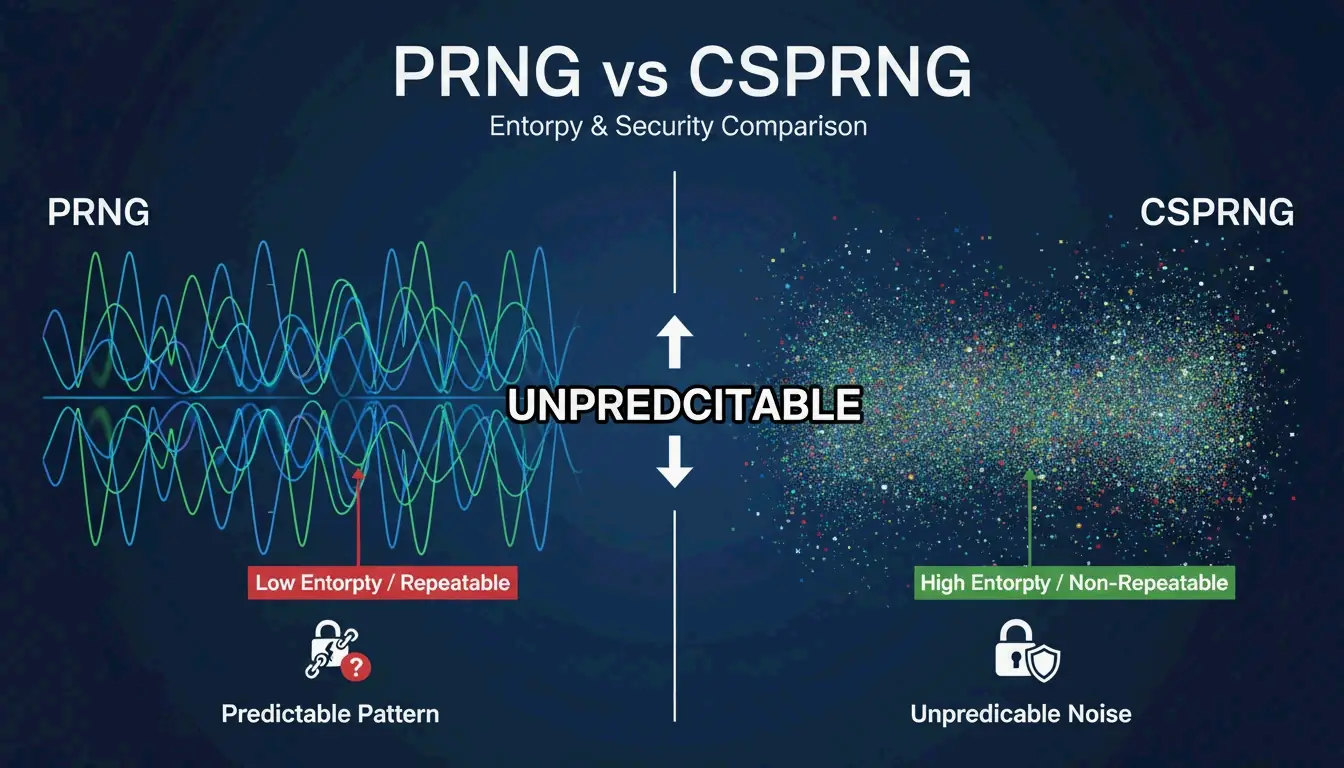
    Feature PRNG (e.g., Mersenne Twister) CSPRNG
    Predictability Predictable if the seed is known Impossible to predict
    Entropy source Mathematical formula Hardware timings, mouse movements, system events
    Standard Fine for simulations Required by NIST SP 800-90A for high-stakes draws
    Example Math.random() crypto.getRandomValues()

    PRNG(可预测)与 CSPRNG(不可预测)的核心差异对比

    The Stakes Are Real

    A historical case involved a $16.5 million lottery fraud where an insider rigged a secure RNG computer to make winning numbers predictable. Modern tools like Wheel of Names prevent this by using crypto.getRandomValues() instead of Math.random().

    Weighted Selection: When Not Everyone Has Equal Odds

    Weighted selection lets certain entries have better odds while keeping the final result random — for example, giving VIP members extra entries in a draw. According to YesOrNoWheelPicker, the key is being 100% transparent about the rules before the draw.

    When announcing results, be clear:

    “To reward our most active community members, this draw used a weighted selection process. Everyone had a chance to win, but those in our ‘Loyalty Tier’ received [X] additional entries. The final pick was processed through a CSPRNG algorithm to ensure it was entirely random and unbiased.”

    Selection Type How It Works When to Use
    Standard Everyone has equal odds (1 in N) Simple raffles, classroom picks
    Weighted Some entries get more “tickets” Loyalty rewards, tiered giveaways

    If you use weighted draws, disclose the weighting rules beforehand — otherwise participants lose trust.

    Compliance and Data Privacy (2026)

    Fairness and privacy go hand-in-hand. If you’re handling participant data, GDPR and CCPA requirements apply. The best platforms use client-side generation — random numbers are created in your browser and never sent to a server.

    Public Verification vs. Data Protection

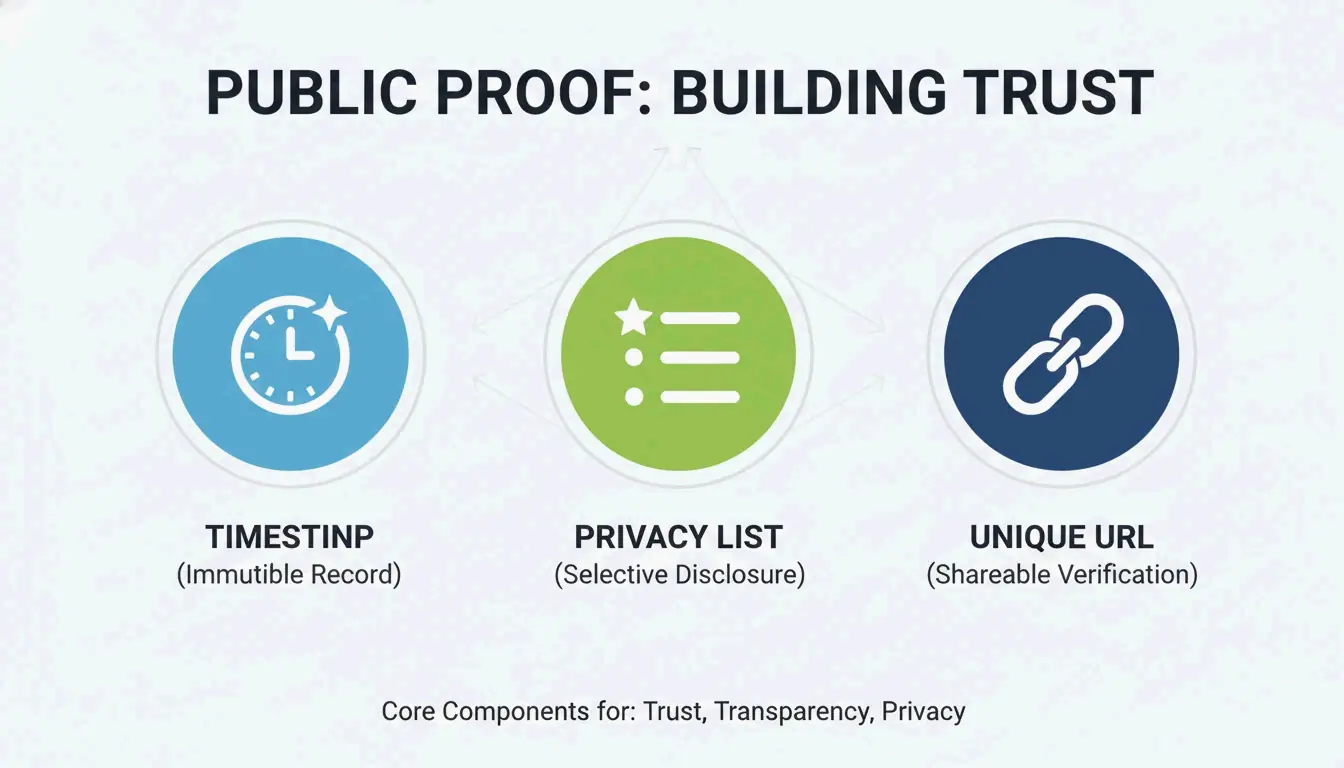
    A RandomPicker study recommends using Public Proof Pages — permanent records that show:

    Proof Element What It Shows
    Timestamp Exact date and time of the draw
    Redacted entry list Participant emails masked (e.g., j***@email.com) — auditable without exposing private info
    Unique URL Proves results weren’t changed or deleted after the fact

    公开证明页面的三大核心要素:时间戳、脱敏数据、唯一链接

    Conclusion

    Fairness in digital selection comes down to three things:

    1. The right algorithm — CSPRNG for any draw involving prizes or money
    2. The right settings — Unique Mode to prevent duplicates, secure entropy source
    3. Clear transparency — Public proof pages with timestamps and redacted entry lists

    In 2026, “trust me” doesn’t cut it. You need to show your work with timestamped logs, NIST-compliant tools, and verifiable proof pages. Whether you’re picking a student in a classroom or running a major giveaway, the same standards apply.

    FAQ

    Is Math.random() fair enough for a high-stakes giveaway?

    No. Math.random() is a PRNG that can technically be predicted. For any draw involving prizes or money, use a tool based on CSPRNG (like crypto.getRandomValues()) to ensure results are truly unpredictable.

    How do I pick a winner from a list without manual bias?

    Use a “List Randomizer” or “Winner Generator” tool. Paste your names, enable Unique Mode, and run the draw. For maximum trust, record your screen during the process and share a timestamped results link or public proof page.

    What’s the difference between standard and weighted random selection?

    Standard: Everyone has equal odds (1 in N). Weighted: Certain entries get more chances (e.g., a VIP gets 5 entries instead of 1). If using weighted selection, you must disclose the rules before the draw so all participants understand how it works.

  • How to Create a Unique Username with Numbers: Aesthetic Ideas and Security Tips

    How to Create a Unique Username with Numbers: Aesthetic Ideas and Security Tips

    With over 2 billion active Instagram accounts, almost every common name was claimed years ago. In 2026, standing out requires more than appending your birth year to your first name — that approach is both generic and a security risk.

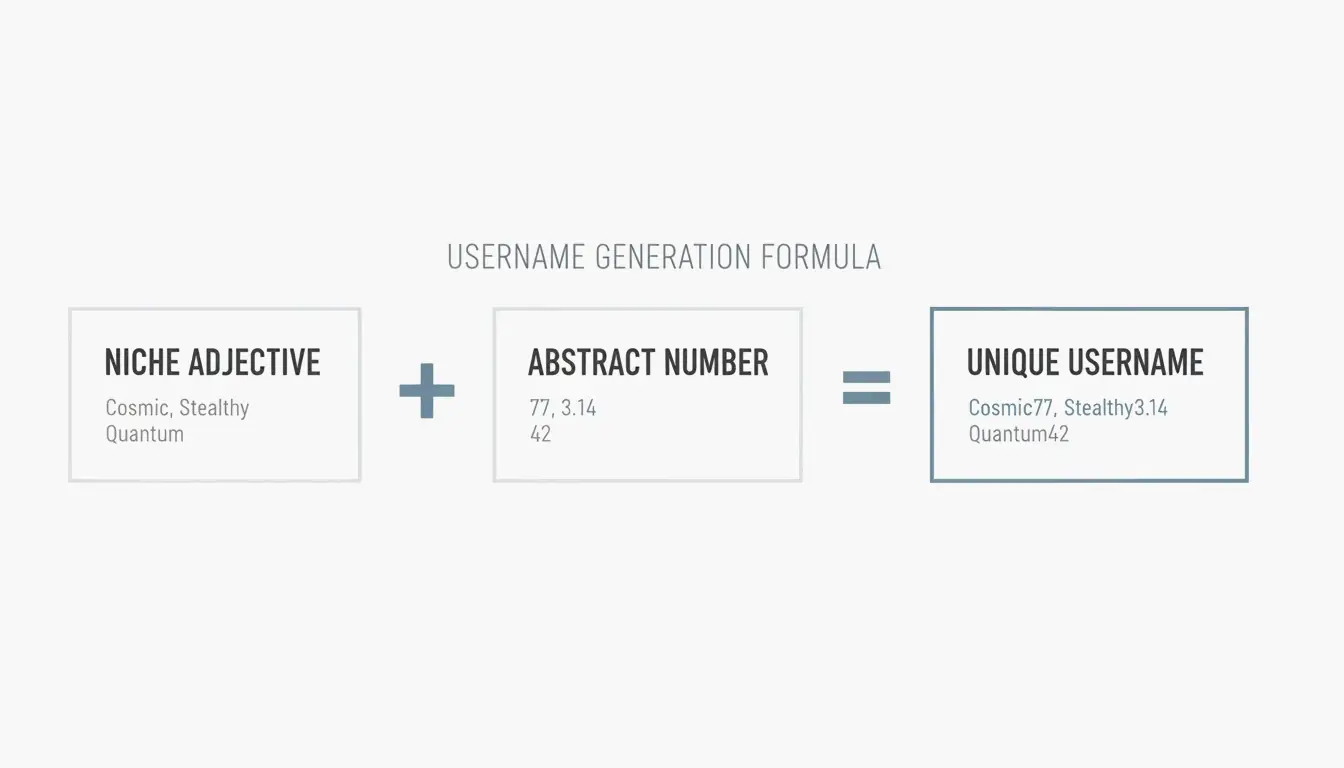
    This guide covers a formula-based method for creating usernames that look great and keep you safe: [Niche Adjective] + [Abstract Number], plus platform-specific formatting tips and security practices that are non-negotiable.

    The 2026 Username Formula

    The most effective strategy right now is combining a mood-specific word with a non-obvious number:

    [Niche Adjective] + [Abstract Number]
    Example: velvet404, dusk000, pulse777
    

    This beats the old “Name + Birth Year” format in two ways: it’s visually cleaner, and it doesn’t leak personal information. Aim for the 12–18 character sweet spot — long enough to be unique, short enough for people to remember and type.

    A simple 3-node diagram showing the 2026 username formula

    Step 1: Pick Your Aesthetic Style

    Style Example Words Best Platforms
    Minimalist Base, Form, Still, Mono, Zero LinkedIn, professional portfolios
    Lo-fi / Dreamy Vapor, Velvet, Dusk, Ethereal, Satin Instagram, Pinterest, Tumblr
    Tech / Cyber Neon, Pulse, Syntax, Node, Hex Discord, Steam, GitHub
    Gamer Shadow, Cyber, Phantom, Apex Xbox, PlayStation, Twitch

    CodeItBro suggests matching your aesthetic to the platform — visual apps favor dreamy styles, gaming platforms favor bold or edgy ones.

    Step 2: Add Numbers That Look Intentional

    Avoid long random strings like user123456 — Zeptempmail warns these look like bot accounts. Instead, use numbers that add visual balance:

    Number Why It Works Example
    000 or 777 Symmetrical, balanced dusk000, neon777
    404 Tech-savvy nod to “not found” velvet404
    99 Clean minimalist suffix form99
    101 Academic / tutorial vibe syntax101

    Security: Why CSPRNG and PII Avoidance Are Non-Negotiable

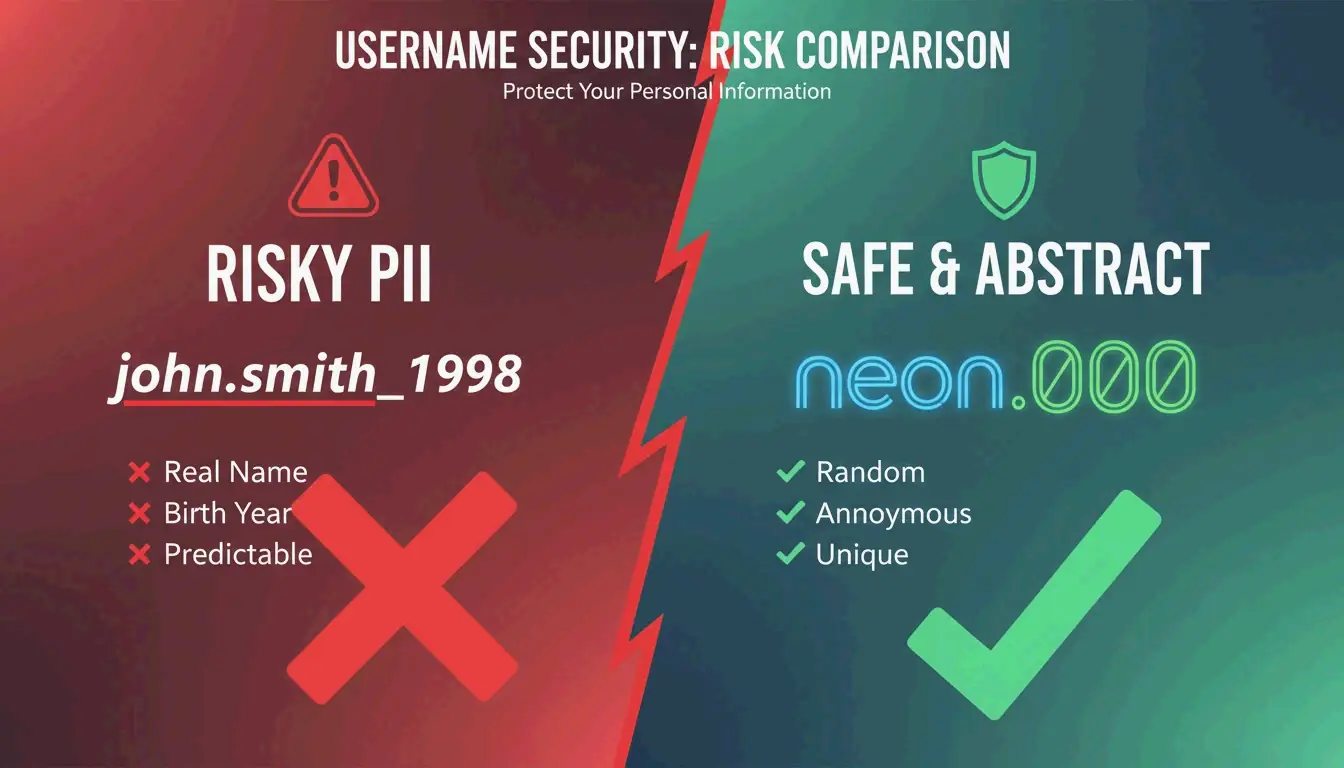
    Putting your birth year, full name, or location in a username makes you a target for Username Harvesting — bad actors collecting data across sites to build a profile for doxing or phishing.

    For high-security accounts, use a CSPRNG (Cryptographically Secure Pseudo-Random Number Generator). According to Generate-Random.org, this ensures your combinations are truly random, not based on predictable patterns.

    A high-contrast comparison between 'Bad/Risky' and 'Good/Safe' username patterns

    The Security-Aesthetic Matrix

    Number Choice Aesthetic Value Security Rating
    Birth year (e.g., 1998) Low — feels dated High Risk (PII)
    Repeating (e.g., 000) High — symmetrical Low Risk
    Abstract (e.g., 404) High — tech vibe Low Risk
    CSPRNG random Moderate Maximum Security

    Don’t Reuse Usernames Across Sensitive and Public Platforms

    Dashlane notes that a unique username is only the first step. If your aesthetic Instagram handle is the same one you use for banking or crypto, a data leak on one site could lead attackers straight to your financial accounts.

    Rule: Your financial/crypto usernames should be completely different from your social ones — use a high-randomness handle generated by a password manager or CSPRNG tool.

    Cross-Platform Consistency

    Building a recognizable brand means using the same (or very similar) handle everywhere. If you’re @velvet.404 on Instagram but @velvet_404_official on TikTok, you lose brand recognition.

    The Social Cat recommends using tools like Namechk to scan availability across multiple platforms before committing.

    Platform Formatting Differences

    Platform Character Limit Style Notes
    Instagram 30 chars Periods (.) feel more editorial/professional
    TikTok 30 chars Same rules as Instagram
    Discord 32 chars Underscores (_) common in lo-fi/gamer communities
    Gaming (Xbox/Steam) 15 chars Edgier prefixes work well (Shadow, Cyber, Neon)

    If your handle is taken on one platform, CodeItBro suggests slightly tweaking the number or adding a minimalist suffix (.co, .edit, hq) to maintain the vibe.

    Advanced: Privacy-First Sign-ups and Rare Handles

    Temporary Email for Sign-ups

    Zeptempmail suggests using a temporary email for social sign-ups to prevent your primary email from entering the advertising ecosystems of Meta or ByteDance. This keeps your real identity separate from your social persona.

    Hunting Rare Handles (4-Letter Names)

    Short usernames are highly prized. If you find a 4-letter handle available, register it on every major platform immediately — even ones you don’t plan to use yet. These names appreciate in value and become unavailable quickly.

    The Crypto/Finance Rule

    Never use your social media handle for financial or crypto accounts. BYDFI and security experts warn that linking financial assets to a public aesthetic handle makes you a phishing target. Use a completely different, high-randomness handle for money-related services.

    Conclusion

    Creating a unique username in 2026 means balancing visual appeal with real security:

    1. Pick your aesthetic — Minimalist, Lo-fi, Tech, or Gamer
    2. Add an abstract number — 000, 404, 777, 99
    3. Check availability everywhere — Use Namechk or similar tools
    4. Separate identities — Social handles ≠ financial handles
    5. Use temp emails for sign-ups to protect your primary identity

    The formula [Niche Adjective] + [Abstract Number] gives you a name that’s memorable, visually clean, and doesn’t leak your personal information.

    FAQ

    Are underscores or periods better for Instagram username aesthetics?

    Periods (.) look cleaner and more editorial — popular with photographers and lifestyle creators. Underscores (_) fit lo-fi, grunge, and gamer aesthetics. Both work as visual breaks, but avoid mixing them in a single name — it looks cluttered.

    How many characters can an Instagram or TikTok username have?

    Both platforms allow up to 30 characters. For SEO and brand recall, stay under 20. The sweet spot is 12–18 characters — unique enough to stand out, short enough to remember.

    Is it safe to use my real name in a crypto wallet username?

    No. Using your real name or social handle links financial assets to your real-world identity. Publicly searchable financial usernames increase the risk of phishing, doxing, and social engineering. Use a completely different, non-aesthetic handle for all financial services.

    How can I check username availability across all platforms?

    Use aggregation tools like Namechk or Social Cat to scan multiple databases at once. If your desired name is taken on a specific platform, tweak it with an abstract number or minimal suffix without losing the aesthetic. Register on major platforms immediately — even ones you don’t plan to use yet.

  • Best Markdown Table Generator: Convert Excel, CSV, JSON to GFM Fast

    Best Markdown Table Generator: Convert Excel, CSV, JSON to GFM Fast

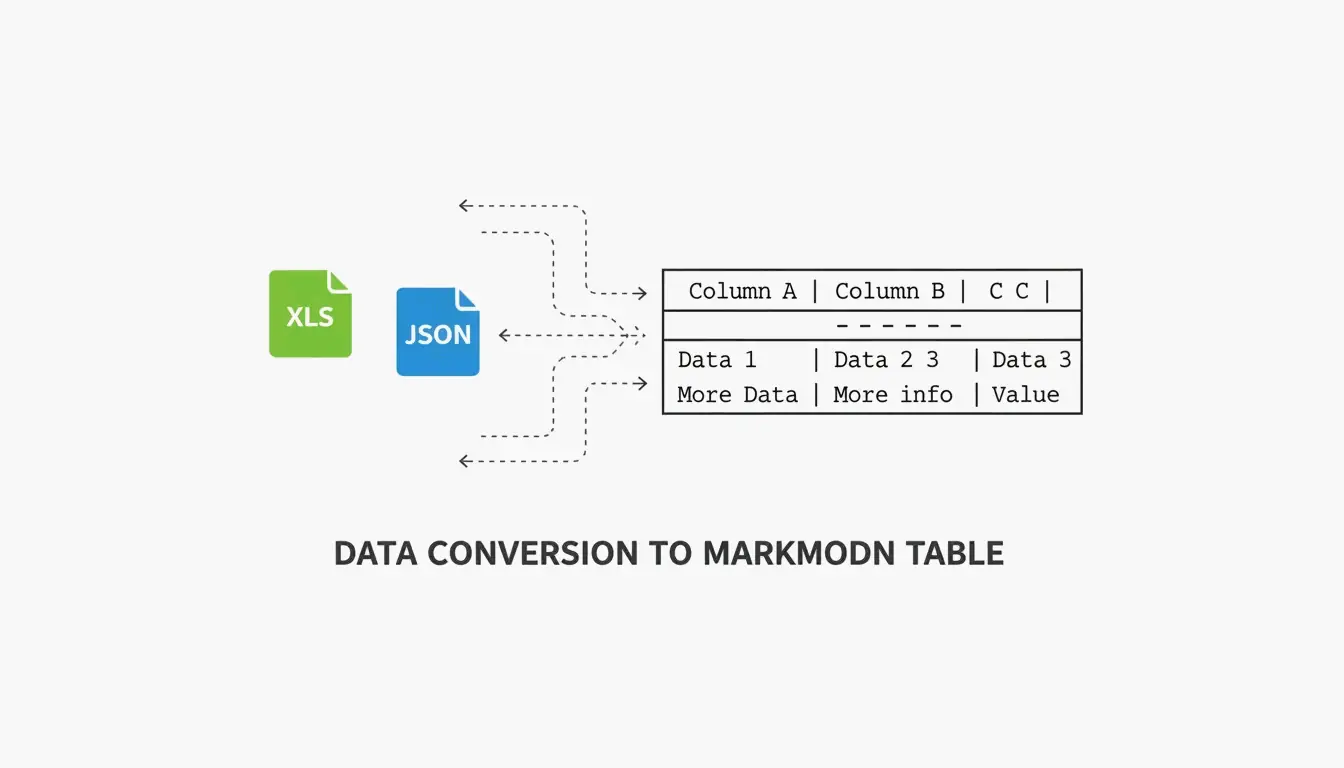
    Need to turn a spreadsheet, CSV, or JSON file into a clean Markdown table? In 2026, the process is straightforward — the right tool depends on whether you’re doing a quick one-off conversion or automating documentation at scale.

    This guide covers the best tools for each scenario: visual editors for manual work, CLI tools for automation, and CI/CD integration for keeping documentation in sync with your codebase.

    Top Tools at a Glance

    Tool Best For Type Key Strength
    TableGenerator.com Quick visual edits Web (client-side) Grid-based editor, alignment controls
    AnywayData Messy JSON files Web / library Flattening nested structures, AST parsing
    MarkItDown (Microsoft) Excel/Word automation Python CLI Preserves headers and table grids from Office files
    Pandoc Multi-format conversion CLI Supports dozens of formats, stable at scale
    EaseCloud Excel → GFM Web Simple browser-based converter
    GoConverter Excel → GFM Web Fast conversion with alignment options

    According to DasRoot (2026), modern Markdown tools can process 15–30 tables per second for mid-sized datasets — and the best ones use client-side processing, meaning your data never leaves your browser.

    Why GFM Compliance Matters

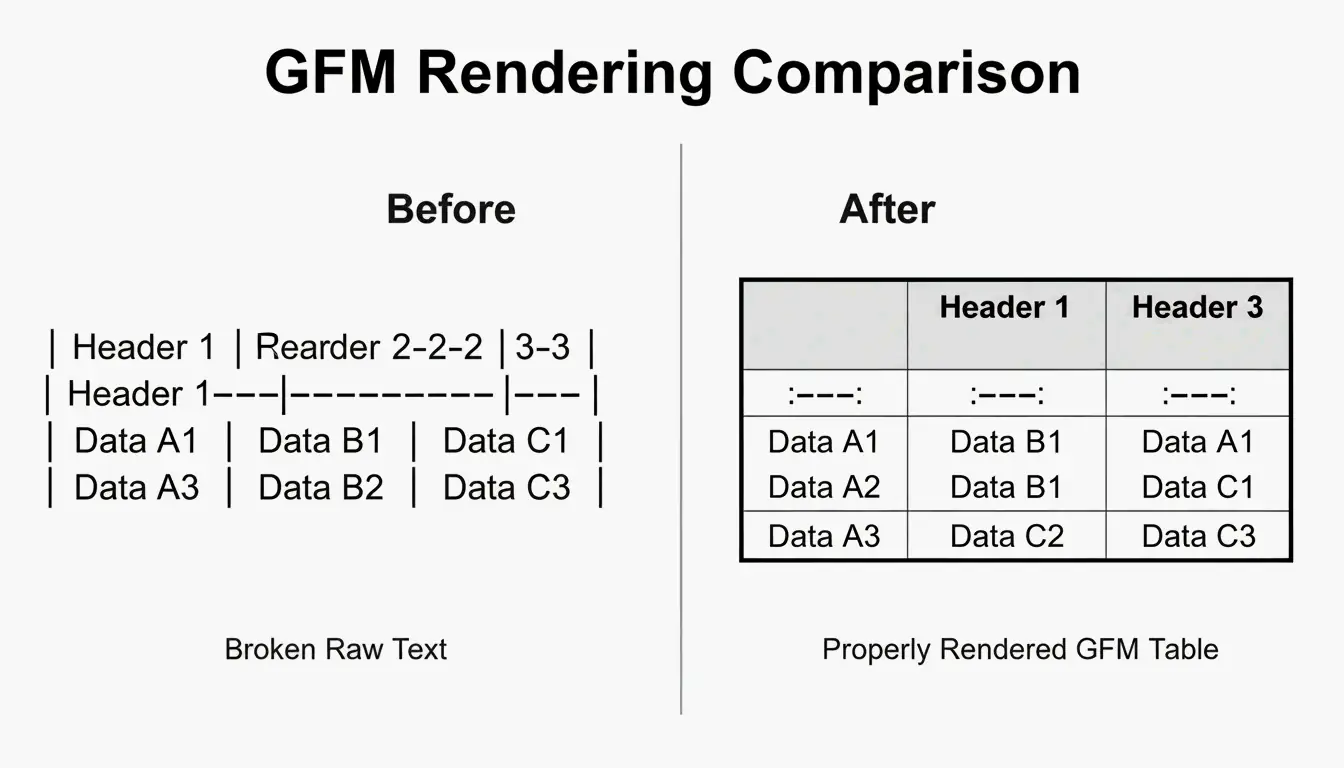
    GitHub Flavored Markdown (GFM) is the specific dialect used by GitHub, GitLab, and Discord. The original Markdown spec didn’t support tables at all — GFM added the familiar “pipe-and-dash” syntax. A GFM-compliant generator ensures your tables render correctly with bold headers and aligned columns, rather than appearing as raw text.

    Visual comparison of raw data vs. a rendered GFM table

    How to Convert Excel and CSV to GFM

    The process is two steps:

    1. Export to CSV — Save your Excel or Google Sheets file as CSV. This strips heavy formatting while preserving the data grid.
    2. Convert — Use a browser-based tool like EaseCloud or GoConverter to generate GFM code.

    Column Alignment

    GFM controls alignment through the separator row (the line under the header):

    Syntax Alignment
    :--- Left-aligned (default)
    ---: Right-aligned
    :---: Center-aligned

    Escaping Pipe Characters

    Markdown uses | to mark column edges. If your data contains a pipe (in a code snippet or formula, for example), it will break the table. Escape it with:

    • HTML entity: |
    • Backslash: \|
    • Code backticks: `|`

    Handling Large Datasets (100+ Rows)

    For datasets over 100 rows, web-based visual editors may lag. Modern converters use incremental parsing to stay responsive. According to AnywayData, using “pairwise combinatorial data logic” can reduce necessary test cases by 90–99%, which helps when documenting complex configurations.

    For truly large datasets, consider splitting into multiple tables or providing a downloadable CSV link alongside the Markdown version.

    Converting JSON to GFM: Flattening Nested Data

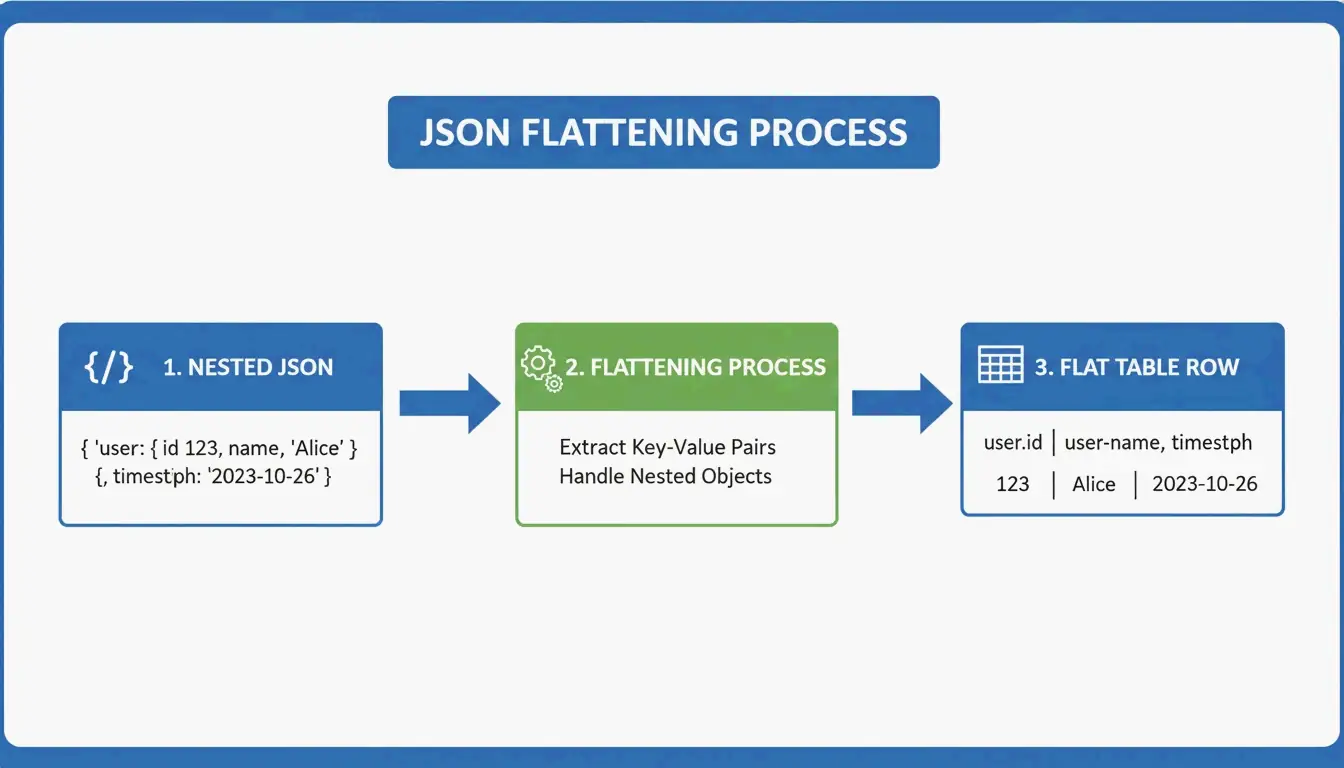
    JSON is hierarchical — data nested like Russian dolls. Markdown tables are flat 2D grids. The conversion requires flattening logic:

    user.address.city  →  "User Address City" (single column header)
    

    3-step visualization of flattening nested JSON into a flat table row

    AnywayData’s Grid Table Editor excels here — it lets you import JSON and manually control how nested layers get flattened. The quality of the conversion depends on whether the tool uses AST (Abstract Syntax Tree) construction rather than simple text pattern matching. AST-based parsers build a logical map of the data structure, handling deeper nesting and inconsistent schemas far more accurately.

    Automating with CI/CD

    For engineering teams, manual conversion is a waste of time. Integrating table generation into your CI/CD pipeline ensures README files stay current automatically:

    • Convert JSON API responses into GFM during the build process
    • Treat documentation as code — it updates when your data changes
    • Prevent the common problem of stale or incorrect information in your repo

    Tools like Terraform-docs v0.17.0 (2026) automatically inject resource tables directly into README files — proving that CLI tools often beat web interfaces for infrastructure-level documentation.

    MarkItDown vs. Pandoc: Which Should You Use?

    Factor MarkItDown (Microsoft) Pandoc
    Optimized for Office files (Excel, Word) Universal document conversion
    Markdown flavors GFM-focused CommonMark, GFM, and many others
    Best for Quick XLSX → GitHub table Multi-format, high-volume CLI work
    Latest version 2026 3.9.0.2 (stable)
    Speed Faster for single Office files Better for batch processing
    Use when You need one Excel file converted You need to convert between dozens of formats

    For most developers, MarkItDown is faster for the common case (Excel → GitHub table). Pandoc is the better choice when you’re juggling many document formats or running large-scale batch conversions.

    Conclusion

    Converting data to GFM tables in 2026 comes down to volume and workflow:

    • One-off edits → TableGenerator.com or AnywayData for visual control
    • Recurring Office conversions → MarkItDown integrated into your Python workflow
    • Multi-format or high-volume → Pandoc for CLI batch processing
    • Infrastructure docs → CI/CD automation with terraform-docs or custom scripts

    The key principle: documentation should update when your data updates. Automating the conversion prevents stale tables and keeps your project’s documentation trustworthy.

    FAQ

    How do I escape pipe characters (|) within a Markdown table cell?

    Use the HTML entity | instead of the literal pipe. Alternatively, use a backslash escape \| if your GFM parser supports it, or wrap the content in code backticks. All three methods prevent the pipe from being interpreted as a column separator.

    Does GFM support merged cells or multi-line content?

    No. Standard GFM doesn’t support colspan or rowspan. Each cell must be independent. For multi-line content within a cell, use HTML <br> tags to force line breaks while keeping the data in a single row.

    What’s the best approach for datasets over 100 rows?

    Skip web-based visual editors (they’ll lag). Use CLI tools like MarkItDown or Pandoc instead. If the resulting table is too large for a single page, split it into multiple tables or provide a link to a downloadable CSV file to maintain readability.

  • VIN Barcode Guide: How to Locate, Scan, and Generate Vehicle Barcodes

    VIN Barcode Guide: How to Locate, Scan, and Generate Vehicle Barcodes

    Every vehicle has a unique fingerprint — a 17-character Vehicle Identification Number (VIN) that encodes its manufacturer, model, engine type, and production sequence. Whether you’re sourcing parts, running a history check, or processing vehicle intake at a dealership, the VIN is the key that unlocks everything.

    This guide covers where to find the VIN barcode, how to scan it with modern OCR tools (99.8% accuracy), how to generate compliant barcodes, and what’s changing with the 2026 EU Digital Product Passport.

    Locating Your VIN: Where to Look

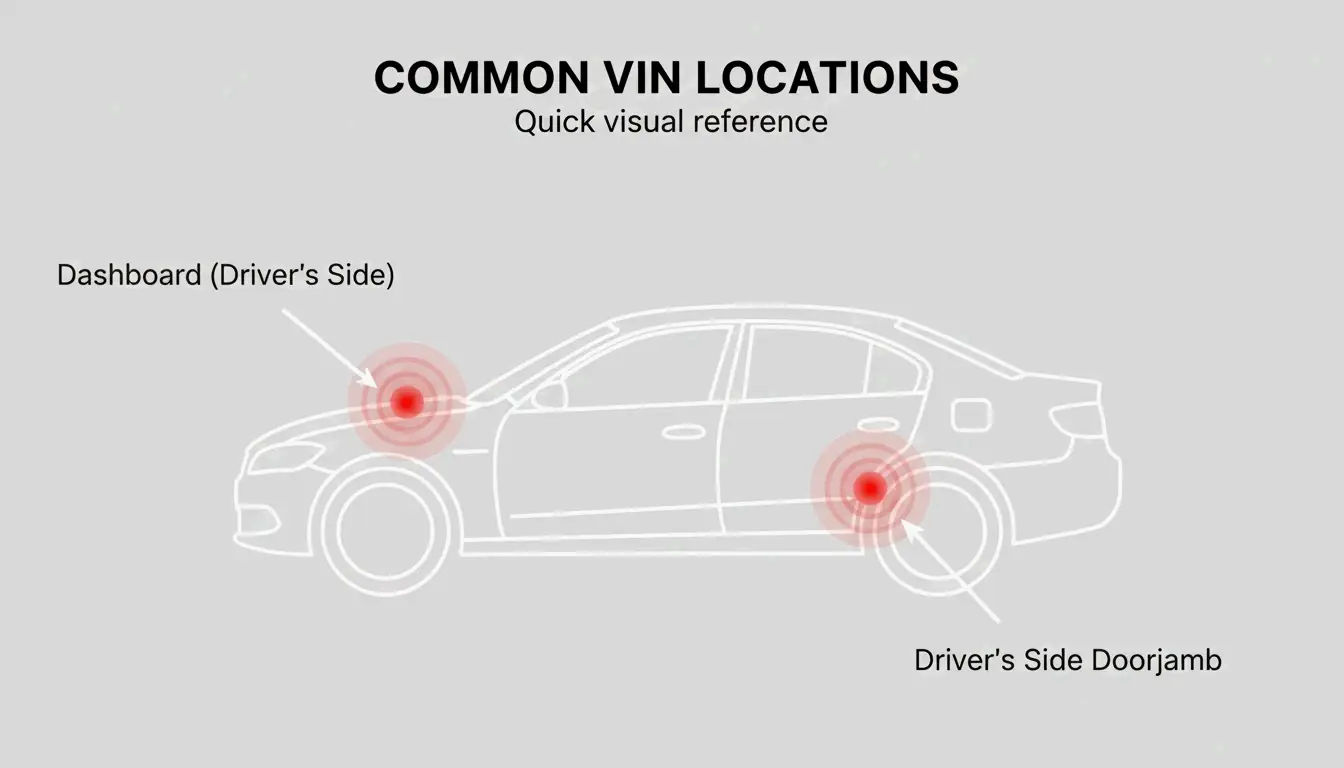
    Since 1981, every vehicle sold in the U.S. carries a standardized 17-character VIN. You’ll typically find the barcode or stamped plate in two primary locations:

    Location How to Find It
    Dashboard (driver’s side) Stand outside the car, look through the bottom corner of the windshield at the metal plate where the dash meets the hood
    B-pillar doorjamb Open the driver’s door, check the post for a compliance sticker listing the VIN, tire pressure, and manufacture date

    Minimalist diagram showing the two primary VIN locations on a car outline.

    For vehicles where these aren’t accessible:

    Vehicle Type Alternative Location
    Trucks / SUVs Front-right frame rail
    Motorcycles Steering head tube
    Trailers Tongue (front hitch area)

    If physical tags are missing or damaged, the NHTSA suggests checking the engine block, spare tire well, or your state registration card, insurance policy, or vehicle title.

    Troubleshooting: Faded or Missing Tags

    For rusted frames or damaged plates, FatBoysOffroad recommends using a wire brush to clear grime and rust from the chassis stamp. If the physical tags are completely gone, your registration card, insurance policy, or vehicle title will have the VIN.

    Scanning Technology: OCR at 99.8% Accuracy

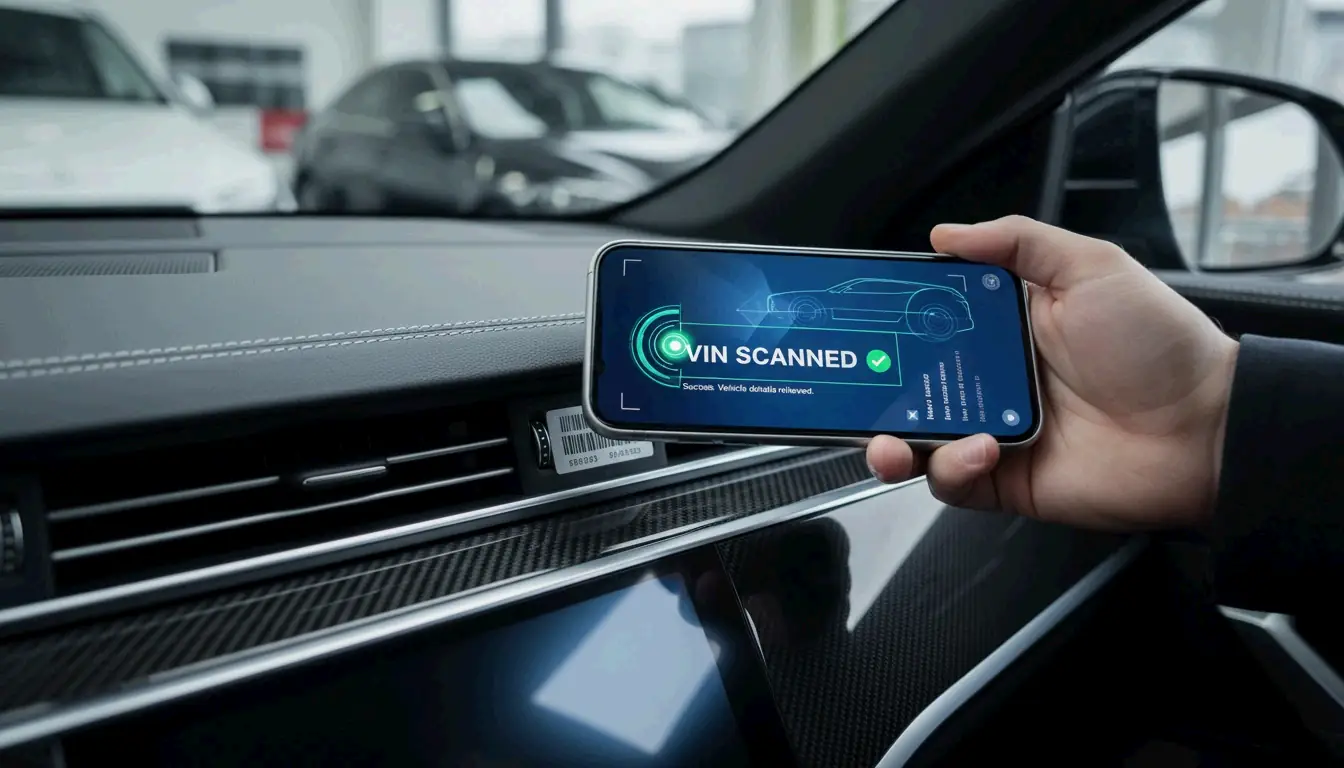
    Typing 17-character codes by hand is error-prone and slow. Modern scanning uses Optical Character Recognition (OCR) to convert a photo into digital text. According to Vincario, professional scanners in 2026 hit a 99.8% accuracy rate — eliminating the typos that lead to wrong parts orders or incorrect valuations.

    Top Tools for 2026

    Tool Type Strength
    Vincario Business platform Decodes VINs + shows market values
    GroupDocs Online scanner Upload photos or use webcam
    Carketa Dealership API Integrated with Dealer Management Systems

    The time savings are significant. Vincario reports dealerships cut manual processing time by ~48% using integrated scanners during vehicle intake and auctions.

    Tips for Scanning Damaged Barcodes

    Scanning through a windshield or reading a faded code can be tricky. GroupDocs uses AI algorithms to reconstruct partial patterns. For best results:

    • Ensure plenty of light but no direct glare on the surface
    • If the barcode won’t scan, switch to “text” mode to read the alphanumeric characters printed beside the barcode lines
    • Try a high-contrast filter within the app

    How to Generate ISO 3779 Compliant VIN Barcodes

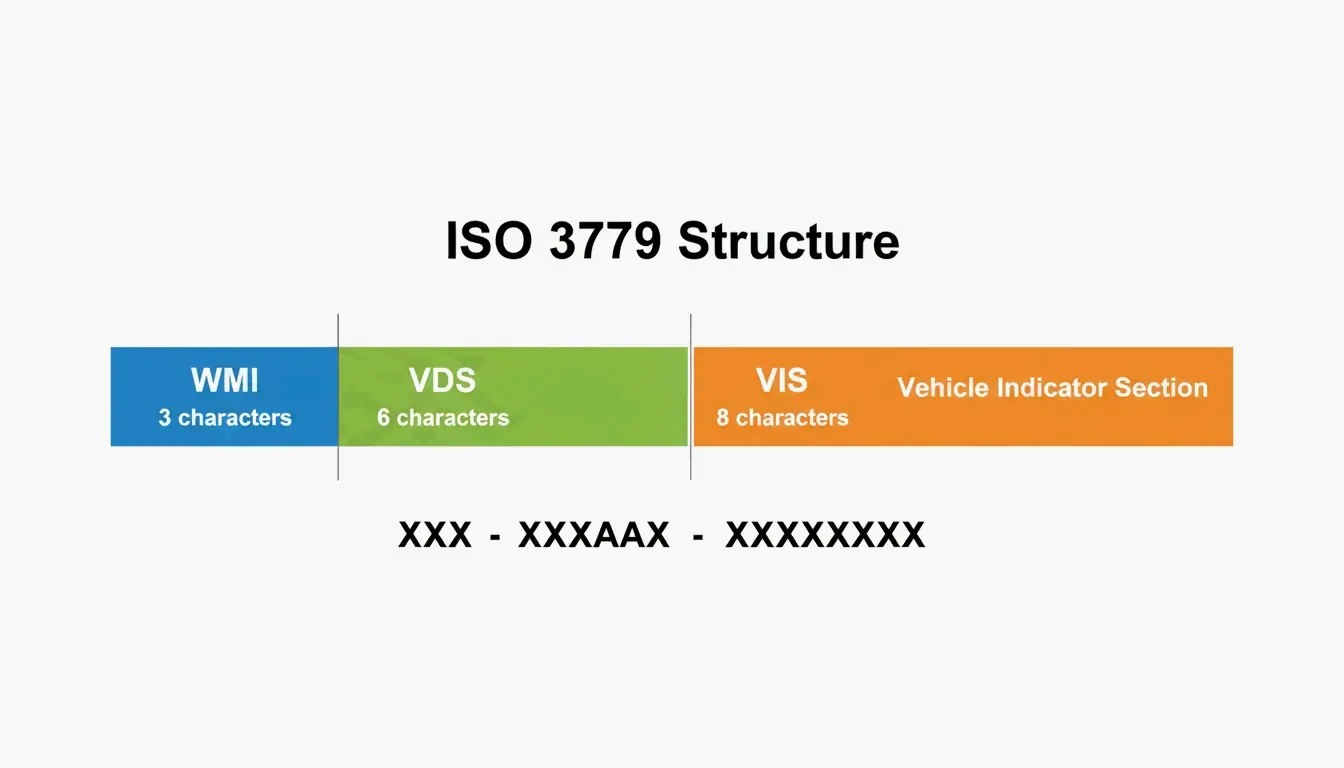
    Generating a VIN barcode for industrial or official use requires following international standards. ISO 3779 defines the 17-character structure:

    Segment Characters What It Encodes
    WMI (World Manufacturer Identifier) 1–3 Country and manufacturer
    VDS (Vehicle Descriptor Section) 4–9 Model, engine type, body style
    VIS (Vehicle Identifier Section) 10–17 Model year, assembly plant, production number

    A simple 3-segment breakdown of a 17-character VIN string.

    Critical Rule: No I, O, or Q

    ISO 3779 bans the letters I, O, and Q to prevent confusion with the numbers 1 and 0. This applies whether you’re typing, printing, or scanning.

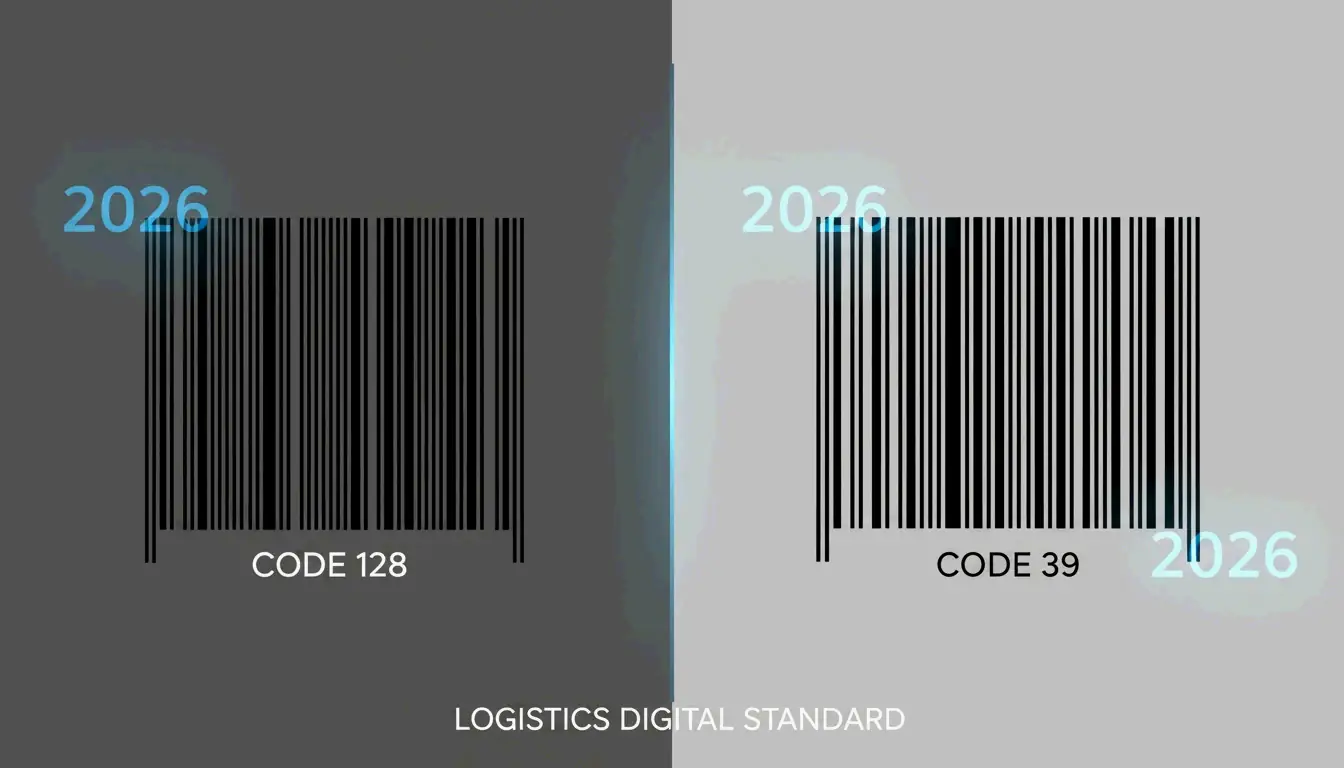
    Barcode Format Options

    Format Best For Notes
    Code 39 DMV, insurance, government work Industry standard for official documents
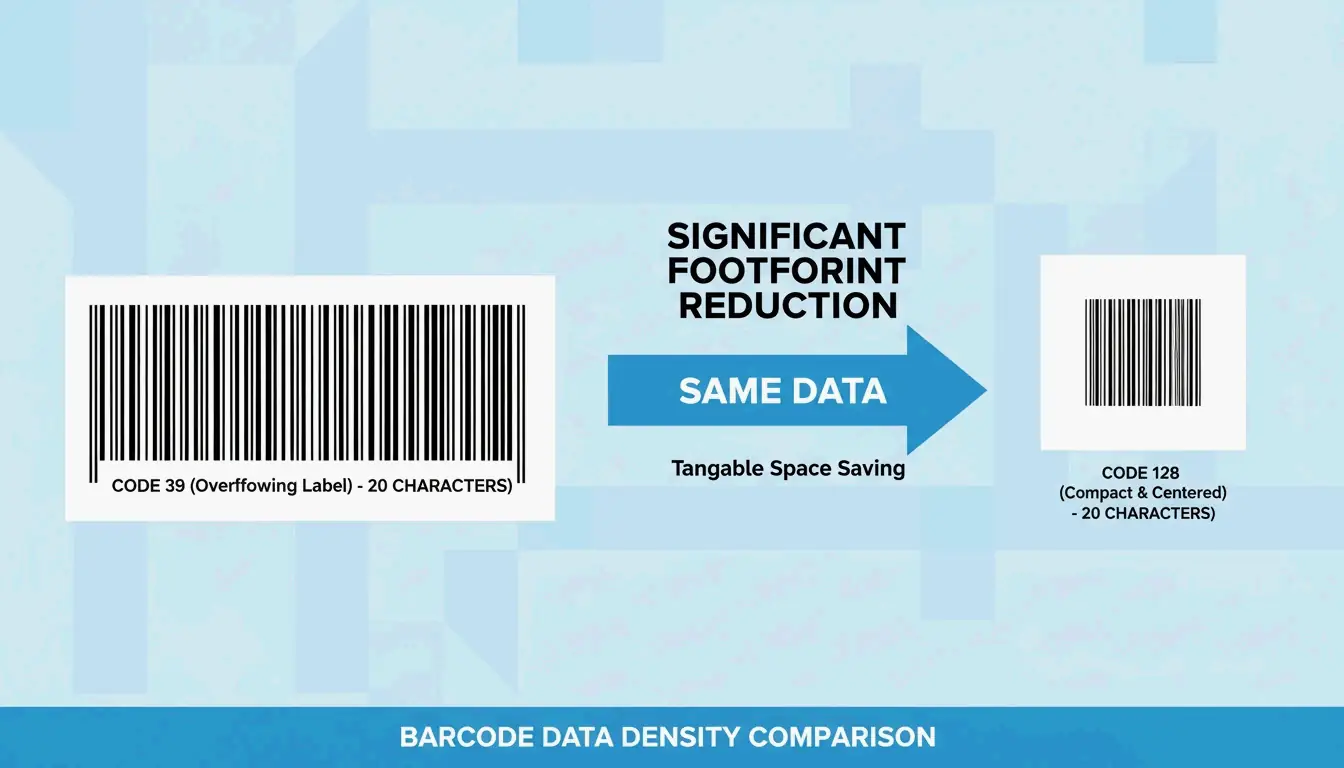
    Code 128 Small labels, high-density needs More compact than Code 39

    Tools like Abundera can generate these codes, though web-based tools typically limit you to 500 codes per session.

    The Check Digit (Character 9)

    The 9th character of a North American VIN is a Check Digit — a number (0–9) or the letter “X” calculated from the other characters to verify accuracy. The EAN Check team notes that U.S. and Chinese markets require this check digit to prevent fraud, while European and Japanese manufacturers follow it less consistently.

    NHTSA 2024 WMI Update

    In a 2024 update, the NHTSA clarified that automakers can use U.S.-issued WMIs for vehicles built outside the U.S. under certain conditions. Some Fords built overseas, for example, still carry a U.S. WMI (starting with 1, 4, or 5). To determine where a car was actually assembled, check the 11th digit, which identifies the specific assembly plant.

    Industrial Applications: Marking and Digital Passports

    Permanently marking a VIN onto a chassis requires specialized techniques:

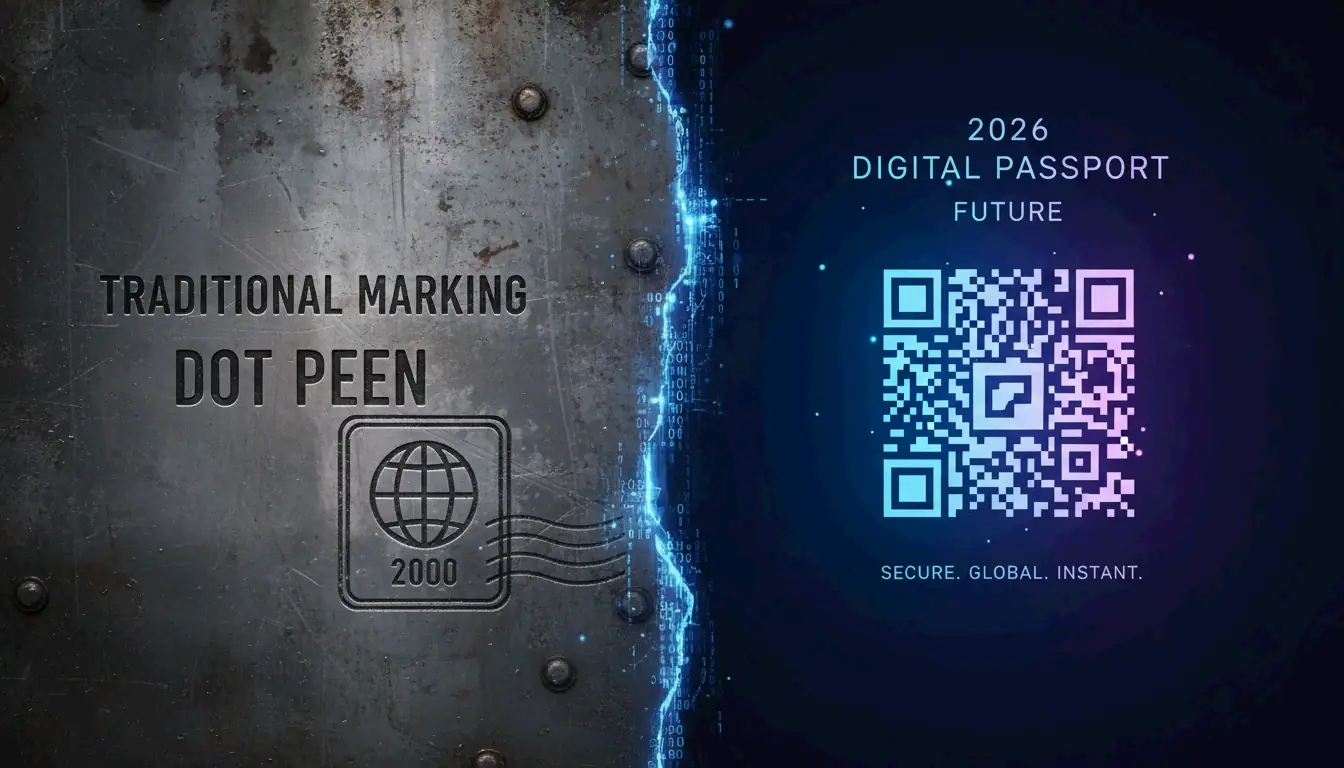
    Method How It Works Best For
    Dot peen marking Metal pin dents the code into metal Chassis — survives painting and powder-coating (HeatSign)
    Laser engraving Etches the code onto the surface Dashboard plates, engine parts — clean, high-contrast finish

    Visual contrast between industrial dot peen marking and digital QR code passports.

    The EU Digital Product Passport (2026)

    As of July 19, 2026, the EU Digital Product Passport (DPP) is reshaping global standards. Under Regulation (EU) 2024/1781, automotive parts sold in the EU must carry a scannable QR or Data Matrix code linking to digital product data. The industry is moving toward a “Digital Passport” for every vehicle.

    Paper Labels vs. Metal Marking

    Feature Paper/Vinyl Labels Metal Dot Peen/Engraving
    Durability Low — can peel or fade Permanent — forged into metal
    Location Doorjambs, windows Chassis, engine block, frame
    Use case Consumer info, tire specs Anti-theft, legal identification
    2026 trend Moving toward QR/DPP Standard for heavy industrial use

    For developers, creating random VINs for testing is legal and common. Tools like the Random VIN Generator produce ISO 3779-compliant strings without using real vehicle data.

    Conclusion

    From the moment a VIN is generated under ISO rules to the day it’s scanned by a mechanic or dealership, it’s the single most important piece of data attached to a vehicle. In 2026:

    • Personal use — A good OCR scanner app with 99.8% accuracy is your best tool
    • Business use — Ensure your tools comply with the 2024 NHTSA rulings and 2026 EU Digital Product Passport standards
    • Generation — Follow ISO 3779 strictly (no I/O/Q, validate check digits), choose Code 39 for official use or Code 128 for compact labels

    FAQ

    Where is the VIN barcode on a motorcycle or trailer?

    Motorcycles: Steering head tube or frame near the engine mount. Trailers: Tongue (front hitch area) or front-left frame rail. If the sticker is missing, look for a physical stamp on the metal chassis.

    Why are the letters I, O, and Q never used in a VIN?

    They’re excluded by ISO 3779 to prevent confusion with the numbers 1 and 0. Removing these visually similar characters significantly improves accuracy during both manual entry and automated OCR scanning.

    Can I scan a damaged VIN barcode with a smartphone?

    Yes — 2026 AI-enhanced OCR apps can reconstruct partial patterns. Ensure good lighting without glare, and try high-contrast filters. If the barcode is unreadable, most apps can use OCR on the alphanumeric characters printed next to the code.

  • Code 128 vs Code 39: Barcode Differences Explained (2026)

    Code 128 vs Code 39: Barcode Differences Explained (2026)

    If you work with barcodes — whether in shipping, healthcare, manufacturing, or retail — you’ve likely encountered both Code 128 and Code 39. They’re two of the most common 1D barcode formats, and in 2026, the choice between them comes down to how much data you need to encode and how much label space you have.

    Code 128 is the modern standard: high-density, full ASCII support, and a mandatory check digit. Code 39 is the older, simpler alternative that works well for short strings but becomes unwieldy with longer data. This guide breaks down the differences and helps you pick the right one.

    Code 128 vs Code 39 at a Glance

    Feature Code 128 Code 39
    Data density High — fits more data in less space Low — gets wide quickly
    Character set Full 128 ASCII characters 43 characters (uppercase, digits, few symbols)
    Lowercase support Native Only via “Extended” mode (doubles barcode length)
    Check digit Mandatory (Modulo 103) Optional
    Bar/space widths 4 widths (1, 2, 3, 4 units) 2 widths (narrow and wide)
    Best for Logistics, shipping, complex data Simple internal tracking, legacy systems

    The physical footprint difference is striking. According to Peak Technologies, you should switch from Code 39 to Code 128 if your data string is longer than 15 characters. A 20-character ID in Code 39 might not fit on a standard 2-inch label, while Code 128 keeps it compact.

    A side-by-side scale comparison showing Code 128 is much shorter than Code 39 for the same data

    Modern scanners (area imagers and smartphone apps) read both formats easily. But Code 128 has the edge in reliability because its built-in error detection prevents misreads in high-volume environments.

    Data Density: Why It Matters

    Data density is how many characters fit into a single inch of barcode. Wikipedia explains that Code 128 uses four different widths for bars and spaces, while Code 39 uses only two. This precision makes Code 128 roughly twice as dense for numeric data — often the only 1D barcode that works for tiny items like medical vials or small electronics.

    Character Support

    • Code 39 (Standard): 43 characters — uppercase A–Z, digits 0–9, and a handful of symbols (-, ., $, /, +, %, space).
    • Code 128: All 128 ASCII characters — uppercase, lowercase, symbols, and even control characters like carriage returns.
    • Code 39 Extended: Can encode lowercase via character pairs (e.g., “+A” for lowercase “a”), but as Peak Technologies notes, this is “wasteful of space” and makes the barcode unnecessarily long.

    Why Code 128 Is the Modern Logistics Standard

    Code 128 powers global shipping through the GS1-128 standard, which uses “Application Identifiers” to structure data like batch numbers, expiration dates, and serial numbers.

    Mandatory Check Digit (Modulo 103)

    In Code 39, a checksum is optional. In Code 128, it’s built-in — the barcode appends a calculated value that the scanner verifies on every read. This virtually eliminates the risk of a “wrong” scan in busy warehouses.

    Optimization Through Code Sets A, B, and C

    Code 128 stays compact by switching between three internal modes:

    Code Set Optimized For Key Advantage
    A Uppercase letters + control codes Industrial applications
    B Standard alphanumeric + lowercase General-purpose text
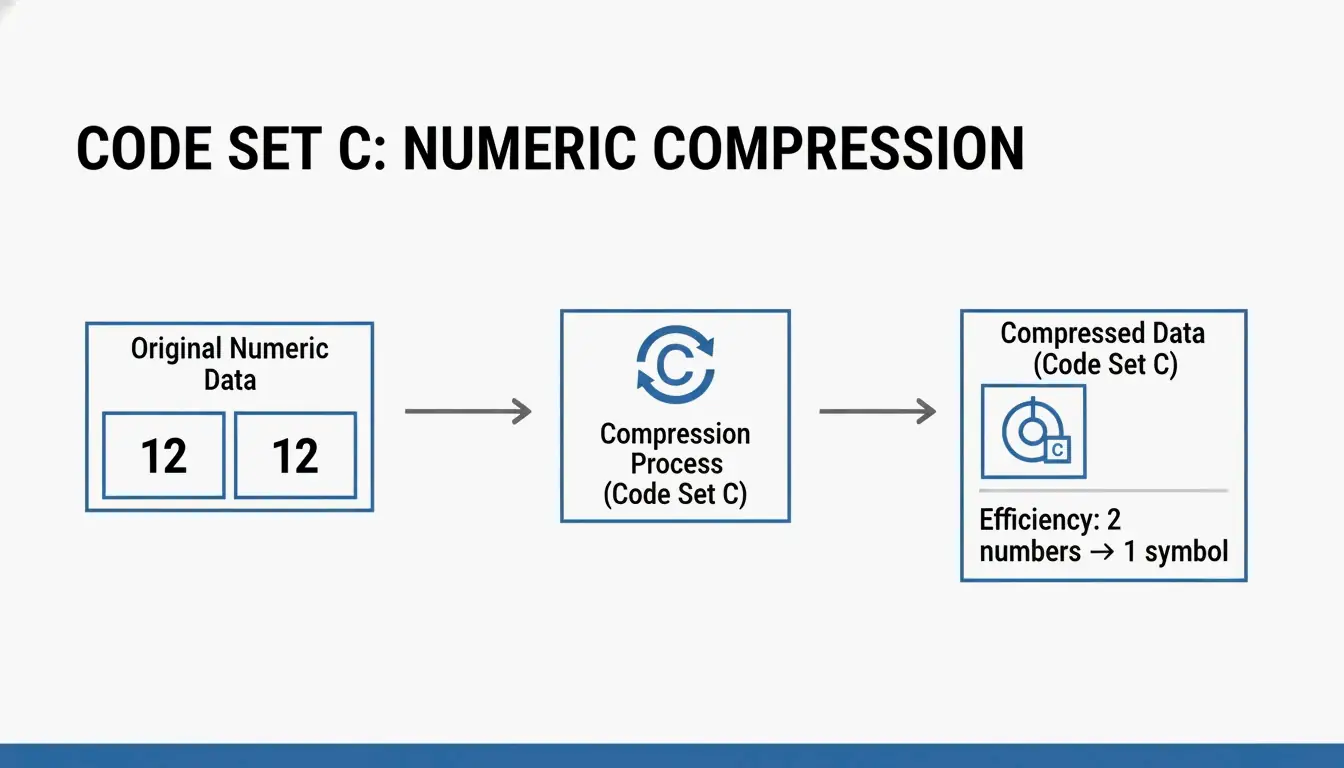
    C Numeric-only data Two digits per symbol — most efficient for numbers

    Wikipedia explains that Code Set C packs two digits into a single barcode symbol. For long numeric strings, this is incredibly efficient. Research by Steven Skiena shows that smart Code Set selection can make a barcode 8% smaller on average than using a static setting.

    Simple visual showing how Code Set C pairs two digits into one symbol

    Is Code 39 Still Relevant?

    Code 39 still has a place in 2026 because it’s simple and forgiving. It’s “self-checking” — the gaps between characters help isolate errors — which makes it work well with low-resolution printers or older industrial scanners.

    You’ll still find Code 39 in:
    – US Department of Defense (LOGMARS standard)
    – Healthcare internal tracking
    – Automotive legacy systems

    The problem arises with Code 39 Extended. Encoding a single lowercase “a” requires printing “+A” — doubling the barcode length. If your tracking IDs use mixed-case letters, Code 39 Extended is a poor choice.

    Technical Specs: X-Dimension and Quiet Zones

    How well a barcode scans depends on the X-dimension — the width of the narrowest bar. According to GS1 2026 standards, the minimum X-dimension for retail checkouts is 0.264 mm (0.0104 inches).

    Both formats also need a Quiet Zone — blank white space on both ends of the barcode, at least 10× the width of the narrowest bar. Without it, scanners can’t determine where the barcode starts and stops.

    Scanner Compatibility

    Scanner Type Works Best With Notes
    Laser scanners Longer, taller barcodes Need a clear laser path across all bars
    Area imagers (2026 standard) Both formats, including high-density Code 128 Can read damaged or tilted labels
    Smartphone cameras Both Native support in iOS/Android

    Per Gitnux 2024, the retail sector handles 42% of global daily scans — which is why the industry is moving toward more reliable area imaging standards.

    Conclusion

    Code 39 is fine for simple, short internal tracking IDs — especially in legacy systems with older scanners. Code 128 is the clear choice for anything else: it’s smaller, supports more characters, includes mandatory error checking, and is the backbone of modern logistics.

    Decision rule:
    – Data shorter than 10–15 characters, uppercase only → Code 39 is acceptable
    – Anything longer, or with mixed case / symbols → Code 128
    – GS1-128 compliance required → Code 128 (no other option)

    When designing labels, ensure your narrowest bar meets the 0.264 mm GS1 standard to guarantee readability worldwide.

    FAQ

    Can Code 39 encode lowercase letters?

    Standard Code 39 only supports uppercase letters, digits, and a few symbols. To encode lowercase, you need Code 39 Extended, which uses character pairs (e.g., “+A” for “a”). This significantly increases the barcode’s physical length, making it far less efficient than Code 128.

    Why is Code 128 more “dense” than Code 39?

    Code 128 uses four bar/space widths (vs. Code 39’s two), and its Code Set C encodes two digits per symbol. This makes Code 128 roughly twice as dense as Code 39 for numeric data, saving valuable label space.

    Do I need a check digit for Code 39 barcodes?

    It’s optional for Code 39 but recommended in high-stakes environments. Code 128 has a mandatory Modulo 103 checksum built into its specification, making it inherently more reliable for high-volume scanning.

    Which barcode type is better for small items with limited label space?

    Code 128 — its higher density means you can print it at a larger X-dimension (easier for scanners to read) within the same physical space where a Code 39 barcode would be cramped and hard to scan.

  • What Is a UUID? The Complete Guide to RFC 9562 and Modern Unique Identifiers

    What Is a UUID? The Complete Guide to RFC 9562 and Modern Unique Identifiers

    Every modern database, distributed system, and API uses unique identifiers — and in 2026, the standard that governs them has fundamentally changed. UUID (Universally Unique Identifier) is a 128-bit label that can identify information across computer systems without any central coordination. Under the new RFC 9562 (which replaced RFC 4122 in May 2024), the landscape has shifted: UUID v4 remains the go-to for random IDs, but UUID v7 is now the recommended standard for database primary keys because its time-ordered structure prevents B-tree index fragmentation.

    This guide covers the full picture: how UUIDs work, which version to use when, and how to implement them correctly.

    Understanding RFC 9562: The Modern UUID Standard

    A UUID is a 128-bit number that’s practically guaranteed to be unique — no central authority needed. According to Wikipedia, the chance of two UUIDs colliding is so close to zero it’s considered impossible for real-world applications. Different teams can label data independently, confident their IDs won’t clash.

    In May 2024, the IETF published RFC 9562, retiring the old RFC 4122. The update responded to the demands of modern distributed systems, which needed IDs that are both unique and sortable by time. Three new versions were introduced: v6, v7, and v8.

    Anatomy of a UUID: Versions and Variants

    You’ll typically see a UUID as 32 hexadecimal characters split into five groups by hyphens (8-4-4-4-12):

    550e8400-e29b-41d4-a716-446655440000
                ^
              version
    

    Two key fields tell you how the UUID was generated:

    Field Location What It Tells You
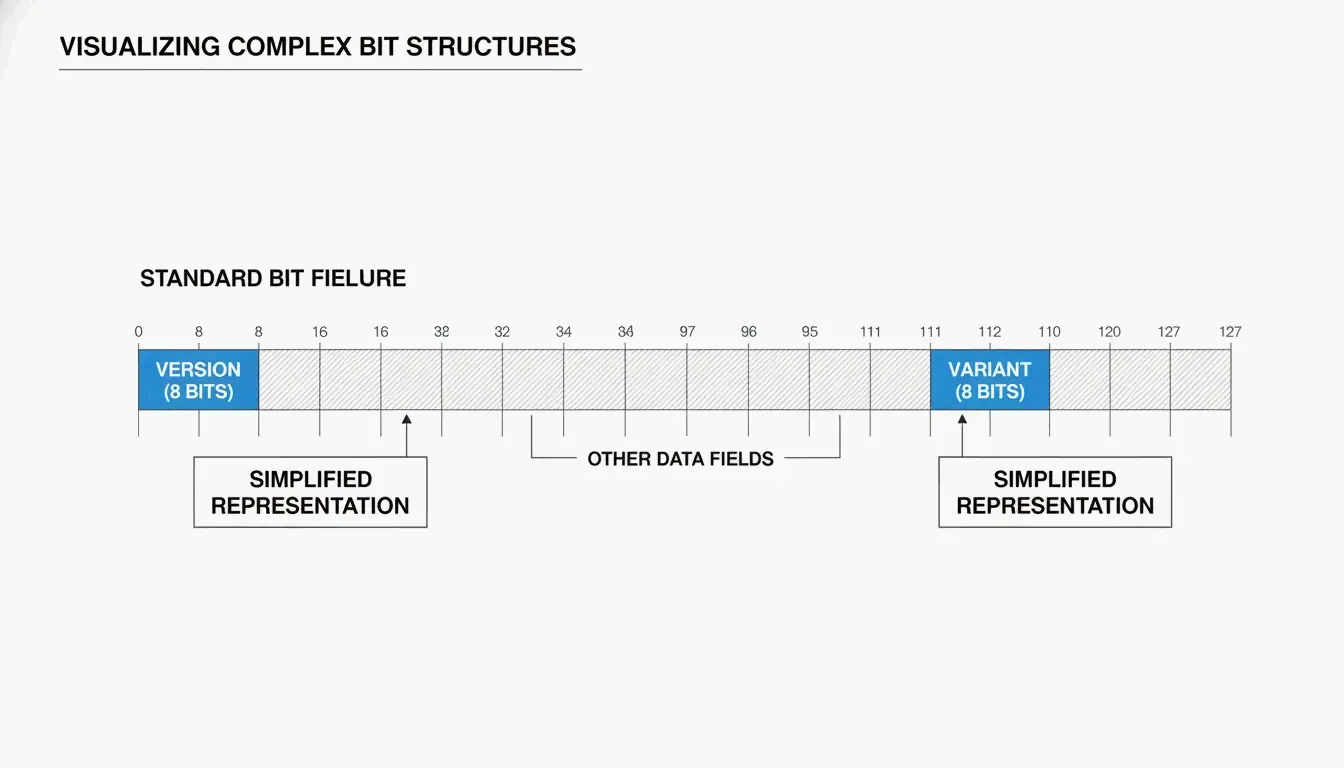
    Version bits First 4 bits of the 7th byte (first char of the 3rd group) Which algorithm was used (e.g., “4” = v4, “7” = v7)
    Variant bits 9th byte The UUID variant — RFC 9562 uses a 10 bit pattern

    As SnapUtils explains, the variant bits separate modern RFC 9562 UUIDs from older Apollo or Microsoft formats.

    UUID 结构拆解示意图

    Why UUID v7 Is the New Gold Standard for Databases

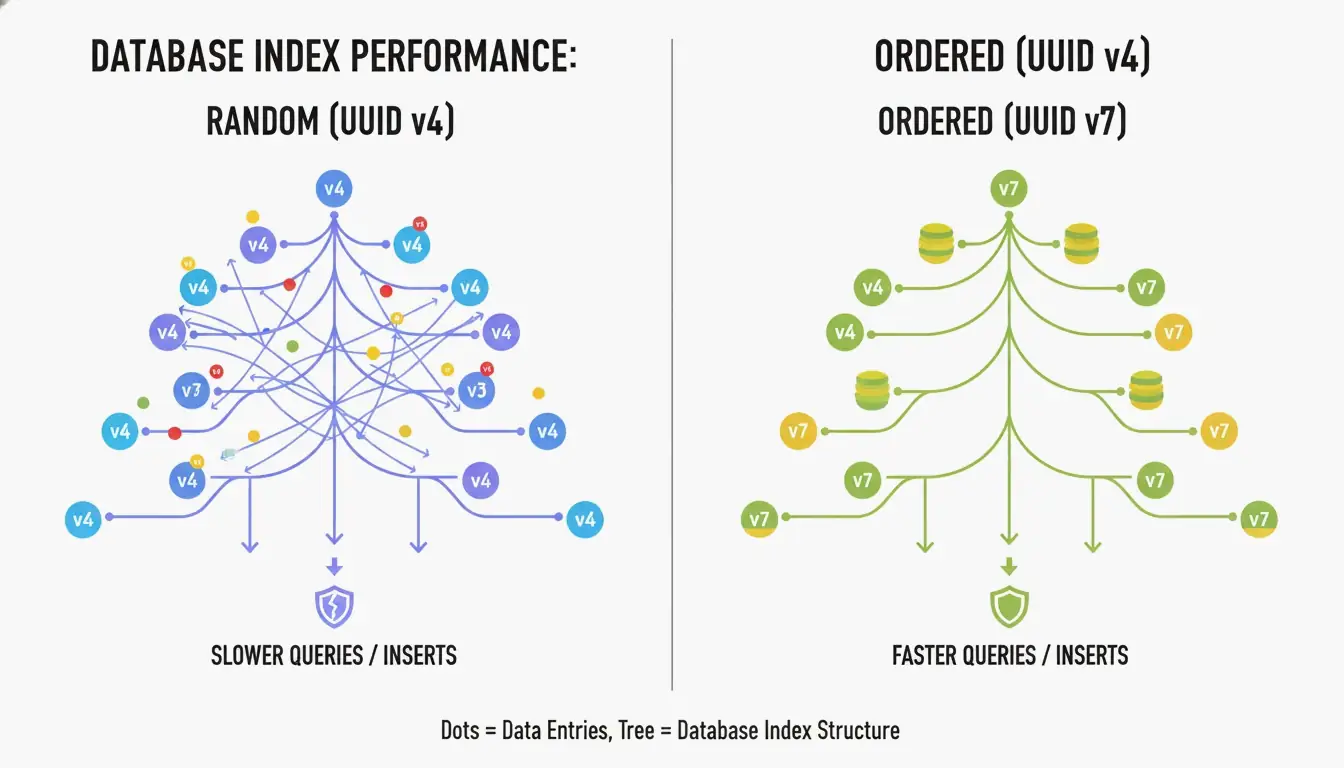
    The biggest drawback of UUID v4 is that it’s completely random. When used as a primary key in a B-tree index, the database has to insert new rows at unpredictable positions. According to CreateUUID, this causes “page splits” — the database must constantly reorganize data to make room, leading to slower writes and wasted memory.

    UUID v7 solves this by placing a 48-bit Unix Epoch timestamp (millisecond precision) at the start of the ID. This makes IDs monotonically increasing — new ones are always larger than old ones. The database can simply append to the end of the index, giving you the performance of a sequential integer with the global uniqueness of a UUID.

    UUID v4 随机插入 vs UUID v7 顺序插入的对比

    How UUID v7 Balances Time and Entropy

    UUID v7 fills the remaining 74 bits using a CSPRNG (Cryptographically Secure Pseudo-Random Number Generator). According to Wikipedia, you’d need to generate about 1 billion UUIDs per second for 85 years to reach a 50% collision probability. For any real application, UUID v7 is effectively collision-proof.

    Storage Best Practices: Binary(16) vs. String(36)

    How you store UUIDs matters as much as which version you use:

    Storage Format Space Index Performance Recommendation
    Binary(16) 16 bytes High (compact) Best practice
    Native UUID type 16 bytes High (optimized) Best for PostgreSQL
    String (Char 36) 36–72 bytes Low (fragmented) Avoid

    SnapUtils recommends always using native types over strings. In PostgreSQL, the native uuid type stores data in a compact 16-byte binary format while still supporting standard string-based queries.

    UUID vs GUID: Is There a Difference?

    A GUID (Globally Unique Identifier) is Microsoft’s implementation of the UUID standard. Historically, there was a difference in byte ordering (endianness) — early Microsoft GUIDs used little-endian for the first three fields, while standard UUIDs used big-endian (network byte order) (SnapUtils).

    By 2026, this is mostly a naming convention. Under RFC 9562, they work identically. A Guid.NewGuid() in .NET is fully compatible with a uuid.uuid4() in Python. You’ll hear “GUID” in Windows/Azure circles and “UUID” in Linux and open-source communities.

    Implementing Modern UUIDs: Language-by-Language

    Language UUID v4 UUID v7
    Python Built-in uuid module uuid6 or uuid7 package
    JavaScript crypto.randomUUID() uuid npm package (v10+)
    PostgreSQL gen_random_uuid() (PG 13+) Native uuidv7() (PG 17+) or extensions
    .NET Guid.NewGuid() Community packages
    Rust uuid crate (v1.7+) uuid crate with v7 feature

    Deterministic IDs: UUID v5

    If you need the same ID every time for a given input (like a URL or username), use UUID v5. It hashes a Namespace UUID and a name string using SHA-1 — perfect for deduplication when you can’t check a central database.

    The Privacy Lesson of UUID v1

    UUID v1 uses a timestamp and the computer’s MAC address. It’s been largely abandoned because it leaks hardware information. A famous example: the Melissa Virus creator was caught because UUIDs in infected Word documents contained his specific MAC address.

    Advanced RFC 9562: v6, v8, and Special UUIDs

    RFC 9562 added specialized versions for niche distributed system needs:

    Version Purpose Use When
    v6 Reordered v1 timestamp — sortable while keeping v1’s precision Migrating legacy v1 systems
    v8 Custom — 122 bits for developer-defined data Experimental or vendor-specific schemes
    Nil UUID 00000000-0000-0000-0000-000000000000 Null placeholder
    Max UUID FFFFFFFF-FFFF-FFFF-FFFF-FFFFFFFFFFFF Range endpoint marker

    Conclusion

    RFC 9562 has updated unique identifiers for the modern cloud era. The practical guidance:

    • Database primary keys → Use UUID v7 for time-ordered, fragmentation-free inserts
    • General randomness → UUID v4 remains perfectly fine
    • Deduplication → UUID v5 gives you deterministic IDs
    • Storage → Always use Binary(16) or native UUID types, never strings

    Action item: Check your database schemas. If you’re using UUID v4 as a primary key in tables with millions of rows, migrating to UUID v7 is a straightforward change that can significantly reduce index fragmentation and speed up queries.

    FAQ

    Is a UUID the same as a GUID?

    Functionally, yes. A GUID is Microsoft’s implementation of the UUID standard. Under RFC 9562, they are identical in behavior — you can use them interchangeably across .NET, Java, and Python applications.

    Can two UUIDs ever collide in a real-world scenario?

    Mathematically possible, practically impossible. For UUID v4, you’d need to generate approximately 2.71 quintillion IDs to reach a 50% collision probability. According to Generate-Random.org, generating 1 billion UUIDs per second for 85 years gives you only a 50% chance of a single collision.

    Should I store UUIDs as strings or binary in my database?

    Always prefer Binary(16) or the native UUID type (available in PostgreSQL). A 36-character string consumes more than twice the space and significantly slows down index lookups and joins. SnapUtils notes that the performance benefits of RFC 9562 are maximized when storage stays compact.

    When should I use UUID v5 instead of UUID v4?

    Use v5 when you need deterministic IDs — the same input always produces the same UUID, without checking a database. Use v4 when you need complete randomness and want to ensure the identifier can’t be reverse-engineered to its source.